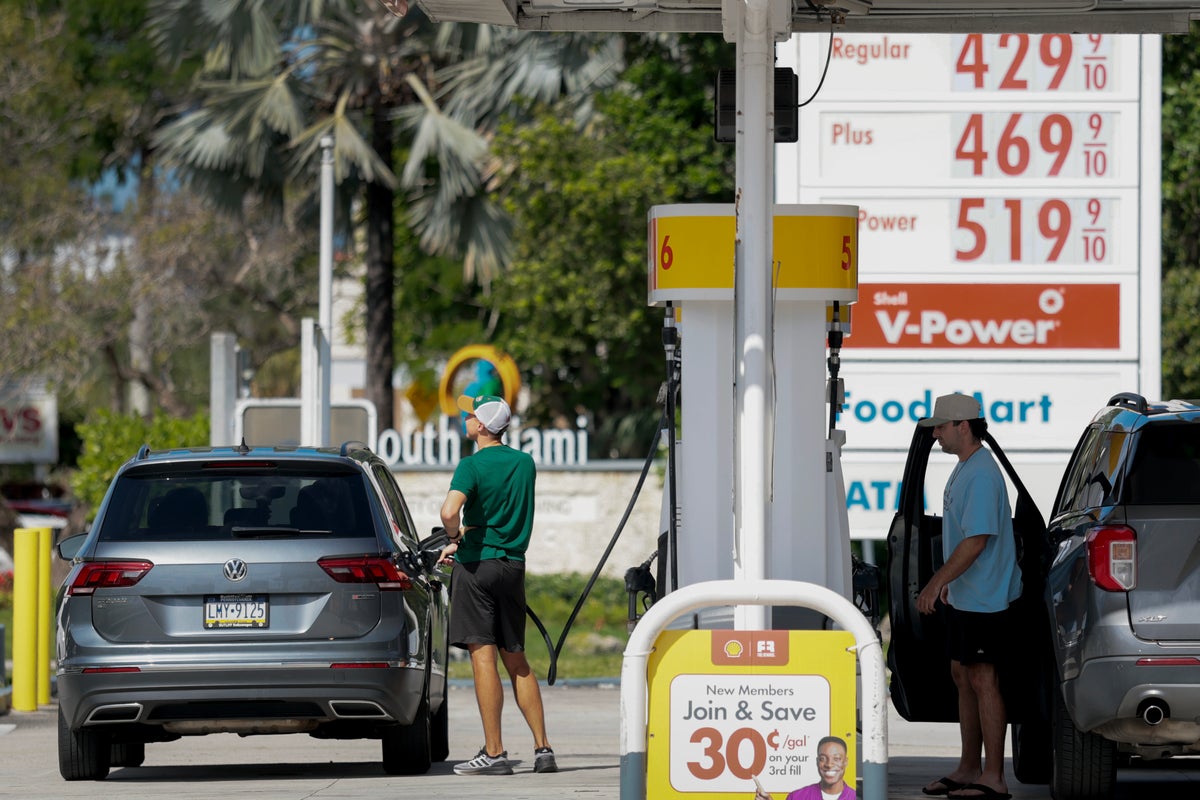
If you are watching the headlines for a ceasefire or a peace treaty as the signal to finally see relief at the pump, you are looking at the wrong map. The common assumption that "peace equals cheap fuel" is a persistent myth that ignores the jagged machinery of global energy markets. Even if every major conflict vanished tomorrow morning, the price you pay to fill your tank would likely remain elevated for months, if not a full year. The delay isn't a glitch in the system; it is the system.
Retail fuel prices are governed by a complex lag of inventory cycles, insurance risk premiums, and the slow-motion physics of global shipping. When war breaks out, prices spike instantly on fear. When peace arrives, prices drift down on reality. Reality moves much slower than fear.
The Mirage of Immediate Relief
The primary reason for the disconnect between a peace deal and your local gas station's marquee is the refining spread. Oil is just the raw ingredient. Turning it into gasoline requires a massive industrial middleman that is currently operating at near-maximum capacity with zero margin for error.
During periods of conflict, energy companies don't just worry about where the oil comes from; they worry about where it can safely go. Shipping lanes become minefields, both literally and figuratively. When a peace treaty is signed, the "war risk insurance" on tankers doesn't vanish with the ink. Insurance providers typically wait for a sustained period of stability before lowering premiums. Until those costs drop, the price of transporting every barrel of crude remains high.
Furthermore, we must address the inventory overhang. Gas stations are selling fuel today that was purchased at wholesale prices weeks or even months ago. Until that expensive inventory is flushed through the system, retailers have no financial incentive to drop their prices. Doing so would mean selling their current stock at a loss. In a low-margin business like retail fuel, that is a death sentence.
Why the Global Supply Chain Has a Memory
The energy market is an elephant. It has a very long memory and it is incredibly hard to turn around. When sanctions are applied to an oil-producing nation during a conflict, the infrastructure supporting that trade begins to rot.
Consider the ghost fleet phenomenon. To bypass sanctions, certain nations rely on aging, uninsured tankers operating in the shadows. Transitioning back to a legitimate, regulated supply chain after a peace deal isn't a matter of flipping a switch. It requires rigorous inspections, new contracts, and the re-establishment of banking ties that were severed by international law. This process takes months of legal and logistical maneuvering.
- Financial Scars: Banks are notoriously risk-averse. Even after a conflict ends, lenders are hesitant to finance energy projects in formerly volatile regions until they see a multi-quarter track record of stability.
- Labor Shortages: War displaces the technical experts—the engineers and technicians—who keep refineries and pipelines humming. Bringing that talent back to the field is a slow human process that cannot be accelerated by a diplomatic handshake.
- Maintenance Backlogs: During high-intensity conflicts, routine maintenance on oil fields and refineries is often deferred. Once the shooting stops, the first order of business isn't pumping more oil; it’s fixing the equipment that was pushed to its breaking point.
The OPEC Factor and the Managed Squeeze
We cannot discuss gas prices without acknowledging the cartel in the room. OPEC+ has spent the last several years mastering the art of supply management. Their goal isn't to provide the world with the cheapest possible fuel; it is to maintain a price floor that keeps their national budgets solvent.
If a peace deal brings a significant amount of "shut-in" oil back to the market—say, from a country that was previously under heavy sanctions or active bombardment—OPEC+ will likely respond by cutting their own production. They view a sudden influx of new oil as a threat to price stability. By throttling their output, they effectively cancel out the downward pressure that peace should have created.
This creates a floor for prices that consumers rarely see coming. You might see the price of a barrel of Brent Crude dip briefly on the news of a treaty, but the cartel's intervention ensures that dip is shallow and short-lived.
The Psychological Lag of the Retailer
There is a documented economic phenomenon known as "Rockets and Feathers." It describes how retail prices rise like rockets when costs go up, but drift down like feathers when costs drop.
When a conflict begins, the local gas station owner sees the wholesale price of their next delivery jumping. To ensure they have enough cash to buy that next shipment, they raise their current prices immediately. However, when a peace deal is announced and wholesale prices begin to soften, the owner is in no rush. They want to recoup the margins they lost during the spike. They watch their competitors across the street. If the guy across the road hasn't lowered his price, they won't either.
This behavior isn't necessarily "price gouging" in the legal sense; it is a defensive survival strategy in a volatile market. But for the consumer, it means the benefit of a geopolitical breakthrough won't hit their wallet until the "feather" finally touches the ground months later.
Refining Bottlenecks and the Seasonal Trap
Even in a world of perfect peace, we are fighting a losing battle against refining capacity. Over the last decade, many Western nations have shuttered older refineries without building new ones, favoring a shift toward renewable energy. This has left us with a system that cannot handle sudden surges in demand, regardless of how much crude oil is available.
If a peace deal is signed in the spring, it coincides with the "summer driving season" and the mandatory switch to more expensive summer-grade fuel blends. These blends are designed to reduce smog but are more costly to produce. The seasonal price hike can easily wash out any savings gained from a diplomatic resolution.
The Hidden Cost of "Drill, Baby, Drill"
There is a common argument that domestic production can solve this, but that ignores the reality of the global commodity market. Oil is fungible. US producers sell to the highest bidder on the world stage. If a peace deal in Eastern Europe or the Middle East fails to immediately lower the global price, domestic producers have no reason to sell their product to American consumers at a discount. They will follow the global benchmark.
Moreover, the "Drilled but Uncompleted" (DUC) wells that people often point to as a quick fix aren't a magic wand. Bringing a well online requires fracking crews, sand, water, and piping—all of which have seen massive inflationary price increases. The cost of producing a new barrel of oil is significantly higher than it was five years ago. This new "breakeven" point means that even in a peaceful world, the days of $2.00 per gallon gasoline are likely gone forever.
The Insurance and Freight Deadlock
Shipping accounts for a larger percentage of your gas price than you might realize. The tankers that move oil across the globe operate on spot rates and long-term charters.
During a conflict, tankers avoid certain zones, forcing them to take longer, more expensive routes. For example, avoiding the Suez Canal and sailing around the Cape of Good Hope adds weeks to a journey and burns thousands of tons of extra fuel. A peace deal might reopen the shorter route, but the tankers currently at sea are already committed to their long paths. The maritime logistics chain has a "buffer" of roughly 45 to 60 days. It takes that long for the ships to get back into their optimal positions.
The Transition Conflict
We are also living through a period of structural energy transition. Investors are increasingly hesitant to pour billions into long-term oil projects when the global political climate is pushing for electric vehicles and carbon neutrality. This "green premium" adds a layer of permanent cost to fossil fuels.
Peace doesn't change the fact that the world's largest investment firms are pivoting away from hydrocarbons. Without massive, sustained investment in new extraction and refining, the supply will always be tight. A peace deal might stop the immediate bleeding, but it won't heal the underlying anemia of the industry's capital investment.
How to Actually Read the Market
If you want to know when your gas prices will actually drop, stop looking at photos of diplomats shaking hands. Instead, look at these three metrics:
- Refinery Utilization Rates: If refineries are running at 95% or higher, prices will stay high because there is no "spare" gasoline being made.
- Crack Spreads: This is the difference between the price of a barrel of crude and the price of the products refined from it. If the crack spread is high, the "peace dividend" is being eaten by the refiners, not passed to you.
- Commercial Crude Inventories: Look for a sustained, multi-week build in inventories. This indicates that supply is finally outpacing demand.
A peace deal is a psychological victory, but it is not an economic one—at least not in the short term. The friction of the global economy ensures that the path from the peace table to the pump is long, expensive, and filled with middle-men looking to settle their own debts before they give you a break.
The next time you see a "Peace in Sight" headline, don't go out and buy a gas-guzzling SUV. Check the insurance rates in the Red Sea and the maintenance schedule of the refineries in the Gulf Coast first. Those are the numbers that actually dictate your life.