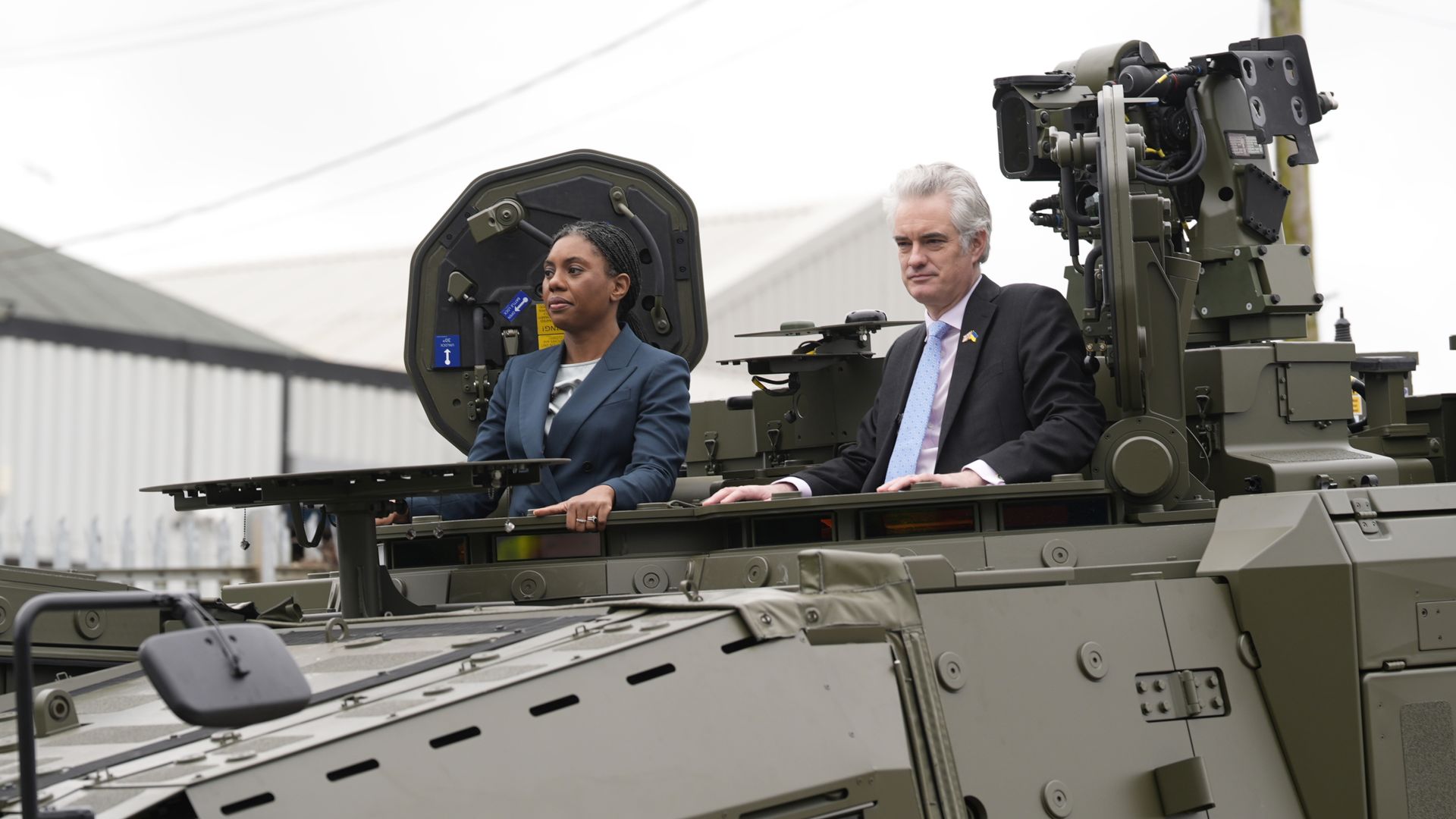
Kemi Badenoch has laid down a high-stakes challenge to her political rivals, demanding drastic cuts to welfare spending to fund a major boost in defense. The Shadow Prime Minister argues that Western security is under its greatest threat in generations, making a shift from the welfare state to a warfare state inevitable. However, an examination of the fiscal realities reveals that this rhetoric faces massive structural barriers. Swapping benefit checks for artillery shells is not a simple policy tweak. It requires dismantling a social safety net that millions rely on, creating an economic and political minefield that neither party is truly prepared to navigate.
The Mathematical Illusion of the Defense Swap
Politicians love clean, binary choices. Frame a debate as national survival versus bureaucratic bloat, and the public argument seems won. The opposition leader's latest policy push relies entirely on this framing, pitching a lean, secure state against an bloated, over-extended welfare apparatus.
The math, however, tells a different story.
The UK defense budget sits at roughly £54 billion, while total work and pensions spending surpasses £270 billion. On paper, taking from the larger pile to feed the smaller one looks easy. In reality, the vast majority of that welfare ledger is not spent on the politically unpopular categories often targeted in tabloid headlines. It goes to age-related expenditures.
The Pension Problem
- The Triple Lock: State pensions consume over £120 billion annually. This figure rises automatically every year due to statutory protections that no major party dares to touch.
- The Demographic Squeeze: An aging population means more claimants entering the system every month, naturally driving costs upward regardless of which party is in power.
- The Universal Credit Reality: The remaining welfare pot is heavily skewed toward disability benefits and in-work tax credits, which directly support low-wage workers in the private sector.
Cutting billions from this system to fund complex military procurement lines means targeting the elderly, the disabled, or the working poor. There is no hidden reservoir of waste large enough to fund modern warfare capabilities without causing immediate, widespread hardship.
Weaponizing Procurement in a Broken System
Even if a government successfully reclaimed tens of billions from the Department for Work and Pensions, throwing that cash at the Ministry of Defence would not instantly yield a stronger nation. The defense procurement apparatus is notoriously inefficient.
Historically, military equipment projects run years behind schedule and billions over budget. Adding more capital to a broken procurement pipeline simply inflates the cost of existing contracts rather than delivering new hardware to the front lines.
Modern defense needs have shifted. We are no longer just buying tanks and boots. True defense readiness in the current era demands massive investments in sovereign satellite networks, advanced drone manufacturing, undersea infrastructure security, and offensive cyber capabilities. These programs require highly specialized engineering talent and deep tech supply chains, neither of which can be bought overnight with redirected welfare funds.
The infrastructure to absorb and effectively spend an extra 1% or 2% of GDP on defense does not exist in a vacuum. It takes a decade of industrial strategy to build the shipyards, factories, and tech hubs capable of turning tax revenue into actual strategic deterrence.
The Hidden Economic Feedback Loop
The argument for cutting welfare to fund defense ignores how closely linked social spending is to macroeconomic stability. Welfare payments do not vanish into a black hole. They are immediately re-spent in the local economy.
When a low-income family receives support, that money goes directly to grocery stores, energy providers, and local services. It drives domestic demand.
Military spending operates on a completely different economic track. A significant portion of defense expenditure leaves the country entirely, flowing to global defense conglomerates based in the United States or continental Europe. Buying a fleet of American-made fighter jets or specialist missile components does very little to stimulate the economy of a struggling industrial town.
[Welfare vs Defense Economic Flow]
Welfare Spending -> Local Consumption -> Retail & Services -> Immediate Domestic Growth
Defense Spending -> Global Supply Chains -> Foreign Aerospace/Tech -> Long-Term Strategic Security
This creates a hidden fiscal drag. Stripping money from domestic welfare reduces local consumer spending, lowering VAT revenues and increasing economic stagnation in deprived areas. The government ends up with a slightly larger military but a weaker, more fragile tax base to support it over the long haul.
Political Posturing Meets Fiscal Reality
By forcing this debate, the opposition is playing a calculated game of political trapping. It forces rivals to defend welfare spending at a time when the public is deeply anxious about global instability and conflict. It frames any hesitation to boost military spending as a lack of patriotism or a failure of national resolve.
But governing requires choices, not slogans. The current administration is trapped between its own promises to maintain social stability and the undeniable geopolitical necessity of deterring foreign adversaries.
This tension cannot be resolved by speeches. It requires an honest admission that the peace dividend enjoyed since the end of the Cold War is officially over.
Paying for a modern military while maintaining a functional society cannot be achieved by cannibalizing one to feed the other. It requires structural tax reform, sustained productivity growth, or a dramatic expansion of the national debt.
Relying on the fantasy that defense can be funded solely by cutting welfare benefits avoids the real conversation. The true cost of national security in the coming decades will demand sacrifices that extend far beyond the welfare budget, impacting every sector of the economy and every tier of the taxpaying public.