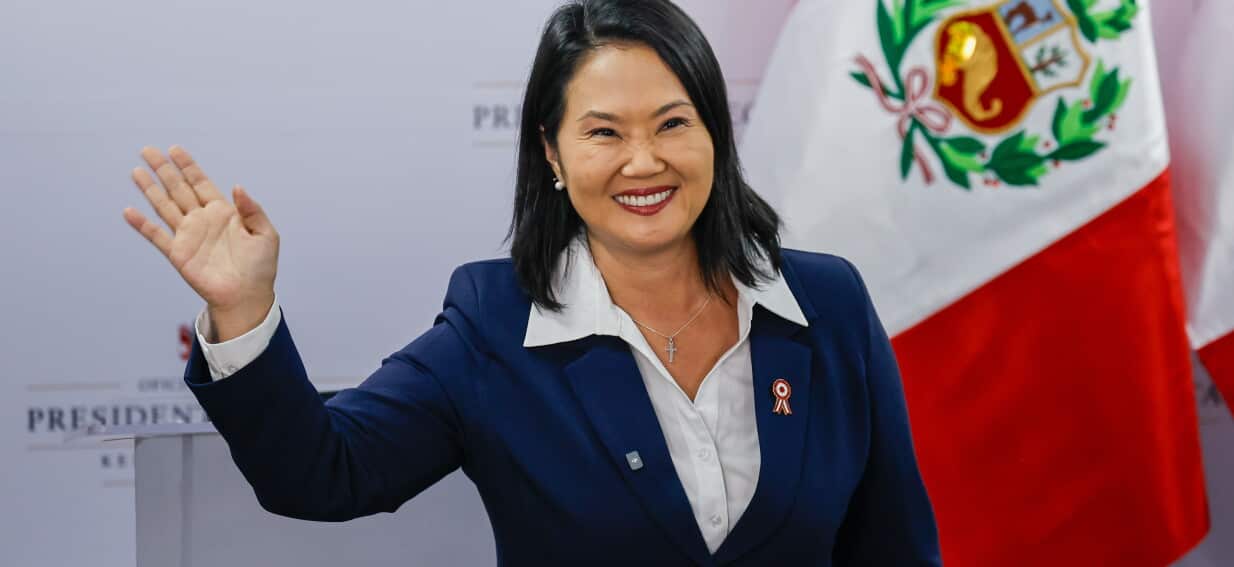
Peru has officially handed its presidency to Keiko Fujimori after a grueling, weeks-long ballot dispute that exposed the profound fracture of a nation. On July 3, 2026, the National Jury of Elections certified her victory in the June 7 runoff by a razor-thin margin of roughly 50,000 votes out of 18 million cast. Defeating her leftist rival Roberto Sánchez with 50.135 percent of the vote against his 49.865 percent, Fujimori secured the office on her fourth attempt. This narrow triumph is not a mandate for a unified nation but rather a reflection of survival in an environment defined by deep institutional decay and an unprecedented surge in violent organized crime.
The immediate challenge for Fujimori is surviving a political system that has chewed through eight presidents over the last decade. Sánchez, the political heir to imprisoned former President Pedro Castillo, has already claimed electoral fraud and refused to recognize the incoming government. With rural regions backing Sánchez and the capital region of Lima driving Fujimori over the line, the election maps present a country entirely split in two.
The Iron Fist Promise Meeting a Broken State
Voters did not hand Fujimori the presidency out of sudden affection for her family lineage. They did it because they are terrified.
Extortion rings, contract killings, and sophisticated transnational syndicates have paralyzed Peruvian small businesses and suburban neighborhoods over the past three years. Fujimori built her entire fourth campaign on an uncompromising law-and-order platform modeled directly on the heavy-handed tactics of her late father, Alberto Fujimori, who ruled the country in the 1990s.
Her specific policy proposals caught the public imagination because of their severity. She promised the immediate construction of four new high-security prisons, including a massive complex modeled after El Salvador’s notorious Center for the Confinement of Terrorism. Under her plan, inmates will be subjected to forced labor. Furthermore, she pledged to immediately deploy the military to the national borders to halt undocumented migration and accelerate deportations.
But implementing these hardline promises will clash with a complex administrative reality. The Peruvian national police force is riddled with internal systemic corruption, and the judicial system suffers from severe backlogs and political interference. Deploying soldiers to do the work of domestic police officers rarely goes smoothly. Historically, such measures result in mounting human rights complaints rather than a sustained reduction in neighborhood extortion.
The Invisible Hand of the Diaspora Ballot
The math behind Fujimori’s victory reveals how structural quirks, rather than a domestic consensus, decided the presidency.
During the initial phase of the vote count, Sánchez held a consistent lead. The domestic ballots from the southern Andes and rural agricultural sectors were processed first, creating a wave of momentum for his platform of wealth redistribution and police purges. His supporters were already celebrating in the plazas of Cusco and Puno.
Then the overseas ballots arrived.
More than a million Peruvians living abroad cast their votes, overwhelmingly favoring Fujimori’s market-oriented economic platform over Sánchez's leftist policies. This massive influx of external votes wiped out Sánchez’s domestic lead and pushed Fujimori ahead by less than one percentage point. It is a bitter irony for the domestic electorate. The decisive votes that cemented the next five years of Peruvian domestic policy came from citizens who do not have to live with the daily reality of Lima's security crisis or the economic inflation on the ground.
A Newly Minted Congress Designed for Gridlock
Even if Fujimori manages to suppress the immediate street protests organized by Sánchez, her legislative path is precarious.
The 2026 election marked Peru’s official return to a bicameral legislature for the first time in three decades. The new structure features a 60-seat Senate and a 130-seat Chamber of Deputies. While Fujimori’s Popular Force party secured the largest single bloc in both chambers, they are nowhere near a functional majority.
- Popular Force (Fujimori): 22 Senate seats, 41 Chamber seats
- Together for Peru (Sánchez): 15 Senate seats, 32 Chamber seats
- Centrist and Regionalist Blocs: Scattered across multiple fractured factions
To pass any legislation, including her flagship prison construction bills or emergency security funding, Fujimori must negotiate with erratic right-wing populists like Rafael López Aliaga or centrist factions that view her family history with immense skepticism. The return of the Senate means double the debate, double the committees, and double the opportunities for impeachment filings. In Peru, Congress has used its broad powers to unseat presidents with alarming regularity. Fujimori is taking the oath of office with a target on her back.
Washington and Beijing Watch the Andean Corridor
The international implications of this razor-thin victory stretch far beyond the borders of Lima. Peru remains the world's second-largest copper producer, making its stability vital for global supply chains.
Fujimori represents the preferred outcome for Washington policymakers who feared another left-wing nationalist administration disrupting mining concessions. The Trump administration is looking to secure strategic mineral supply lines and counter Chinese infrastructure holdings in South America, notably the massive deepwater port at Chancay. Fujimori’s defense of the existing market model offers a predictable partner for US investment initiatives.
However, she cannot afford to alienate Beijing. China is Peru’s top trading partner and the primary buyer of its mineral wealth. Fujimori will have to balance her tough right-wing regional alignment alongside figures like José Antonio Kast in Chile with the cold economic reality that Peru’s fiscal survival depends entirely on Chinese industrial demand.
When Fujimori walks into the Palacio de Gobierno on July 28, she enters a building haunted by her predecessors' failures. She has won the office she chased for fifteen years, but she inherits a nation that is angry, divided, and armed with a legislative mechanism designed to tear her down at the first sign of weakness.