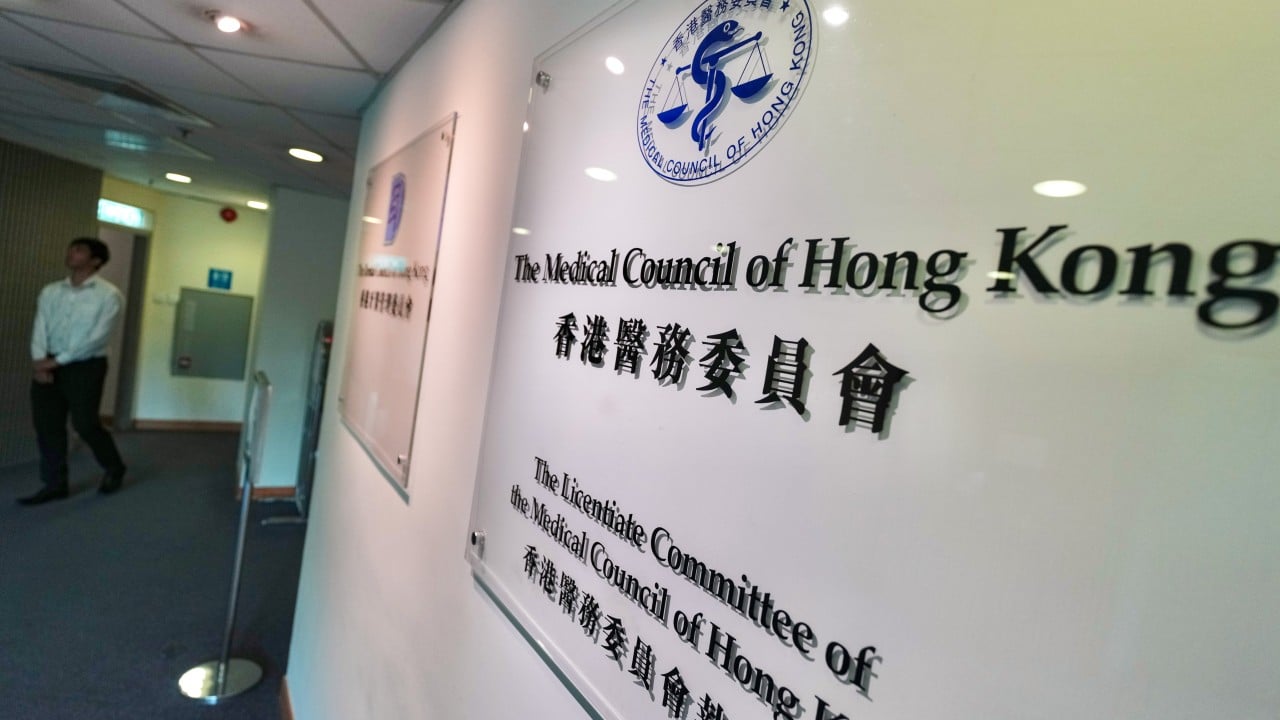
Hong Kong is altering the composition of its Medical Council by increasing the proportion of lay members to 31 percent and introducing strict time limits for disciplinary inquiries. The statutory body, long criticized for protecting its own, faces structural changes intended to accelerate a massive backlog of patient complaints. However, this adjustment is not a cure-all for the city's healthcare oversight crisis. By focusing heavily on the ratio of public representatives, the government addresses the appearance of protectionism while leaving the underlying, resource-starved administrative machinery untouched.
For decades, the Medical Council of Hong Kong operated as a closed shop. Doctors judged doctors. When a patient suffered from medical negligence, the wait for a disciplinary hearing regularly stretched beyond half a decade. This systemic delay caused immense distress for grieving families and allowed incompetent practitioners to continue practicing without restriction. The legislative push to inject more non-medical voices into this process aims to break the professional monopoly and restore public trust.
The core of the new framework rests on two pillars. First, the introduction of additional lay members to ensure independent scrutiny during complaints screening and full inquiry hearings. Second, the implementation of a statutory clock to force efficiency upon a notoriously sluggish bureaucracy.
The Numbers Game in Medical Governance
Altering percentages on a board room chart rarely fixes deep-seated cultural problems. Increasing lay representation to nearly a third of the Council looks impressive on a government press release, but the operational reality is far more complex.
The Council handles everything from initial complaints processing to preliminary investigations and formal disciplinary inquiries. Lay members are not full-time employees; they are civic-minded individuals, lawyers, and community leaders who volunteer their time. Forcing a higher quota of non-medical participants into every stage of the grievance pipeline creates an immediate logistical bottleneck. If a hearing cannot proceed without a specific ratio of lay members present, the entire schedule becomes hostage to the availability of a small pool of overstretched volunteers.
Medical disciplinary hearings are highly technical. They require parsing complex surgical notes, understanding drug interactions, and evaluating conflicting expert testimony. While lay members provide essential common-sense ethics and public accountability, they rely heavily on the guidance of legal advisors and independent medical experts. Increasing the number of lay votes changes the optics of the panel, but it does not inherently make the evaluation of clinical negligence any faster or more accurate.
The Illusion of the Statutory Clock
Imposing a strict timeline on medical inquiries sounds like an effective regulatory tool. It forces accountability. Yet, without a massive injection of administrative funding, legal staff, and full-time investigators, statutory deadlines often backfire.
Consider the mechanics of a standard medical complaint in Hong Kong. A patient submits an allegation. The Preliminary Investigation Committee must review the case, secure medical records from public or private hospitals, and obtain independent expert opinions. Hospitals frequently take months to release complete files. Independent doctors are often hesitant to write reports against their peers, leading to further delays.
When a hard legal deadline is imposed on an understaffed system, the quality of investigation drops. Investigators face a terrible choice. They can rush the gathering of evidence to meet the statutory clock, risking a flawed case that collapses during the formal inquiry, or they can dismiss ambiguous complaints early in the process to keep their dockets clear. Neither outcome serves the public interest.
The backlog is not driven by a lack of willpower; it is driven by a lack of infrastructure. The Medical Council relies on the Department of Health for its legal secretariat and administrative support. The government can mandate a 31 percent lay member ratio, but if the secretariat remains understaffed, the documents will simply sit on a different desk for six years.
Professional Autonomy Versus Public Accountability
The tension between the medical fraternity and the public is palpable. Local doctors argue that maintaining a professional majority is vital to protect the standards of the industry. They fear that an influx of lay members, potentially influenced by political agendas or emotional public sentiment, could lead to witch-hunts against physicians who take calculated clinical risks.
This argument misses the point of modern regulatory governance. The goal of lay representation is not to dictate clinical guidelines, but to ensure that when a doctor breaches those guidelines, the system reacts with transparency.
Under the old system, the perception of bias was overwhelming. When the public sees a tribunal comprised entirely of a doctor’s peers repeatedly handing down suspended sentences or simple warning letters for clear cases of negligence, faith in the entire healthcare ecosystem erodes. The shift toward 31 percent lay membership is a desperate attempt to salvage that reputation, yet it stops short of the international standard seen in countries like the United Kingdom, where the General Medical Council features an equal 50-50 split between medical and lay members.
What True Reform Demands
If Hong Kong wants to genuinely resolve its medical grievance crisis, it must look beyond basic quotas. True efficiency requires structural separation between the body that investigates complaints and the body that adjudicates them.
Currently, the Medical Council acts as investigator, prosecutor, and judge. This concentration of roles creates inherent conflicts of interest and slows down proceedings as the same small group of council members rotates through different committees. An independent medical ombudsman, completely separate from the Medical Council, should handle the initial intake and investigation of patient complaints.
A specialized, well-funded enforcement body could employ full-time clinical investigators and legal counsel to build cases rapidly. They would possess the statutory power to seize medical records immediately, eliminating the multi-month delays that currently plague the pre-hearing phase. Once a case is built, it would be presented before an independent tribunal.
Furthermore, the pool of lay members must be professionalized. Expecting part-time volunteers to manage hundreds of complex medical law cases per year is unsustainable. The city needs a dedicated academy of trained healthcare adjudicators who are fairly compensated for their time and thoroughly educated in medical ethics and administrative law.
The current legislative adjustments are a superficial patch on a failing vessel. Changing the ratio of faces around the tribunal table fixes the imagery of accountability while leaving the broken gears of the bureaucracy grinding to a halt behind closed doors. Patients will continue to wait years for justice until the administrative engine receives the structural overhaul and financial resources it actually requires.