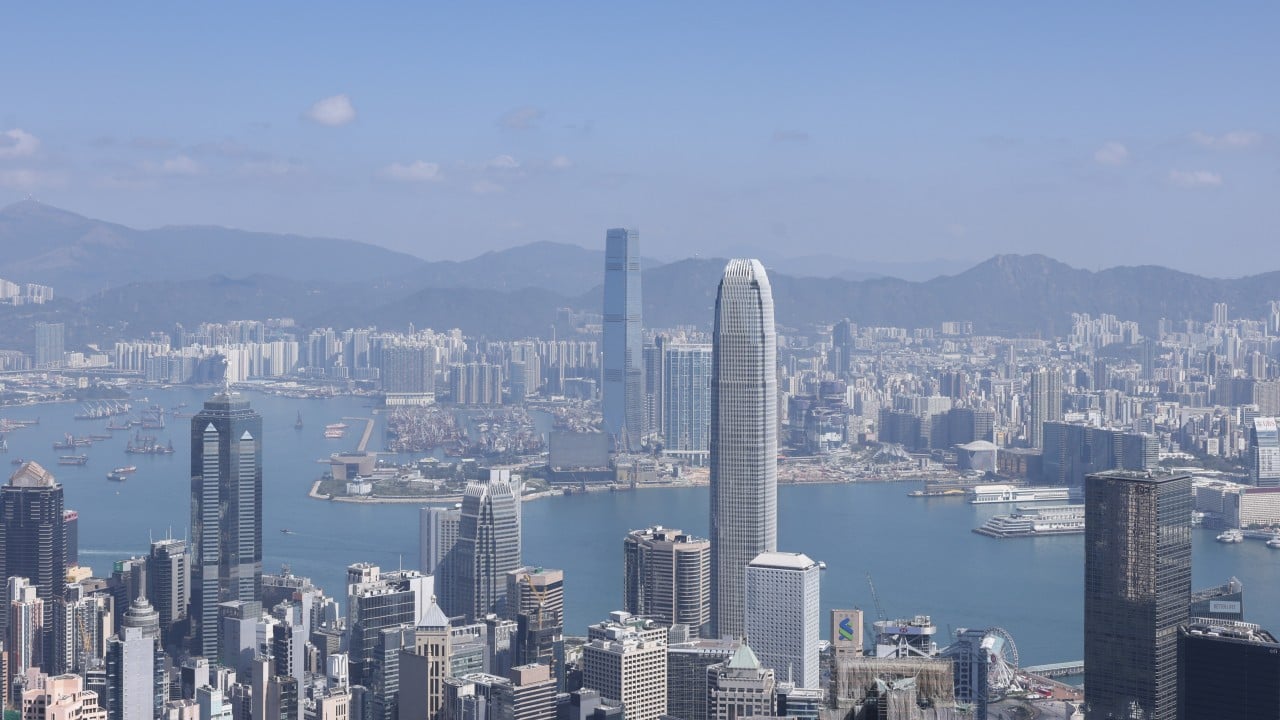
Hong Kong has officially dethroned Switzerland as the world’s premier cross-border wealth hub, hitting a historic $2.95 trillion in international assets under management. According to data from the Boston Consulting Group Global Wealth Report 2026, Hong Kong's 10.7% surge narrowly pushed it past Switzerland’s $2.94 trillion. This marks the first time in modern financial history that the Alpine safe haven has been unseated. The shift is permanent, structurally engineered, and deeply tied to Beijing's capital market machinery.
While mainstream financial headlines treat this as a simple tale of Asian economic triumph, the underlying reality is far more complex and hazardous. This milestone is not merely a story of competitive banking; it is the physical manifestation of a massive, systemic restructuring of global capital. Wealthy individuals are no longer just looking for yield or tax minimization. They are desperately scattering their fortunes across geographic fracture lines to insulate themselves from sanctions, Western regulatory overreach, and mounting geopolitical hostilities.
Behind Hong Kong's ascent lies a brutal truth: its new crown is entirely dependent on a single, authoritarian patron, exposing the world's largest wealth cache to unprecedented concentration risks.
The Engine of Southerly Capital Flows
To understand how Hong Kong managed to bridge the gap and surpass a sanctuary that has dominated private banking since the 18th century, look at the composition of the capital. More than 60% of the cross-border wealth booked in Hong Kong originates from mainland China.
This is not passive money. This capital is driven by a state-sanctioned, highly deliberate funnel. Over the past year, a massive revival in Hong Kong's initial public offering market, combined with aggressive deregulation by Hong Kong Exchanges and Clearing, created an offshore fundraising boom. Mainland tech giants and manufacturing leaders—particularly those dominating the electric vehicle and green energy supply chains—surged back to the territory to raise capital away from the prying eyes of Western regulators.
Simultaneously, the expansion of the Wealth Connect infrastructure provided a frictionless, regulated pipeline for high-net-worth mainland citizens to move liquid wealth south. Combined with a deliberate policy push by Hong Kong to authorize local banks to distribute digital assets and aggressively court family offices, the city transformed itself into an inescapable liquidity vortex.
By contrast, Switzerland’s traditional bread-and-butter client base—mature, generational wealth from Western Europe—grew at a modest 7.6%. European capital simply cannot match the velocity of mainland China's private wealth creation, which grew by 15% last year alone.
The Illusion of Stability vs. The Reality of Firewalls
The private banking elite in Zurich and Geneva are fond of pointing out that Switzerland remains a globally diversified hub, drawing assets from the Middle East, Latin America, and Europe. They argue that Hong Kong’s reliance on China makes it vulnerable.
That view is dangerously outdated. It misreads why billionaires are moving money today.
"We are witnessing a completely new phenomenon," notes Michael Pellman Rowland, an independent wealth manager based in Switzerland. "Historically, offshore money moved for tax optimization or corporate structuring. Post-pandemic, the primary driver is jurisdictional diversification."
The ultra-wealthy have watched Western governments freeze Russian assets, weaponize the SWIFT banking system, and increase scrutiny on elite capital. For an entrepreneur in Shenzhen or an industrialist in Mumbai, booking assets in Switzerland, the UK, or the US no longer feels safe. They view Western financial centers as a single, uniform jurisdiction subject to sudden political alignment.
Consequently, the global wealth architecture is splitting into two distinct, competing axes:
| Eastern Axis (Anchored by Hong Kong & Singapore) | Western Axis (Anchored by Switzerland, US, & UK) |
|---|---|
| Primarily serves Mainland Chinese, Indian, and Southeast Asian capital. | Primarily serves Western European, Middle Eastern, and Latin American wealth. |
| Fueled by emerging manufacturing dominance, tech platforms, and digital asset adoption. | Supported by legacy institutional stability, mature capital markets, and flight-to-safety flows. |
| Projected growth rate through 2030: 9% annually | Projected growth rate through 2030: 6% annually |
By positioning itself outside the direct legislative reach of Western sanction regimes, Hong Kong became the premier firewall. Wealthy individuals are willing to accept the regulatory oversight of Beijing if it protects them from the asset-seizure risks of Washington and Brussels.
The Deadly Concentrated Gamble
Despite the celebratory press releases coming from Hong Kong’s Financial Services Development Council, the city's new status carries a glaring, systemic vulnerability.
Switzerland became the world’s bank because it was neutral, diversified, and stable. Hong Kong is now the world’s bank because it is China’s gateway. If the Chinese mainland economy stumbles, or if Beijing decides to implement a sweeping regulatory crackdown on private wealth reminiscent of the common prosperity initiatives seen years ago, Hong Kong’s wealth management sector will take a direct hit.
Furthermore, the competition within the Eastern axis itself is fierce. Singapore managed $2.1 trillion in cross-border wealth last year and is growing at the same 9% annual clip as Hong Kong. Singapore does not have Hong Kong’s sheer scale, but it possesses genuine sovereignty and a highly diversified asset base drawn from across Southeast Asia, India, and increasingly, Europe.
If Hong Kong becomes too heavily integrated into the mainland's regulatory grid, it risks losing the very "offshore" status that made it attractive in the first place. The territory is walking an incredibly thin tightrope. It must remain sufficiently aligned with Beijing to keep the capital pipelines open, yet distinct enough to convince international investors that their wealth remains safe from sudden expropriation.
Switzerland’s Self-Inflicted Decline
The Swiss banking sector cannot blame its dethronement entirely on the rise of Asia. Much of its decline is self-inflicted.
For years, Swiss institutions rested on their laurels, relying on historical reputation while dragging their feet on financial technology and modern wealth structures. The forced merger of Credit Suisse into UBS shattered the illusion of flawless domestic stability. Now, UBS—which ironically remains a top wealth manager within Hong Kong and Singapore—is locked in an aggressive, protracted dispute with Swiss regulators over stringent new capital requirements designed to prevent another banking collapse.
This regulatory friction in Bern has broadcasted a message of domestic uncertainty to the rest of the world. At the exact moment global capital was looking for absolute predictability, the Swiss banking system looked fractured.
Meanwhile, secondary competitors like Dubai are weaponizing this European complacency. Moving quickly, the United Arab Emirates grew its cross-border wealth by 11% to reach $721 billion, actively siphoning off Middle Eastern and European capital that historically would have landed in Zurich.
The Shift Is Permanent
The gap between Hong Kong and Switzerland is projected to widen to nearly $600 billion by 2030. This is not a cyclical fluctuation driven by a temporary bull market in Asian equities. It is a permanent realignment of where the world's elite choose to safeguard their fortunes.
The era of a single, centralized Western haven for global wealth is dead. In its place stands a fractured financial system where capital clusters around political alliances. Hong Kong won the race to $2.9 trillion because it built the most efficient, high-volume pipeline to the fastest-growing pool of wealth on earth.
Private banks that fail to aggressively scale their presence along this Eastern axis will find themselves managing an dwindling pool of mature, stagnant European capital. The money has moved, the power has shifted, and Switzerland is not getting its crown back.