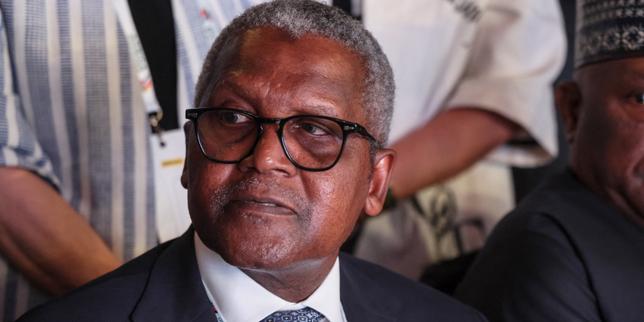
Aliko Dangote built a $20 billion refining monolith outside Lagos on a singular, audacious premise: ending Africa’s reliance on imported European fuel while dictating the terms of Atlantic basin energy trade. The 650,000-barrel-per-day facility represents a massive structural shift in how refined petroleum moves across the globe. By processing domestic crude into high-quality diesel, aviation fuel, and gasoline, Dangote is systematically choking off the historic, highly lucrative export routes long dominated by European merchants.
The immediate result is a localized supply shock that forces Western trading houses to recalculate their margins. Yet, behind the triumphant rhetoric of continental self-reliance lies a far more volatile economic battleground. The project does not merely insulate West Africa from foreign price shocks; it actively threatens the survival of aging European refineries that have used the Gulf of Guinea as a dumping ground for low-spec gasoline for generations.
To view this strictly as an African success story is to miss the broader macroeconomic warfare. Dangote is playing a high-stakes game of supply-chain chicken with international oil companies, state regulators, and deep-pocketed commodity trading desks in Geneva and London.
The Death of the West African Arbitrage
For decades, the global oil trade relied on a bizarre, highly inefficient loop. Nigeria, Africa’s largest crude producer, pumped millions of barrels of sweet, low-sulfur oil out of the ground, only to load it onto tankers bound for foreign shores. Because the country's state-owned refineries languished in terminal disrepair, Nigeria imported over 90 percent of its refined petroleum products.
European refiners, particularly those in the Amsterdam-Rotterdam-Antwerp hub, grew dependent on this structural deficit. They processed crude into gasoline, often blending it to meet weaker environmental standards permitted in West African markets, and shipped it right back. It was a license to print money.
The Lekki Free Zone facility disrupts this multi-billion-dollar merry-go-round.
[Traditional System]
Nigeria (Crude) ----> Europe (Refining & Blending) ----> Nigeria (Expensive Import)

[Dangote System]
Nigeria (Crude) ----> Dangote Lekki Refinery ----> West African Domestic Markets
When operating at scale, a single massive refinery introduces massive economies of scale that smaller, century-old European plants cannot match. By keeping the crude on the continent, Dangote eliminates the double-shipping costs, port fees, and insurance premiums that bloated the retail price of fuel for millions of African consumers. The arbitrage window that kept structural inefficiencies profitable for Western trading desks is slamming shut.
The Crude Supply Tug of War
Building a mega-refinery is an engineering triumph; securing a steady diet of feedstock in a hostile market is a geopolitical nightmare. Despite sits atop vast oil reserves, the facility spent its initial operational phases hunting for crude.
International oil companies operating in Nigeria preferred selling their equity crude to overseas buyers who settled accounts in US dollars without friction. The Nigerian National Petroleum Company Limited, which initially held a stake in the project, struggled to meet its supply commitments due to rampant pipeline vandalism, systemic corruption, and prior crude-for-fuel swap agreements that locked up its production capacity.
This forced the billionaire to do the unthinkable: import American WTI Midland crude.
Shipping Texas oil to a refinery in Nigeria highlights the deep fractures in the domestic supply chain. Local producers demanded international market premiums, while the refinery pushed for state-mandated interventions to guarantee domestic crude allocation at competitive rates. The state eventually stepped in to allow crude purchases in the local currency, the Naira, but this operational band-aid fails to address the underlying structural friction.
If international majors can make more money selling Nigerian Bonny Light to refiners in Rotterdam or India, they will use every legal and logistical loophole available to bypass Lekki. Dangote must constantly fight to defend his home-turf advantage against global market forces that view his refinery as an existential threat to established trade flows.
European Refiners Under Siege
The ripples of this shift extend far beyond the shores of Lagos. European refining infrastructure is old, heavily regulated, and facing stringent carbon-tax penalties. For years, their saving grace was the ability to export excess gasoline to West Africa, a market that absorbed their structural overproduction.
With that market evaporating, European operations face a bleak horizon.
The Survival Margin
Refinery economics turn entirely on utilization rates. A plant operating at 85 percent capacity quickly burns through its cash reserves due to high fixed overhead costs. As Dangote ramps up output of Euro-V compliant fuels—which meet strict emissions standards—he gains the capability to export clean fuels directly into Europe itself.
This reverses the historic trade dynamic. Instead of Europe exporting its surplus to Africa, Africa is positioned to export its surplus to Europe, undercutting local producers who are hamstrung by high energy costs and strict environmental compliance fees.
The Blending Crisis
The European regulatory environment creates a strange hypocrisy. While European nations enforce strict fuel quality standards domestically, their trading houses historically blended high-sulfur, high-benzene components into gasoline destined for African ports. These low-grade fuels, toxic to modern engines and public health, are now explicitly barred by revised West African import standards and the sheer presence of the new refinery's clean output.
Deprived of this regulatory blind spot, Western blending stations lose their primary mechanism for offloading substandard chemical components. The financial hit will likely force a consolidation wave across independent European refining assets, pushing marginal plants into permanent closure.
The Sovereign Monopoly Risk
While the project promises liberation from foreign economic exploitation, it introduces a dangerous domestic vulnerability: the creation of a private, heavily protected monopoly over a nation's lifeblood.
The line between state interest and corporate ambition is completely blurred. To ensure the refinery's commercial viability, the Nigerian government faces intense pressure to restrict competing imports through tariff walls and regulatory hurdles. When a single corporate entity controls the production of every liter of gasoline, diesel, and aviation fuel in a nation of over 200 million people, the public interest hangs in a delicate balance.
+-----------------------------------+-----------------------------------+
| Monopoly Advantages               | Sovereign Vulnerabilities         |
+-----------------------------------+-----------------------------------+
| - Drastic reduction in FX drain   | - Total dependence on one plant   |
| - Domestic price predictability   | - Single point of labor/infra risk|
| - Localized industrial job growth | - Corporate capture of regulation |
+-----------------------------------+-----------------------------------+
If the refinery experiences an extended operational shutdown, a major fire, or a catastrophic technical failure, the entire West African transport architecture risks grinding to an immediate halt. There is no fallback option. The state-owned refineries remain hollowed-out monuments to mismanagement, meaning the country has effectively traded dependence on a cartel of foreign traders for dependence on a single domestic tycoon.
The Currency Conundrum
The ultimate metric of success for this industrial experiment is not measured in barrels per day, but in foreign exchange conservation. Nigeria's chronic economic instability stems directly from its defense of the Naira against a constant bleed of US dollars used to pay for fuel imports.
Processing crude locally alters this balance sheet. By eliminating the need to source billions of dollars every month for fuel tenders, the central bank frees up liquidity to support other critical sectors of the economy. However, the internal math of the refinery requires careful management. The facility carries immense dollar-denominated debt obligations from its construction phase.
To service these loans, the operation must generate dollar revenues, which naturally incentivizes exporting premium products to international buyers rather than selling them cheaply to price-sensitive domestic consumers. The tension between maximizing corporate yield on the global market and providing affordable energy to the local population remains an unresolved structural flaw.
The High Cost of Energy Independence
The global energy transition adds an ironic layer of time-bound pressure to the entire enterprise. As Western economies attempt to transition toward electrification and biofuels, the lifetime value of traditional fossil fuel infrastructure faces a definitive ceiling.
Dangote is making a massive, capital-intensive bet on hydrocarbons at the twilight of the oil age.
This gamble works because Africa’s demographic expansion and urbanization curve will drive an exponential increase in fossil fuel demand for the next three to four decades, completely decoupled from Western decarbonization timelines. The refinery is built for a continental reality where energy access and cost trumps climate policy every single time.
The true legacy of this project will not be the salvation of Europe’s balance sheets or the preservation of its failing industrial base. It is the calculated, aggressive reclamation of an internal African market by an African industrial empire, executed with the cold-blooded efficiency of global capitalism. The era of cheap, unregulated Western fuel dumping in West Africa is officially over, and the international market must now adapt to a reality where the terms of trade are dictated from Lagos, not London.