The bill has finally arrived for the most ambitious—and perhaps most ill-timed—media marriage in modern history. Warner Bros. Discovery (WBD) recently reported a staggering $2.9 billion quarterly loss, a figure that serves as a cold bucket of water for those still believing in the magic of "scale" within the streaming era. While the market often treats these earnings reports as temporary turbulence, this specific shortfall exposes a foundational rot in the logic that brought Discovery and WarnerMedia together under one roof.
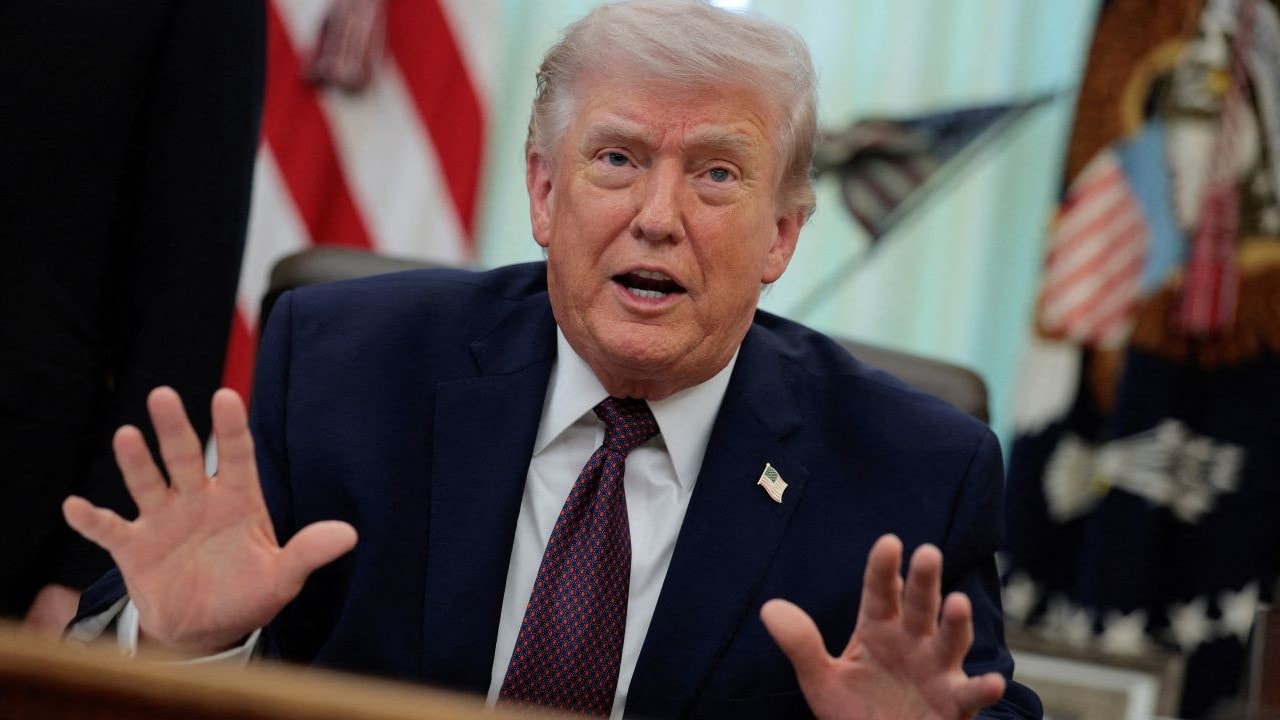
Most of this massive loss stems from a $2.1 billion write-down of intangible assets. In plain English, the company admitted that its television networks and film libraries are worth significantly less than they were when the deal closed. David Zaslav, the man tasked with steering this ship through a storm of debt, is finding that cutting costs is far easier than building a sustainable future in a world that has moved past the linear bundle. The $2.9 billion isn't just a number on a balance sheet; it is a confession.
The High Price of Goodwill and Bad Timing
When AT&T spun off WarnerMedia to merge with Discovery, the projected benefits were built on a world that no longer exists. The architects of the deal assumed that the steady cash flow from cable channels like CNN, TNT, and TBS would bankroll the expensive pivot to streaming. They were wrong. The "cord-cutting" phenomenon didn't just continue; it accelerated into a mass exodus.
The $2.1 billion impairment charge is a mathematical acknowledgment that the "goodwill" and brand value of these networks have evaporated. Investors were promised a lean, mean streaming machine. Instead, they inherited a debt-heavy conglomerate struggling to justify its existence to advertisers who are moving their budgets to Google, Meta, and Netflix.
The debt remains the elephant in the room. WBD is currently carrying approximately $47 billion in gross debt. While the company has been aggressive in paying down billions since the merger, the interest payments alone act as a massive drag on operations. It is a treadmill that never stops. To pay the debt, they must cut content. To attract subscribers, they need content. This is the paradox that keeps Zaslav awake at night.
The Content Fire Sale
To bridge the gap, WBD has turned to a strategy that would have been unthinkable five years ago: selling the family silver. We have seen the company license high-profile HBO originals to Netflix, its primary competitor. Shows like Insecure, Band of Brothers, and Six Feet Under are now helping the "enemy" retain subscribers.
This is a short-term survival tactic disguised as "platform agnostic" distribution. By licensing these titles, WBD gets an immediate cash infusion to satisfy creditors, but it erodes the exclusive value of the Max streaming service. Why pay for Max if the best of HBO eventually migrates to the service you already have? It is a tactical win but a strategic retreat.
The restructuring hasn't stopped at licensing. We’ve seen the outright cancellation of nearly finished projects like Batgirl and Coyote vs. Acme for tax write-offs. This "accounting-first" approach to creativity has damaged the company's relationship with talent. Hollywood is a small town built on egos and long memories. When you treat a $90 million film as a rounding error on a tax return, directors and actors notice. They start taking their best ideas to Apple or Sony instead.
The NBA Sized Hole in the Strategy
The most immediate threat to the WBD ecosystem isn't just a lack of new movies; it's the potential loss of the NBA. For decades, live sports have been the "glue" holding the cable bundle together. TNT’s Inside the NBA is widely considered the gold standard of sports broadcasting. Losing those rights would be catastrophic for the company’s leverage with cable providers.
Without the NBA, TNT becomes just another channel filled with procedural reruns and movies you’ve already seen. The carriage fees—the money cable companies pay to carry the channel—would likely plummet. This creates a domino effect. Lower fees mean less money for high-end scripted content, which leads to fewer subscribers, which leads to more losses.
Zaslav famously said a few years ago that the company "didn't have to have the NBA." That comment may go down as one of the most expensive blunders in sports media history. It signaled to the league that WBD was looking to haggle, allowing NBC and Amazon to swoop in with aggressive, massive offers that WBD is now desperately trying to match in court.
The Streaming Profitability Myth
Management has been beating the drum of "streaming profitability," claiming that the D2C (Direct-to-Consumer) segment is finally in the black. However, this profitability is often achieved through accounting maneuvers and massive marketing pullbacks rather than genuine growth. If you stop spending money to acquire customers, your margins look better for a quarter or two, but your "churn" eventually catches up to you.
The rebranding of HBO Max to simply Max was intended to broaden the appeal, stripping away the "prestige" label to make room for Discovery’s reality TV catalog. The result has been a muddled brand identity. Is it a home for cinema? Or is it a place to watch 90-day engagements? By trying to be everything to everyone, Max risks becoming nothing to anyone.
The reality is that streaming is a scale game where only two or three players will likely survive with healthy margins. Netflix is already there. Disney is brute-forcing its way to the finish line. WBD is stuck in the middle, lacking the global reach of its rivals and the specialized niche of a smaller player.
The Advertising Decline
Compounding the merger's misery is the secular decline in linear advertising. Traditional TV ads were once the "golden goose." Now, they are dying. Advertisers are terrified of the lack of measurement and the aging demographics of cable viewers. As WBD's networks lose viewers, the rates they can charge for a 30-second spot drop.
This creates a revenue vacuum. The company hoped that the ad-supported tier of Max would fill this hole. While ad-tier subscribers are growing, the revenue per user hasn't yet matched what they used to get from a standard cable subscriber. It is an exchange of "analog dollars for digital dimes," a phrase that has haunted the media industry for a decade and shows no signs of losing its relevance.
The Structural Flaw
The core issue isn't just bad management; it’s a structural flaw in the merger’s thesis. The idea was that "Content is King." If you own the biggest library, you win. But in 2026, Distribution is King.
WBD owns the content, but they don't own the pipes. They don't own the operating system on your phone, and they don't own the hardware of your smart TV. They are at the mercy of Amazon, Apple, and Google, who control the gateways to the consumer. These tech giants don't need to make a profit on streaming; they use it as a loss leader to sell prime memberships or phones. WBD doesn't have that luxury. Every dollar spent on a House of the Dragon episode has to eventually return a dollar in profit, or the math fails.
Operational Reality Check
For the company to survive in its current form, several things must happen simultaneously. First, the debt must be aggressively refinanced or paid down to a level where interest doesn't consume all free cash flow. Second, the company must find a way to stay in the live sports business without overpaying to the point of bankruptcy. Third, they must stop the brain drain of creative talent leaving for platforms that won't delete their work for a tax credit.
If these conditions aren't met, the only logical end is a further breakup of the company. We are already hearing whispers of spinning off the streaming service and the film studio from the decaying "legacy" cable networks. This would allow the high-growth assets to trade at a higher multiple while the cable networks are harvested for cash until they eventually go dark.
The $2.9 billion loss is a warning shot. It tells us that the era of the "Mega-Merger" as a solution to digital disruption is over. You cannot fix a broken business model by simply adding more broken pieces to it. The focus must shift from "more" to "better."
The industry is watching WBD not as a leader, but as a cautionary tale. If a library that includes Batman, Harry Potter, Game of Thrones, and CNN can't figure out the economics of 2026, the problem isn't the movies. The problem is the machine. Survival now depends on whether management can stop acting like debt collectors and start acting like a media company again. The window to make that transition is closing fast, and the market’s patience has already run out.
Stop looking at the quarterly losses as a temporary setback. Start looking at them as the cost of a failed strategy that is now being dismantled in real-time.