Cuba is currently enduring its most severe food security crisis in thirty years, a direct result of a crumbling energy grid that has effectively severed the link between the field and the dinner table. While external trade restrictions create a suffocating frame, the immediate reality for Cuban farmers is a lack of fuel to power tractors, pump water, and transport perishable harvests. This isn't just a story about scarcity. It is a story of a systemic breakdown where every gallon of diesel is a choice between keeping the lights on in Havana or preventing crops from rotting in the soil of Artemisa.
The Cold Chain Collapse
Agricultural production does not end at the harvest. In a modern economy, it begins there. For Cuba, the inability to maintain a consistent cold chain—the series of refrigerated transport and storage facilities required to keep food fresh—has turned successful harvests into wasted effort. When the power grid fails, the industrial freezers in state distribution centers go quiet.
Farmers who manage to grow tomatoes or peppers often find themselves watching the produce liquefy in the heat because the trucks meant to collect them have no fuel, or the processing plants lack the electricity to can or freeze the surplus. This creates a massive internal inefficiency. Even when the weather is favorable and the soil is productive, the logistical skeletal system of the country is too weak to carry the weight of the nation's caloric needs.
The Diesel Hierarchy
In a command economy facing an energy blockade, diesel is more than fuel. It is the primary currency of survival. The Cuban government is forced to prioritize which sectors receive the dwindling supply of imported oil. Usually, the list starts with the national power grid (the SEN) and vital services like hospitals. Agriculture, despite being the bedrock of national stability, often falls further down the list.
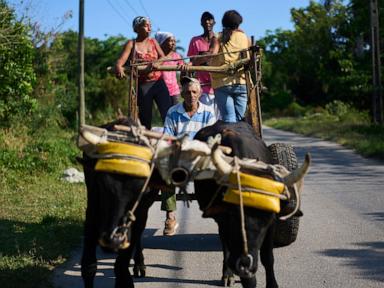
The result is a return to pre-industrial methods by necessity rather than choice. Oxen have replaced tractors in many provinces. While this reduces dependency on imported fuel, it drastically lowers the yield per hectare and increases the physical toll on a labor force that is already aging and shrinking. An ox cannot plow with the speed or depth of a diesel engine. The math of hunger is simple: less power equals less food.
The Fertilizer Gap and Soil Exhaustion
The energy crisis extends into the very chemistry of the dirt. Most modern fertilizers are petroleum-based or require immense amounts of energy to produce through the Haber-Bosch process. Since Cuba cannot produce these at scale and struggles to import them due to financial restrictions, the soil is being mined of its nutrients without replenishment.
- Nitrogen Scarcity: Without synthetic urea, crop yields for staples like corn and rice have plummeted.
- Pesticide Shortages: Fungal outbreaks and insect infestations that could be managed with a single spray now wipe out entire fields.
- Irrigation Failure: Electrical pumps that draw from underground aquifers remain idle during the peak of the dry season, leaving crops to wither.
This isn't just a temporary dip in production. It is a long-term degradation of the land's carrying capacity. When a farmer cannot find fertilizer, they plant more land to compensate for lower yields, but without fuel for machinery, planting more land is impossible. It is a closed loop of decline.
The Shadow Market and the Price of Scarcity
When the formal state distribution system—known as the Acopio—fails to provide fuel or fair prices, a parallel economy emerges. This shadow market is the only reason many Cubans are still eating, but it comes at a staggering cost.
Private farmers, who now hold more autonomy than in previous decades, are often forced to source fuel on the black market at ten times the official rate. These costs are passed directly to the consumer. In a country where the average state salary has been eroded by hyperinflation, a pound of pork or a bag of powdered milk can now cost a significant portion of a monthly wage.
The "blockade" isn't just a set of laws written in Washington; it is a physical reality that manifests in the dry fuel tanks of a delivery truck. But the internal friction of the Cuban bureaucracy also plays a role. Middlemen and state inspectors often create bottlenecks that are as restrictive as any shipping embargo. The farmers are caught between an external pressure that prevents imports and an internal structure that struggles to distribute what little is left.
Currency Disconnect
The recent "monetary unification" was intended to simplify the economy but instead accelerated the crisis. Farmers need "hard currency" (USD or Euro) to buy imported seeds and tools, but they are often paid by the state in Cuban Pesos (CUP). This currency mismatch makes it nearly impossible for a small-scale producer to reinvest in their farm.
If a tractor part breaks, it cannot be bought with Pesos. It must be imported, often through third countries at a premium. Without access to the international banking system, these transactions are convoluted, expensive, and slow. The tractor sits idle. The field remains unplanted. The market stalls remain empty.
The Decentralization Gamble
In an attempt to stave off total collapse, the Cuban government has begun allowing more private cooperatives and small businesses (SMEs). This is a radical shift for a state that historically controlled every aspect of the food chain.
However, decentralization without resources is merely shifting the burden of failure. Giving a farmer the right to sell their own produce doesn't help if there is no fuel to get that produce to the city. The private sector is more efficient at finding workarounds, but it cannot manufacture diesel out of thin air.
We are seeing a bifurcated Cuba. On one side, the tourist enclaves and high-end restaurants in Havana manage to secure food through specialized supply lines. On the other, the rural population and the urban poor are left to navigate a landscape of "not today" and "maybe next week."
The Geopolitical Stranglehold
It is impossible to analyze the Cuban food crisis without acknowledging the impact of the U.S. embargo, specifically the designation of Cuba as a State Sponsor of Terrorism. This label is a financial guillotine. It prevents international banks from processing payments involving Cuba, fearing massive fines from the U.S. Treasury.
Even when Cuba finds a willing seller of grain or oil, the logistics of payment become a nightmare. Ships that dock in Cuba are often barred from U.S. ports for months, leading many shipping lines to simply refuse the route. This "shipping premium" means Cuba pays more for a ton of rice than almost any other nation in the Caribbean.
The Russian and Venezuelan Factor
Historically, Cuba relied on subsidized oil from Venezuela to keep the lights on. As Venezuela's own economy cratered, that lifeline frayed. Efforts to pivot back toward Russia have yielded some fuel shipments, but Moscow is preoccupied with its own conflicts and is no longer interested in the "charity" exports of the Soviet era. Everything now comes with a price tag, and Cuba is out of cash.
The Reality on the Ground
Walk through a market in Central Havana and the evidence of the energy-food nexus is everywhere. You will see shelves with nothing but bottles of rum and bags of salt. The fresh produce section, if it exists, features wilted greens and small, scarred tubers that would have been rejected by wholesalers five years ago.
The farmers aren't lazy. They are some of the most resourceful innovators on the planet, capable of keeping 1950s Chevrolets running with MacGyvered parts and sheer will. But you cannot MacGyver calories. You cannot "innovate" your way out of a total lack of phosphorus in the soil.
The crisis has triggered the largest migration wave in Cuban history. The people leaving are often the youngest and strongest—the very people needed to work the land. This demographic drain creates a secondary crisis: a labor shortage that ensures even if fuel were to arrive tomorrow, there might not be enough hands to plant the seeds.
The Immediate Path Forward
To prevent a full-scale humanitarian disaster, the focus must shift from political rhetoric to technical logistics. The "fix" is not a single policy but a brutal series of requirements:
- Direct Fuel Allocation: Agriculture must be moved to the top of the energy hierarchy, above even residential comfort.
- Micro-Grid Investment: Moving away from the centralized national grid toward solar-powered irrigation and refrigeration at the farm level.
- Sanction Carve-outs: International pressure to ensure that "humanitarian exemptions" for food and medicine actually function in the banking sector.
- Price Liberalization: Allowing the market to dictate food prices to ensure farmers can cover the true cost of production, while providing targeted subsidies to the most vulnerable.
Without these shifts, the cycle of decay will continue. The soil will grow thinner, the oxen will grow older, and the dinner tables in Havana will remain empty. The energy blockade is a reality, but the response to it has been a slow-motion collision with the inevitable. Cuba is a country running on fumes, and the fumes are finally running out.
The only way to feed the nation is to acknowledge that a tractor without diesel is just a very expensive lawn ornament.