For decades, conservation biology operated on an unspoken hierarchy of charisma. If an animal possessed big eyes, fur, or a backbone that resonated with human empathy, it commanded millions in funding. If it was an invertebrate weighing as much as a house mouse, it usually vanished into the administrative dark.
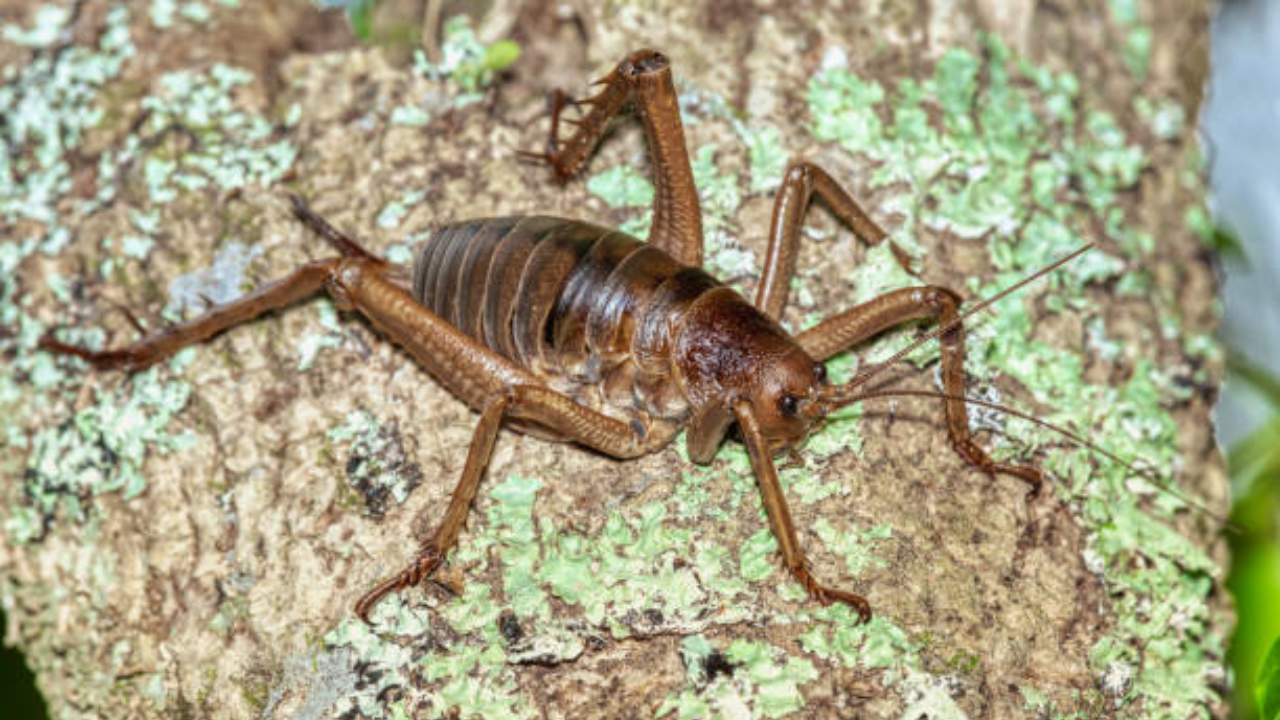
Yet a quiet, industrial scale intervention in the South Pacific has rewritten the rules of invertebrate recovery. Over a span of fifteen years, a coalition centered around Auckland Zoo and New Zealand’s Department of Conservation bred and released more than 11,000 wētāpunga—the world’s heaviest insect—across ten distinct island and mainland sanctuary sites. The recent publication of this multi-year blueprint confirms what field biologists long doubted: you can manufacture a population crash reversal for an endangered bug, provided you are willing to completely rethink captivity.
To understand why 11,000 releases matter, one has to look backward into an ecological vacuum. Before mammalian predators arrived in the archipelago, wētāpunga occupied a niche roughly analogous to small rodents. They were ancient browsers, older than the tuatara, chewing their way through the dark understory of native forests. Then came the introduction of rats, cats, and stoats. By the latter half of the twentieth century, these ancient orthopterans had been systematically wiped off the mainland. They held on in a solitary stronghold: Te Hauturu-o-Toi, also known as Little Barrier Island.
By 2004, the eradication of Pacific rats from Hauturu allowed the wild population to stutter upward from a meager 78 recorded individuals to nearly 200. But nature moves slowly when a species has been cornered against extinction. Waiting for the island's source population to naturally overflow into the rest of New Zealand was a luxury the ecosystem did not possess. A single catastrophic fire or disease outbreak on Hauturu would have erased the species entirely.
Captive intervention was mandatory. It was also initially a logistical nightmare.
Early husbandry models treated individual giant wētā like rare museum artifacts. Technicians reared them in isolation to prevent cannibalism and track meticulous metrics. The strategy produced healthy specimens, but the output was pitifully low. Conservation math is unforgiving; if you need to flood a safe island with thousands of founders to establish a self-sustaining gene pool, solitary housing will fail against the sheer velocity of habitat loss.
The turning point came when Auckland Zoo flipped its operational philosophy from boutique care to high density management. Researchers discovered that housing juvenile wētāpunga in communal mesh cages—specifically calibrated to twenty insects per enclosure—transformed the program.
There was an immediate evolutionary hazard to this approach. Wētāpunga are not naturally communal. When mixed-age groups shared a cage, the larger nymphs inevitably treated their smaller cage mates as a high protein snack. The solution required ruthless synchronization. Keepers had to isolate egg clutches so that all nymphs hatched within days of each other. Uniform size classes eliminated the predation window. Survival rates inside the breeding rooms skyrocketed to eighty percent.
Dietary optimization mirrored this industrial shift. While wild wētāpunga graze on the large leaves of karaka, kohekohe, and māhoe, captive rearing demanded heavy caloric density to fuel rapid growth. Technicians supplemented native foliage with fish flakes, providing a concentrated protein source that artificially accelerated the insects through their eleven grueling molting stages.
Transporting the harvest required equal ingenuity. Thousands of sub-adults were packed not into sterile medical containers, but inside hollow bamboo tubes tied securely to the branches of pest-free sanctuary islands. Younger nymphs were scattered directly onto trees during the cover of darkness. Field teams recorded zero transit deaths across dozens of individual translocations.
Today, the fruit of this labor is visible across ecosystems like Tiritiri Matangi and Motuora islands, where multi-generation colonies now complete their life cycles entirely in the wild. The species' formal conservation status has shifted from endangered upward to increasing.
Yet, institutional triumphalism obscures a stubborn biological reality. The newly established populations remain precarious tenants. Many of the designated release sites, particularly fenced mainland sanctuaries, still harbor introduced mice. Whether a giant insect can coexist alongside low density murine predators over evolutionary time scales remains an open question. Genetic stagnation is another silent clock ticking in the background; most captive lines trace their lineage back to a tiny handful of original founders from Hauturu. Without ongoing genetic mixing, inbreeding depression could quietly unravel what fifteen years of intensive zoo management achieved.
The blueprint has been written. The mechanics of mass rearing heavy insects are no longer a mystery. The real test is whether these engineered populations can hold their ground when the human scaffolding is finally pulled away.