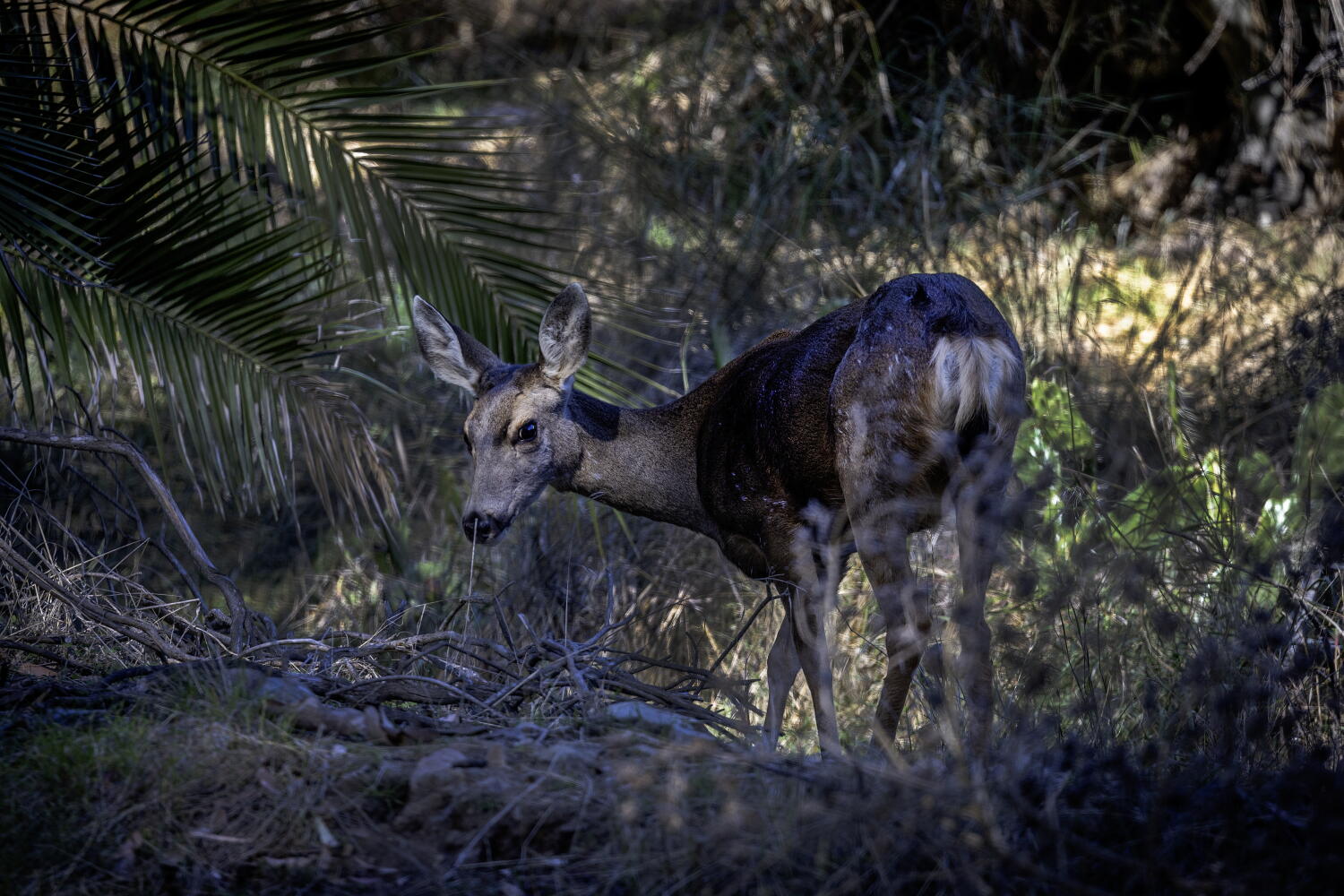
The helicopter blades start beating against the marine layer before dawn. Down below, across twenty-two miles of rugged canyons and wind-scoured ridges, a quiet, polarizing ecological execution is underway. The systematic elimination of mule deer on Santa Catalina Island has officially begun. Wildlife managers and conservation authorities are not pretending this is a catch-and-release operation or a gentle relocation project. It is an active eradication program carried out by professional sharpshooters, designed to purge a non-native species from a fragile island ecosystem that can no longer sustain the biological weight of an introduced ungulate population.
For decades, the presence of mule deer on Catalina was treated as a picturesque quirk of the landscape. Tourists snapped photographs of bucks grazing near the rugged cliffs of Avalon, and hunting clubs managed populations with steady harvests. But biology does not negotiate with sentimentality. The deer were introduced to the island a century ago, stripped of natural apex predators like mountain lions, and left to multiply in an environment with finite resources. Now, the bill has come due. Rare endemic plants teeter on the edge of extinction, native scrub is chewed down to bare dirt, and conservation biologists point to a stark reality. Either the deer vanish, or the unique biodiversity of the island vanishes permanently.
The Anatomy of an Island Invasion
To understand why sharpshooters are currently scanning Catalina ridgelines from the air, one must look at how island ecosystems function. Islands are closed biological systems. Unlike the mainland, where animals can migrate away from depleted resources or face population checks from a vast matrix of predators, diseases, and human barriers, an island acts like a pressure cooker.
Mule deer are not native to Santa Catalina Island. Historical records indicate they were brought over in the early twentieth century to enhance recreational hunting opportunities. Without predators to control their numbers, the population surged. Deer are prolific browsers, and on an island where many plant species evolved in isolation without heavy browsing pressure, the results were catastrophic.
Endemic plants such as the Catalina mahogany and various local ironwood variants found themselves defenseless. Unlike mainland plants that developed sharp thorns, toxic secondary compounds, or rapid growth rates to survive heavy herbivory, island flora often lack these defense mechanisms. The deer consumed seedlings before they could mature, effectively halting natural forest and scrub regeneration.
When plant communities collapse, the soil follows. Without roots to anchor the steep, fire-prone slopes of the island, heavy seasonal rains trigger severe erosion. Topsoil washes into the Pacific, choking nearshore marine habitats, kelp forests, and sensitive coral communities. The presence of thousands of medium-sized hoofed mammals created a cascading ecological failure that threatened the entire island web of life.
Why Relocation Failed the Feasibility Test
Whenever a large-scale animal removal program is announced, the public reaction follows a predictable script. Social media fills with outrage. Petitions circulate demanding peaceful alternatives. Why not capture the deer and ship them to the California mainland? Why not use sterilization programs?
The answers lie in the brutal constraints of logistics, animal welfare, and state law.
Capturing and relocating wild mule deer sounds humane on paper, but in practice, it is a prolonged, terrifying ordeal for the animal. Deer are notoriously high-strung creatures with a severe vulnerability to capture myopathy. This stress-induced condition causes massive physiological damage, leading to sudden death long after the net has been removed or the crate opened. Transporting stressed wild animals across open ocean water and releasing them into unfamiliar mainland territory introduces massive vectors for disease transmission, including chronic wasting disease, which California wildlife agencies fiercely guard against.
Furthermore, mainland habitats are rarely empty. Introducing hundreds of stressed, disoriented island deer into established mainland herds creates intense territorial competition, starvation, and social collapse within existing populations. State wildlife regulations strictly prohibit dumping un-tested, wild ungulates into new regions for these exact reasons.
Contraception programs fared no better under analytical scrutiny. Immunocontraception requires repeated booster injections to maintain effectiveness over time. Doing this once in a controlled park setting is difficult; doing it across thousands of acres of vertical, roadless canyons with an agile, wild population of deer is practically impossible. Even if every single doe could be tracked and darted annually, the deer currently alive would continue to consume vegetation for another decade or more, giving the ecosystem no time to recover.
The conservation math leaves zero room for sentiment. When an invasive species reaches a density that threatens the fundamental integrity of a landscape, passive management ceases to be an option.
The Broader Battle for Ecological Restoration
Catalina is not an isolated anomaly. Across the globe, island restoration projects are forcing difficult conversations about the price of historical mistakes. From New Zealand to the Galapagos, conservationists have increasingly turned to radical, uncompromising eradication methods to save endemic species from total annihilation.
The primary contractor hired for the Catalina operation, Planet Technologies and specialized wildlife removal teams, utilizes aerial eradication techniques. While controversial, this method is statistically proven to be the most humane and efficient way to remove a large population quickly, minimizing the total duration of the project and reducing the prolonged suffering associated with trapping or slow-moving ground hunts. Quick, decisive action prevents the remaining animals from becoming wary, trap-smart, or hyper-vigilant, which ultimately drags out the eradication timeline.
The Catalina Island Conservancy faces an uphill public relations battle, but their mandate is clear. They are not managing a municipal park for aesthetic comfort; they are managing a designated sanctuary of rare biological heritage. If the deer remain, the Catalina Island fox, the Catalina Island shrew, and countless endemic insects and plants face a future of permanent deprivation.
The public often struggles to reconcile the cruelty of killing thousands of animals with the abstract necessity of saving an ecosystem. Yet, conservation is rarely a choice between good and bad. More often, it is a choice between bad and catastrophic.
What Happens When the Ridges Go Quiet
As the eradication program progresses through its scheduled phases, the landscape of Catalina Island will undergo a profound transformation. The immediate aftermath will look barren and stark. Carcasses managed under strict environmental protocols will disappear, and the human presence will eventually retreat from the backcountry.
What follows will be a slow, observable greening. Botanists expect to see dormant seed banks in the soil spring back to life after decades of suppression. Native shrubs will reclaim ridgelines where bare rock currently dominates. Streams will run clearer as sediment loads drop, and the delicate balance of native fauna will finally find breathing room.
The deer did not ask to be brought to Catalina a century ago. They simply did what evolution programmed them to do, eating, multiplying, and surviving in a place that offered them endless opportunity. But nature on an island is a zero-sum game. Every leaf eaten by an invasive deer was a leaf denied to an ancient, irreplaceable native ecosystem.
The helicopters will keep flying at dawn until the last canyon is cleared, and the silent recovery of the island will begin in earnest under the harsh light of biological reality.