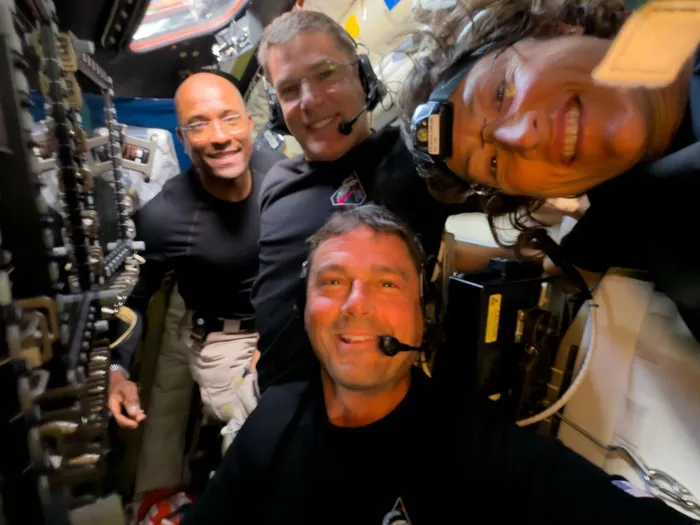
The capsule bobbing in the Atlantic or the Gulf of Mexico represents the final hurdle of a multi-billion dollar engineering feat. For the public watching the live stream, the moment the hatch opens and the astronauts wave is the victory lap. For the recovery teams and the flight surgeons, it is the start of a precarious medical intervention. These crews have just spent months in a microgravity environment that systematically deconstructs the human body, and the transition back to a 1G environment is less of a homecoming and more of a physical assault.
When a spacecraft splashes down, the occupants are not merely tired. They are physiologically fragile. The vestibular system is haywire, the heart has shrunk, and the bones have leached minerals into the bloodstream. The "successful splashdown" headline ignores the reality that for the first hour on Earth, these explorers are effectively incapacitated.
The Physics of the Impact
Splashdown is often described as a soft landing, but that is a relative term. Even with modern parachute clusters reducing velocity to roughly 15 to 20 miles per hour, hitting the water is a violent deceleration. The capsule hits the ocean surface with a force that can reach several Gs, depending on the angle of the waves and the wind speed.
The immediate concern for recovery teams is not just the health of the crew, but the integrity of the capsule. These vehicles are scorched, having endured temperatures of 3,500 degrees Fahrenheit during atmospheric entry. They are also toxic. The thrusters use hypergolic propellants—hydrazine and nitrogen tetroxide—which are lethal if inhaled. Before a single person can exit that spacecraft, "sniffers" must clear the exterior of any lingering chemical plumes. The crew remains sealed inside a hot, rocking tin can, often battling intense nausea as the ocean swells fight against their compromised inner ears.
The Body in Revolt
Inside the capsule, the astronauts are experiencing the "gravity tax." While in orbit, their fluid shifted toward their heads, giving them puffy faces and spindly legs. Now, gravity pulls that fluid back down. Their hearts, which grew lazy because they didn't have to pump blood "upward" against gravity, struggle to keep oxygen flowing to the brain. If an astronaut stands up too quickly, they risk a total blackout—a condition known as orthostatic intolerance.
This is why you see them carried out on stretchers or assisted into reclining chairs. It isn't for the cameras. It is because their blood pressure is in a state of collapse.
Vestibular Chaos and Sensory Mismatch
The most immediate and grueling challenge is the vestibular system. Your inner ear tells you which way is up, but after months in space, the brain learns to ignore these signals. Upon reentry, the brain is suddenly bombarded with data it no longer knows how to process. Turning one's head even an inch can trigger a sensation of the room spinning violently.
Many astronauts describe the feeling of their skin being pulled toward the floor by lead weights. Their clothes feel heavy. Their watches feel like dumbbells. The simple act of holding up their own heads becomes a grueling muscular workout.
The Logistics of the Recovery Fleet
A successful recovery requires a small navy. We are talking about a primary recovery ship, fast-response boats, and a suite of helicopters. The "Go Navigator" or similar recovery vessels must be positioned with surgical precision.
The process follows a strict sequence:
- The Hazard Check: Swimmers jump into the water to inspect the capsule for leaks and attach flotation collars to ensure the craft stays upright.
- The Capsule Lift: A massive crane winches the 20,000-pound spacecraft onto the deck of the ship.
- The Extraction: Once the atmosphere is stabilized and the hatch is blown, the medical teams move in.
There is an invisible clock ticking. The longer a crew sits in a bobbing capsule, the higher the risk of severe motion sickness, which complicates their medical stabilization. The goal is to get them into a controlled medical environment within thirty minutes of the hardware hitting the deck.
The Overlooked Infrastructure of Reentry
We focus on the rocket, but the heat shield is the true protagonist of the return journey. Modern ablative shields are designed to char and erode, carrying the heat away from the cabin. However, these shields are single-use and represent one of the highest costs in the refurbishment cycle of reusable spacecraft.
If the shield develops a "cold soak" or a localized fracture during the transition from the vacuum of space to the friction of the atmosphere, the result is catastrophic. The investigative reality of aerospace is that we are always one microscopic crack away from a disaster. Every successful splashdown is a testament to the rigorous NDT (Non-Destructive Testing) performed months before the launch even happened.
The Problem of Sea State
The biggest variable is the weather. NASA and private contractors like SpaceX have strict "launch commit" and "landing commit" criteria based on wave height. If the waves are too high, the recovery cranes cannot safely lift the capsule without it swinging and smashing against the hull of the ship. This has led to scenarios where crews are forced to stay in orbit for several extra days, waiting for a "window" of calm water. This delay isn't just an inconvenience; it puts additional stress on the life support consumables and the mental state of the crew.
The Psychological Reentry
There is a documented phenomenon among long-duration flyers where the return to Earth feels alien. The smells of the ocean, the feeling of wind, and the sheer noise of the planet are overwhelming. After months of hearing only the hum of fans and the beeps of computers, the "real world" is a sensory assault.
Analysts often overlook the transition of the "bird" itself. The capsule, once a pristine white marvel, returns as a blackened, salty relic. It is immediately washed with fresh water to prevent the saltwater from corroding the exotic alloys of the frame. The data recorders are pulled, the cargo is offloaded, and the engineering post-mortem begins. Every scorch mark is mapped. Every seal is inspected.
The Future of Earth Arrival
As we look toward Mars, the splashdown model becomes a liability. You cannot splash down on a planet with no oceans. The transition from the ocean-based recovery of the Apollo and Dragon eras back to the land-based precision landings—pioneered by the Soviets and now being refined by Starship—is the next major shift.
Landing on solid ground requires retro-propulsion, which means carrying more fuel, which means a heavier ship. It is a vicious cycle of weight and force. But landing on a pad allows for immediate medical access without the maritime chaos. It eliminates the "nausea factor" of the rocking ocean.
Until that shift is perfected, we remain dependent on the sea. We continue to drop our most advanced technology and our most highly trained humans into the salt water, hoping the parachutes deploy and the cranes hold steady. It is a primitive end to a high-tech journey, a final reminder that no matter how far we travel, we are still bound by the brutal physics of our home planet.
The recovery team unbuckles the harness. The astronaut squinting at the sun is not thinking about the mission's scientific output. They are focusing on the simple, agonizing task of breathing against the weight of the air. They are learning how to be heavy again.
Secure the hatch. Clear the deck. The mission isn't over until the crew can walk under their own power.