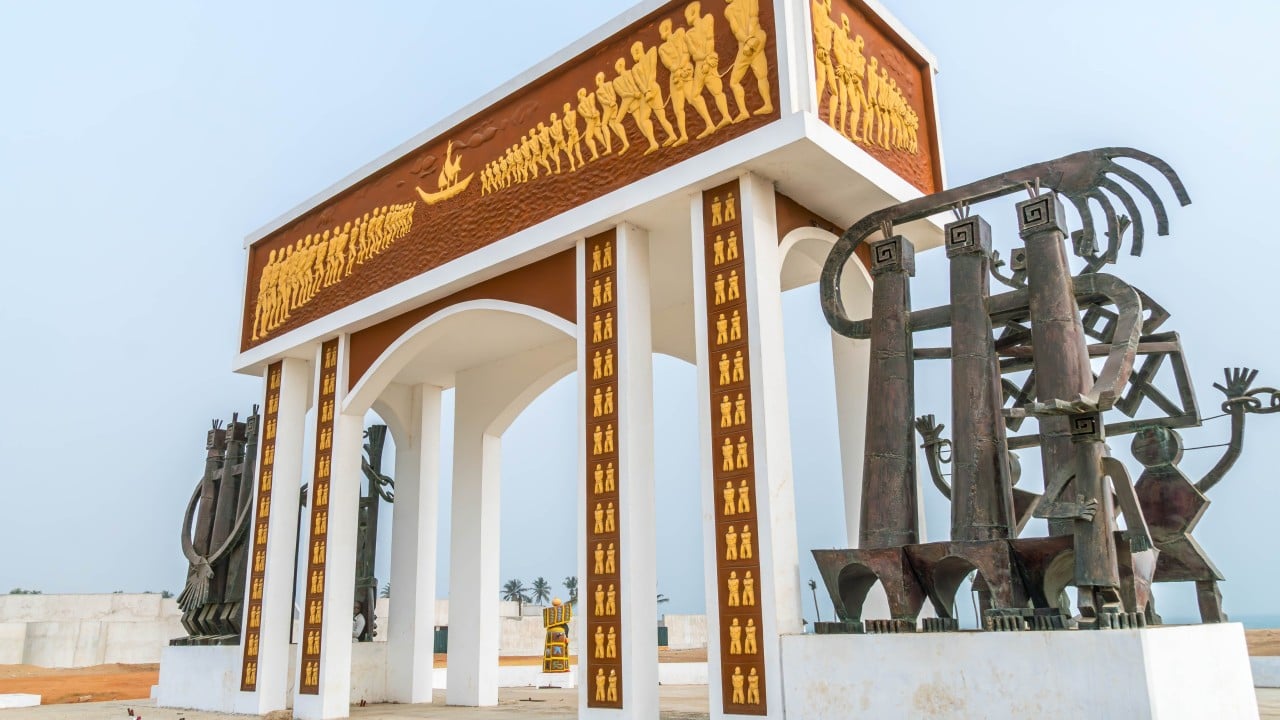
A quiet transformation is unfolding along the Atlantic coast of West Africa, where state-backed Chinese construction firms are converting historical slave trading ports into high-end waterfront tourism hubs. While local governments pitch these projects as economic lifelines, the reality is a complex web of soft power, massive debt, and the sanitization of painful history. This is not simple urban renewal. It is a calculated geopolitical strategy. Beijing is locking down strategic maritime footholds while reshaping the historical narrative of the African coastline to serve commercial interests.
The strategy relies on a specific financial blueprint. A state-owned Chinese enterprise secures a concession, provides the upfront capital through state-backed loans, and brings in its own labor force to build hotels, marinas, and boardwalks. For African nations burdened by sluggish economies, the influx of capital is hard to refuse. Yet, the long-term cost goes far beyond the balance sheet.
The Economics of Erasure
Tourism infrastructure requires prime real estate. In West Africa, that real estate often overlaps with historical sites where millions of captured Africans were once held before being shipped across the Atlantic. When a state-owned enterprise enters a joint venture to build a luxury resort on these grounds, a tension immediately arises between historical preservation and profitability.
Monuments do not generate high profit margins. Luxury suites do.
In several coastal zones, the physical remnants of the slave trade—structures that have resisted decay for centuries—are being hemmed in by glass facades and concrete promenades. Local preservationists warn that this commercial encroachment dilutes the solemnity of these spaces. A fortress that once witnessed human bondage becomes a picturesque backdrop for an infinity pool.
Typical Port Redevelopment Capital Flow:
[EXIM Bank of China] ➔ (Low-interest Loan) ➔ [African Sovereign Debt]
       │
       ▼ (Direct Project Funding)
[Chinese State Contractor] ➔ (Infrastructure Build) ➔ [Waterfront Resort/Port]
       │
       ▼ (Revenue Generation)
[Operational Profits] ➔ (Sent Back) ➔ [Chinese Parent Corporate Entity]
This economic model ensures that the host country takes on the financial liability, while the majority of the high-value project revenue flows back to the foreign contractors. The local population is left with low-wage service jobs as bartenders, cleaners, and security guards. The promise of broad economic development dissolves into localized real estate speculation.
Strategy Disguised as Leisure
Beijing’s interest in African ports is rarely purely commercial. For over a decade, maritime analysts have tracked the "String of Pearls" strategy in the Indian Ocean, where commercial port investments eventually accommodate naval assets. The Atlantic coast of Africa represents the next frontier for this maritime expansion.
A luxury cruise terminal or a mega-resort marina requires the same foundational engineering as a naval logistics hub. Dredging deep-water channels, reinforcing seawalls, and building heavy-duty piers are dual-use capabilities. By financing and constructing these waterfront districts, foreign entities gain long-term operational control over critical maritime choke points.
The Mechanism of Sovereign Leverage
When an African government falls behind on loan repayments for a tourism megaproject, the terms of the contract dictate the outcome. Equity swaps and long-term leases are standard clauses. If the glittering waterfront fails to attract the projected volume of European and Asian tourists, the state-owned builder can assume majority ownership of the asset.
- Sovereign Debt Ties: High-interest infrastructure loans reduce a nation's fiscal flexibility.
- Operational Control: Foreign management of ports compromises national security oversight.
- Resource Access: Port access is frequently bundled with agreements for nearby offshore fishing or mineral rights.
This creates a cycle of dependency. The host country loses autonomy over its sovereign territory, disguised as a standard corporate default.
Local Resistance and the Fight for Memory
The local communities living around these historic ports are not passive observers. Fishermen who have used these beaches for generations find themselves displaced by private security forces protecting construction zones. Artisanal economies are systematically pushed out to make way for air-conditioned boutiques.
The social friction is intense. In public forums, community leaders voice anger over the lack of transparency in the bidding processes. Decisions made in distant capital cities strip coastal communities of their land and their heritage without their consent.
+-----------------------------------------------------------------+
|               The Divergent Waterfront Agendas                   |
+------------------------------------+----------------------------+
| State-Backed Developer Priorities  | Local Community Priorities  |
+------------------------------------+----------------------------+
| Maximize real estate yield         | Preserve ancestral lands   |
| Deep-water maritime access         | Protected fishing access   |
| Standardized global aesthetic      | Historical truth-telling   |
| High-income foreign tourism        | Local economic autonomy    |
+------------------------------------+----------------------------+
The cultural cost is the most difficult to quantify. When a historic site is remodeled to appeal to international travelers, the narrative is often softened. The dark, uncomfortable realities of the transatlantic slave trade are minimized to ensure that vacationers do not feel uncomfortable during their stay. History is commodified, packaged, and stripped of its teeth.
The Mirage of Job Creation
The primary justification offered by African politicians for these deals is employment. They point to the thousands of jobs promised during both the construction and operational phases. A closer look at the payrolls reveals a different story.
During the construction phase, specialized engineering and project management roles are filled almost exclusively by foreign nationals brought in by the contractor. Local laborers are hired for basic, grueling tasks, often under precarious working conditions with minimal safety oversight. Once the hotels and marinas open, the high-paying executive positions remain in foreign hands, while locals are restricted to seasonal, low-wage employment.
This does not build a sustainable domestic middle class. It creates a highly vulnerable workforce dependent on the whims of global tourism trends and foreign corporate management.
Navigating the Geopolitical Crossfire
West Africa has become a primary arena for the economic rivalry between Washington, Brussels, and Beijing. For decades, Western nations offered development aid tied to political reforms and anti-corruption measures. Beijing offered a alternative: capital with no political strings attached, delivered quickly and without lectures on human rights.
African leaders found this pragmatic approach highly appealing. It allowed them to deliver visible, grand infrastructure projects ahead of election cycles. The long-term structural risks were brushed aside in favor of immediate political wins.
Now, the bill is coming due. Western governments are scrambling to offer alternative financing mechanisms, but they are decades behind in infrastructure investment. The coastal transformation is already well underway, and the concrete is setting.
The Cost of the Long Lease
The typical concession period for these waterfront developments ranges from 50 to 99 years. A century of foreign control over a nation's historic coastline alters its developmental trajectory entirely. It locks the host country into a specific economic model that prioritizes external stakeholders over domestic needs.
As global sea levels rise, these coastal investments will require massive, ongoing expenditures for climate adaptation. Under many of these public-private partnerships, the financial burden of protecting the infrastructure from environmental degradation falls back on the host government, not the foreign operator. The state must drain its treasury to protect private resorts while nearby local villages are swallowed by the ocean.
The transformation of West Africa's historic slave ports into commercial waterfronts is a lesson in modern economic statecraft. It shows how history can be leveraged, packaged, and repurposed to serve the geopolitical ambitions of a foreign superpower, while leaving the host nation holding the debt. The glittering glass towers rising from the old slave dungeons are not monuments to African progress. They are the new architecture of economic alignment, built on the foundations of an unhealed past.