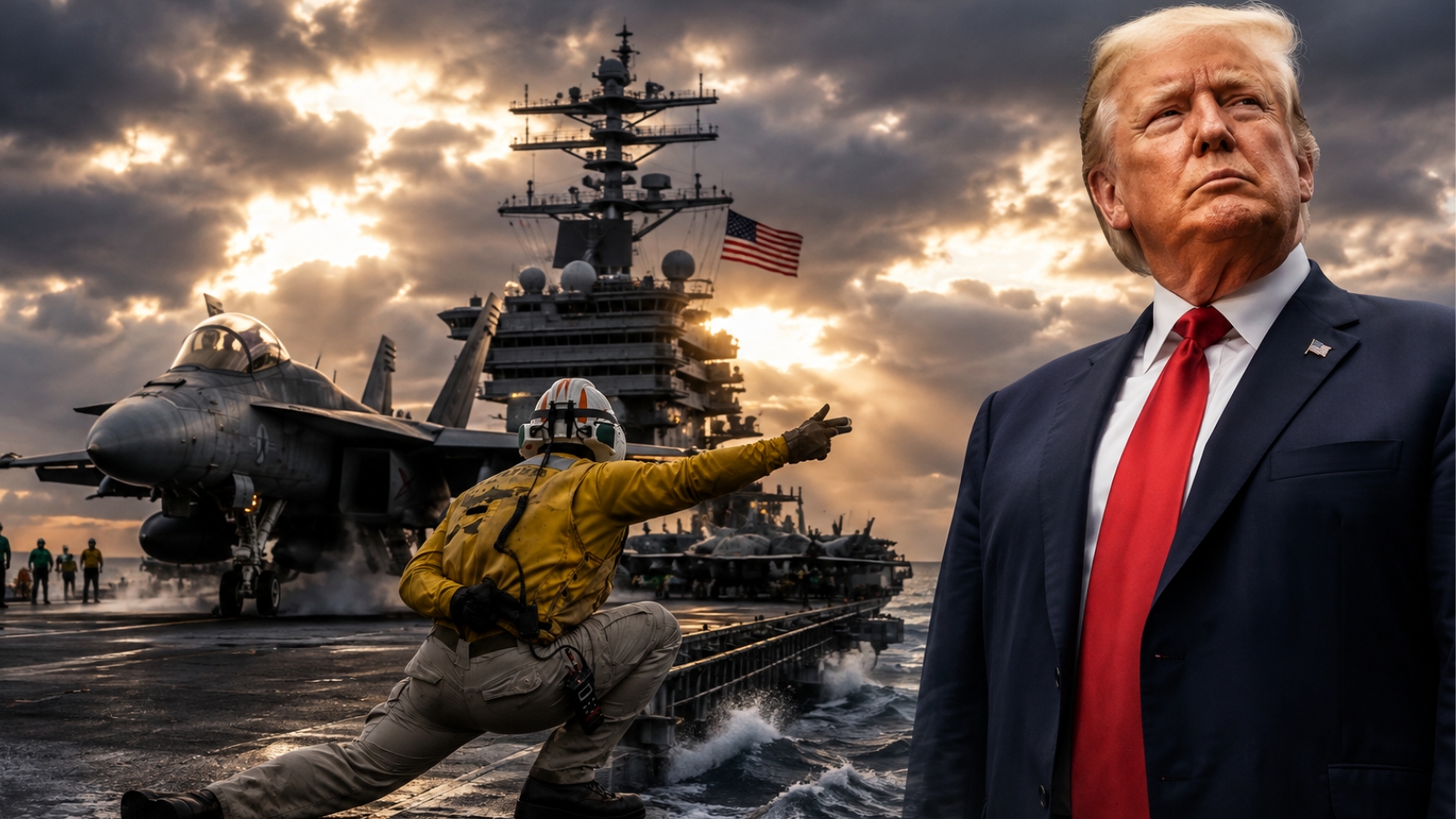
President Donald Trump recently dismissed mounting concerns over the historic deployment of the aircraft carrier USS Abraham Lincoln, asserting that its more than eight-month mission at sea was "not nearly long enough". Yet this defiant stance clashes sharply with mounting distress reports from sailors and their families. Having crossed the threshold of 260 consecutive days away from home port without a single port call, the vessel has become a floating crucible. The ongoing naval blockade supporting military operations against Iran has stretched the limits of mechanical endurance and human psychology. While administration officials insist that conditions are completely misrepresented, the reality inside a nuclear-powered supercarrier tells a grimmer story of institutional strain.
The Breaking Point of Modern Sea Power
Modern naval architecture is a marvel, but it is not infinite. When a Nimitz-class aircraft carrier remains continuously underway for over eight months, the wear and tear accumulates in invisible, systemic ways. Water purification systems fail under endless demand. Sanitation networks back up. Fresh food reserves dwindle, leaving crews subsisting on rations while operating in punishing high-temperature environments.
For the roughly 5,000 sailors and Marines aboard the Lincoln, the absence of port visits for over 200 days shatters the traditional rhythm of naval deployments. Sailors typically rely on port calls as psychological decompression valves. Stripped of these resets, crews face relentless 16-hour shifts under high-threat tactical conditions. Sleep deprivation becomes the baseline. Small irritants metastasize into severe behavioral health crises.
Defense Secretary Pete Hegseth defended the mission parameters, emphasizing the profound gratitude owed to sailors operating in austere conditions. However, gratitude does not replace broken desalination units or supply depleted hygiene stocks. When basic comfort items vanish from ship store shelves, morale absorbs the impact.
Political Fallout and Strategic Blind Spots
The crisis aboard the Lincoln has ignited a fierce partisan debate in Washington. Lawmakers, including military veterans and members of the Senate Armed Services Committee, have demanded immediate Pentagon accountability. Critics argue that indefinite commitments without an exit strategy transform national defense into an endurance contest with diminishing returns.
Consider a hypothetical strategic scenario: a carrier strike group is held on station past its recommended service life to project resolve during a regional standoff. While strategic signaling succeeds on paper, the secondary effect is mechanical fatigue that leaves critical flight decks and arresting gear operating past maintenance tolerances. Steel fatigues. Equipment breaks down. Most importantly, the human element degrades.
When young sailors begin exhibiting signs of acute psychological distress—with reports of personnel going overboard and severe anxiety rippling through the ranks—the cost shifts from operational capability to human capital. The Navy maintains that it tracks and addresses all medical and mental health concerns proactively, but families back home report a chilling disconnect between official talking points and the desperate messages received via intermittent satellite communications.
The Relief Valve That Cannot Come Soon Enough
Change is finally on the horizon, though critics argue it arrives far too late. The USS George Washington carrier strike group has been dispatched to relieve the Lincoln, marking the end of a record-setting deployment cycle. Yet the underlying dilemma remains unresolved. As long as American foreign policy relies on extended carrier presence to manage volatile Middle Eastern flashpoints without clear political closure, the burden will fall squarely on the shoulders of sailors isolated at sea.
Dismissing the psychological toll as politically motivated exaggeration ignores the structural reality of prolonged naval warfare. The machinery of sea power requires maintenance, and the people who operate it require relief. Pretending otherwise courts disaster on the open ocean.
WATCH: Trump says USS Lincoln's deployment was 'not nearly long enough' | PBS News
This video provides primary news coverage and official statements regarding the prolonged deployment of the USS Abraham Lincoln and the political debate surrounding crew conditions.
http://googleusercontent.com/youtube_content/1