The suburban dream possesses a very specific soundtrack. It is the rhythmic hum of a lawnmower on a Tuesday evening, the distant bounce of a basketball on asphalt, and the polite exchange of pleasantries across a manicured hedge. On Laurel Creek Trail in Cobb County, Georgia, that soundtrack was meticulously maintained. Neighbors knew Kirk Wrzesien as the social guy who did yard work—a friendly, ordinary fixture of a quiet, ordinary neighborhood.
But beneath the domestic peace of a suburban home, there are often frequencies the neighbors cannot hear.
Shortly before eight o'clock on a Tuesday night, the soundtrack of Laurel Creek Trail splintered. Gunshots broke the Georgia evening. When emergency responders arrived, they found a twenty-three-year-old man named Jason bleeding outside the house, shattered by ballistic wounds. Inside, his mother, Sheetal Wrzesien, lay dead. Her husband—the social neighbor from the yard—was arrested at the scene without incident, later charged with felony murder and aggravated assault.
The police report reads like a hundred others: a domestic dispute that escalated. The news headlines reduced it further: "Indian-Origin Google Techie Shot Dead."
To the internet, she became a collection of high-profile nouns. Indian-origin. Google techie. Senior director. The world saw a corporate resume violently interrupted. We are trained to look at a tragedy through the lens of exceptionalism, as if her two decades of tech leadership made her life more valuable, or her death more shocking.
But the real problem lies elsewhere. The tragedy isn't that a brilliant tech executive was killed. The tragedy is that a woman was killed in her own home by the person who promised to share it. Her corporate title didn't shield her, because domestic violence does not care about your LinkedIn profile.
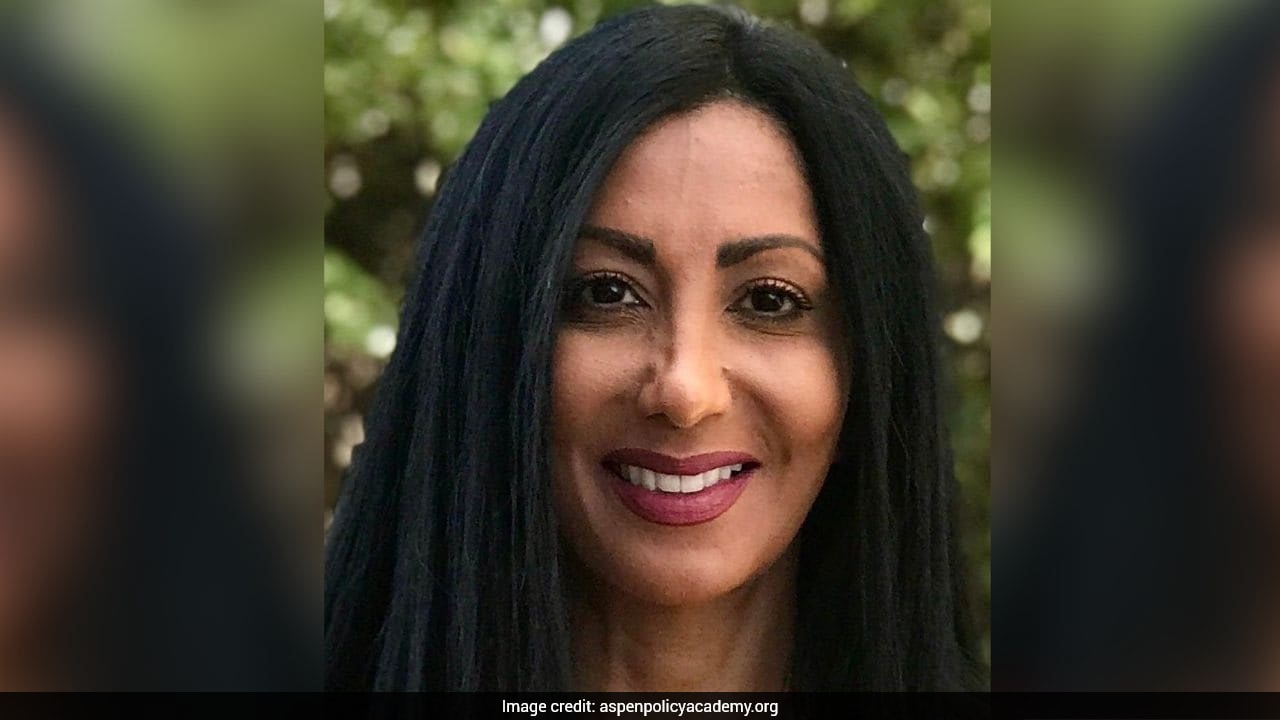
Sheetal Wrzesien’s life was an intricate map of global movement. She grew up crossing borders, spending her early years in England, India, and Ghana before anchoring her life in the United States. She earned a Computer Science degree from the Georgia Institute of Technology back in 1994, a time when very few women—let alone immigrant women—were claiming space in those lecture halls. She built systems. She steered massive digital transformations for retail giants, guided data governance for Google, and advised the Android division. She sat on advisory boards and spent her spare hours mentoring young women trying to break into STEM fields.
Consider the sheer amount of willpower it takes to build a life like that. To navigate multiple cultures, to break through systemic glass ceilings, to become an expert in data systems meant to create order out of chaos.
Yet, there is a terrifying disconnect between public capability and private vulnerability. We often look at successful, independent women and assume they possess an invisible armor. We buy into the myth that domestic abuse only happens in specific socioeconomic corners, to people without resources, or to those without a voice.
It is an assumption built on a lie.
Resourcefulness cannot outrun a bullet. Brilliance cannot negotiate with a firearm during an escalating confrontation. When we focus purely on her employment status at Google, we inadvertently participate in a corporate sanitization of human horror. We look at the corporate logo rather than the blood on the floor.
The suspect now sits in the Cobb County Adult Detention Center, held without bond. The legal system will process him through a series of cold, bureaucratic steps. The charges will be read, the evidence presented, and the sentences handed down. But the legal system only measures guilt; it cannot restore the ecosystem that was destroyed in those few minutes before 8:00 PM.
A son is left in a hospital bed, recovering from emergency surgery, forced to carry the physical and psychological scars of a night where his home turned into a crime scene. A community of young women in technology has lost a mentor who showed them what was possible. A family has been hollowed out.
The tech industry loves to talk about security. It obsesses over data privacy, encryption, and firewalls designed to keep the dangerous elements outside the perimeter. Millions of dollars are spent ensuring that corporate networks are impenetrable.
But there is no firewall for the human heart. There is no software update that can patch the deep, volatile fractures that occur within a relationship. We can secure our devices, encrypt our messages, and build empires of digital architecture, but we remain profoundly vulnerable to the people we let past our front doors.
The house on Laurel Creek Trail is quiet again. The police tape will eventually be cleared away. The neighbors will return to their yard work, though they will likely look at each other a little longer, wondering what else is hidden behind the neat curtains of suburban tranquility.
Sheetal Wrzesien’s legacy should not be reduced to a tragic news cycle or a cautionary tale about a domestic dispute. She was a woman who built a vast, beautiful, global life, only to have it stolen by the oldest, most mundane brutality known to humanity.
The blue light of a smartphone screen continues to flash with news alerts across the globe, processing her death into a thousand algorithms, while the real world is left to mourn a woman who was worth far more than the tech giant she worked for.