The coffee at the corner diner on Figueroa was always lukewarm, smelling faintly of burnt grounds and institutional cleaning fluid, but it was hot enough to thaw fingers numb from an overnight shift watching the concrete. I sat across from Marcus, a man whose official title within the Los Angeles homeless services apparatus sounded like an administrative puzzle meant to be solved by bureaucrats rather than human beings. He stirred three packets of sugar into his cup, watching the white grains dissolve into the dark void.
"We are measuring the wrong things," he told me, his voice carrying the gravel of a thousand meetings that went nowhere. "We count paper clips. We count bed nights. We count grant compliance. Do you know what we don't count? Whether anyone actually stopped sleeping on the asphalt."
That conversation remains the prism through which every official report, every emergency declaration, and every budgetary crisis in Southern California must be viewed. Right now, the machinery tasked with healing the deepest scar on the Angels' city is facing a reckoning. The Los Angeles Homeless Services Authority, known universally by its acronym Lahsa, has been put squarely on notice. For decades, this massive joint powers authority operated with a near-monopoly on the moral and financial capital dedicated to the unhoused population. Billions flowed through its ledger books. Tents multiplied. Frustration hardened into despair. And now, the political winds have shifted violently enough to crack the foundation. They have to compete.
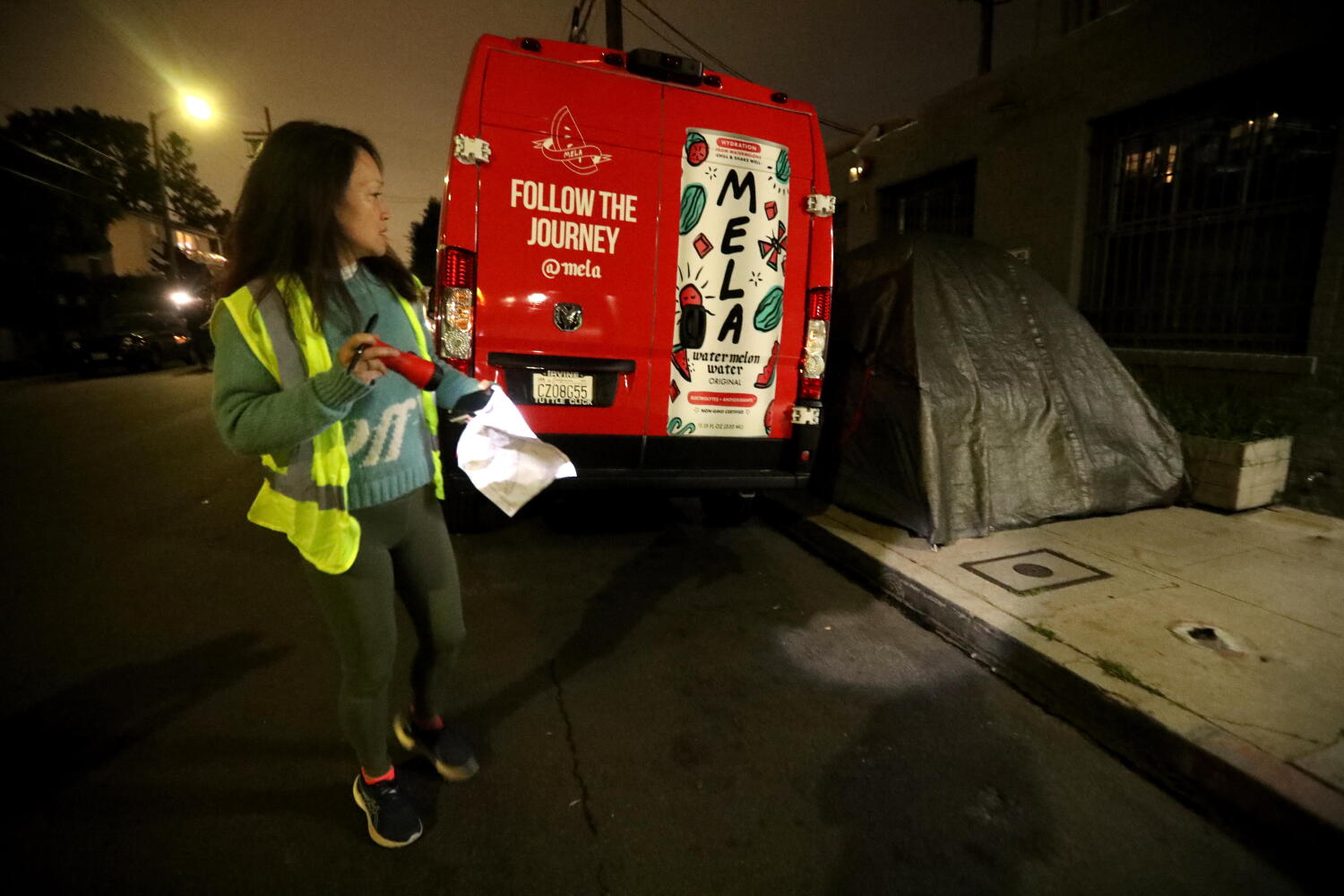
To understand why this matters, you have to step away from the podiums where politicians announce new funding tiers and walk down the alley behind the neon shell of an old motel in Hollywood.
Imagine, for a moment, a hypothetical woman named Elena. (The name is mine, but the blueprint is built from hundreds of real files scattered across county intake desks.) Elena lost her apartment of twelve years when the rent doubled in a single summer, a casualty of a housing market that treats shelter like a speculative asset. She slept in her sedan for three weeks until the battery died. Then she slept on a bench outside a transit station. When she finally encountered the system, she did not find a welcoming door. She found a labyrinth of intake forms, waiting lists that looped back onto themselves, and a dozen different agencies operating in silos, each speaking a different dialect of institutional jargon.
Lahsa was built to be the architect that harmonized these discordant instruments. Created decades ago as a joint venture between the city and the county, it was designed to coordinate strategy, distribute funds, and track outcomes. Instead, it became a behemoth of bureaucracy, bogged down by the sheer gravity of its dual-parent oversight. If the city wanted one thing and the county wanted another, Lahsa often became the buffer where good intentions went to stall.
Critics have pointed out for years that the agency acts both as a funding distributor and an operational monitor, creating a glaring conflict of interest. It funds programs, and then it grades those same programs. Unsurprisingly, the grades have rarely reflected the apocalyptic reality on the streets.
Now, the status quo is shattering. Local leaders are demanding performance-based contracts, opening the door for private non-profits, specialized health networks, and nimble community organizations to bid on work that Lahsa once claimed exclusively as its own domain. The monopoly is breaking. And in that fracture lies both immense peril and a rare, fragile hope.
Let us be honest about the terror of competition in the social sector. When you introduce market dynamics to human misery, things can go terribly wrong. Organizations can begin cherry-picking the easiest clients—those closest to housing stability—while leaving the chronically ill, the severely mentally traumatized, and the addicted to languish in the shadows because their recovery metrics do not look good on a quarterly spreadsheet. That is the dark side of accountability. If funding follows simple metrics, providers will chase the metrics that are easiest to hit, rather than doing the messy, unglamorous work of building trust with someone who has not slept indoors since the Obama administration.
Yet, the alternative was worse. The alternative was a stagnant bureaucracy that could fail upward year after year, absorbing torrents of taxpayer money while the encampments grew denser and more desperate.
I remember walking with a street psychiatrist named Dr. Vance through an encampment near the 101 freeway. The air tasted of exhaust and dust. He carried a backpack stuffed with antipsychotic medications, clean socks, and bottled water. He didn't work for Lahsa. He worked for a smaller, independent psychiatric outreach group that survived on private donations and specialized grants.
"The big agencies talk about systemic alignment," Vance told me, pausing to squat down and speak softly to a man wrapped in a tattered blue tarp. "I talk about whether Arthur here will take his risperidone today so he doesn't try to fight a streetlight tonight. Scale is the enemy of intimacy. When an organization gets too big, it stops seeing people and starts seeing populations."
That observation cuts to the heart of the current crisis. Lahsa's structural flaw was never a lack of caring individuals within its ranks. Many of the line workers are grinding themselves to exhaustion trying to make a broken engine turn over. The flaw was architecture. It was too vast, too politicized, and too insulated from the visceral feedback loop of the pavement.
When you force an organization to compete, you strip away its armor. You ask a fundamental question: What are you actually producing? Are you producing compliance reports, or are you producing keys?
The Los Angeles County Board of Supervisors and the City Council are no longer willing to accept the excuse that homelessness is simply too complex to solve. They have watched billions of dollars flow through Measure H and Proposition HHH, only to see the visual and human evidence of suffering expand. Public patience has worn down to the bone. Taxpayers want to see results, and unhoused residents want dignity instead of temporary shelter beds that feel more like cages.
By opening the door to competitive bidding, the region is embarking on a high-stakes experiment. Will smaller, agile providers step up and deliver humane, rapid rehousing models that actually stick? Or will the transition period create chaos, dropping vulnerable people through the cracks as contracts are renegotiated and turf wars erupt behind closed doors?
The answer depends entirely on whether the city and county can maintain rigorous oversight without suffocating innovation in red tape. It requires a delicate balance—the kind of balance that governments rarely achieve on the first try.
Consider what happens next: Every non-profit executive, every county supervisor, and every neighborhood council member is currently recalculating their position. Old alliances are fraying. New coalitions are forming in the smoke of political survival. Lahsa's leadership is fighting to reinvent an institution while it is being audited by its own paymasters.
It is messy, bruising, and deeply uncomfortable. But comfort is a luxury the streets of Los Angeles abandoned long ago.
As the sun began to dip behind the concrete canyons of downtown, casting long, bruised shadows across the pavement where Marcus and I finished our coffee, he looked out the diner window toward a group of people huddled near a bus stop. A city outreach van idled at the red light, its engine humming, waiting for the green.
"They have to change," Marcus said quietly, tossing a crumpled sugar packet onto the saucer. "Because the alternative isn't just a failed agency. It's another winter out there."
The van shifted into gear and rolled forward into the traffic, its tail lights fading into the red river of evening commuters, leaving behind a city suspended between the weight of its past and the terrifying urgency of its future.