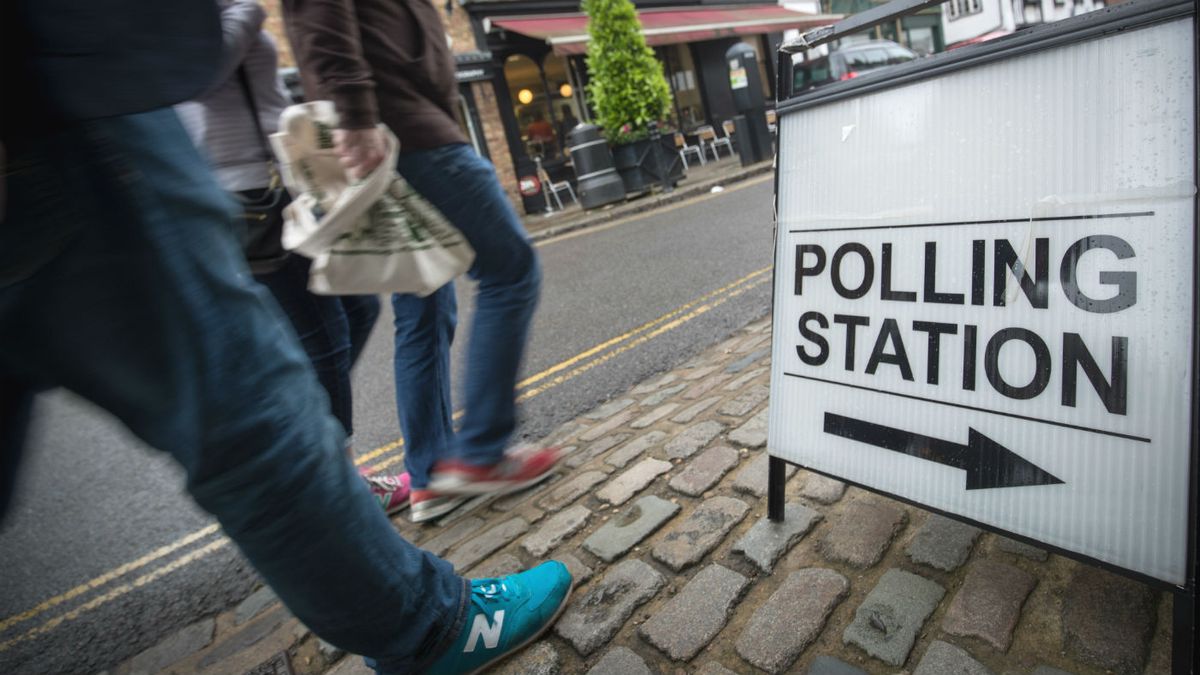
The British General Election of 2024 represents a fundamental collision between electoral arithmetic and fiscal reality. While public discourse focuses on personality and polling leads, the true stakes are defined by a trilemma of systemic pressures: the exhaustion of the post-2010 fiscal model, the demographic crystallization of the electorate, and the structural decay of public service delivery. The incoming administration will not merely inherit a set of policy challenges; they will inherit a "Fiscal Straitjacket" where debt-servicing costs and health spending leave less than 15% of the discretionary budget for transformative investment.
The Trilemma of British Governance
Understanding the 2024 stakes requires a deconstruction of the three competing forces that dictate the movement of the British state. Any party seeking power must navigate these variables, yet no party has successfully articulated a plan that balances all three.
- The Productivity Gap: Since 2008, UK productivity growth has decoupled from its historical trend. This results in a stagnant tax base that cannot naturally fund the rising costs of an aging population.
- Public Service Solvency: The "Maintenance Backlog" in the National Health Service (NHS) and the crumbling of local government finance have reached a point where marginal funding increases no longer improve outcomes but merely prevent total collapse.
- Electoral Volatility vs. Safety: The First-Past-The-Post (FPTP) system creates a "Winner-Takes-All" outcome that hides a deeply fragmented electorate. This leads to a mandate that is mathematically broad but politically thin.
The Fiscal Straitjacket: Quantifying the Constraints
The standard political narrative suggests that a change in leadership provides a "reset." However, the quantitative reality of the UK’s balance sheet suggests otherwise. The UK’s debt-to-GDP ratio is hovering near 100%, the highest level since the early 1960s. Unlike the post-WWII era, where high growth and inflation eroded the debt, the current environment features high interest rates and low growth.
The Cost of Servicing the Debt
For the first time in a generation, debt interest payments have become a top-tier department by spend. This creates a "Crowding Out" effect. Every 1% rise in interest rates or a failure to meet growth targets forces a contraction in departmental spending. The stakes of this election are therefore defined by who can manage this contraction without triggering social unrest or a bond market revolt similar to the 2022 "Mini-Budget" crisis.
Demographic Realignment and the Geopolitics of the Vote
The 2024 election marks the final transition of the "Red Wall" and "Blue Wall" tropes into a permanent structural reality. The UK electorate has reorganized itself not by class, but by age and educational attainment.
The Age Divide as a Policy Barrier
The divergence between home-owning retirees and rent-burdened workers has created a zero-sum game in British housing policy.
- The Pensioner Triple Lock: This mechanism ensures pensions rise by the highest of inflation, earnings, or 2.5%. It is a non-negotiable political asset for the Conservative Party, yet it creates an ever-increasing fiscal burden on the shrinking working-age population.
- Housing Supply Elasticity: Neither major party can solve the productivity crisis without addressing housing. However, the electoral geography of the UK means that building houses in high-productivity areas (the South East) often alienates the core voters needed to win those specific seats.
The Geographic Efficiency of the Vote
The FPTP system rewards geographic concentration. The 2024 stakes involve a massive "Efficiency Shift." In 2019, the Conservative vote was highly efficient, winning seats with small margins across the North and Midlands. In 2024, the Labour Party faces the challenge of "Vote Wasting"—accumulating massive majorities in urban centers that do not translate into additional parliamentary seats. The strategic imperative for any challenger is not just winning the popular vote, but winning it in the right places to achieve a working majority.
The NHS as a Black Hole for Capital
The National Health Service has transitioned from a source of national pride to a structural risk. The stakes of the election are centered on whether the system can be reformed or if it will continue to absorb all available fiscal headroom.
The crisis is not merely one of "funding" but of "flow." The social care system is currently dysfunctional, meaning hospital beds are occupied by patients who are medically fit for discharge but have nowhere to go. This "Bed Blocking" reduces the efficiency of the entire acute care system.
- The Capital Deficit: The UK has consistently under-invested in health infrastructure compared to OECD peers. This has led to a reliance on aging diagnostic equipment and crumbling estates, which directly lowers the number of patients a clinician can treat per hour.
- The Workforce Retention Crisis: The election is a referendum on the "Public Sector Pay Deal." With inflation eroding real wages, the next government faces a binary choice: significantly increase pay (risking further inflation) or face a continuous exodus of skilled staff to the private sector or overseas.
Energy Security and the Net Zero Friction
The UK has committed to Net Zero by 2050, but the 2024 election exposes the friction between long-term environmental goals and short-term cost-of-living pressures. The "Green Transition" requires a massive reallocation of capital that the UK currently lacks.
- Grid Decarbonization: The current electrical grid is not fit for a localized, renewable-heavy future. The stakes involve the bureaucratic overhaul of the planning system. Currently, it can take over a decade to connect new wind farms to the national grid.
- The Industrial Strategy Vacuum: Britain lacks the massive subsidies seen in the US (Inflation Reduction Act) or the EU. This puts UK manufacturing at a disadvantage. The election will determine if the UK adopts a "Protectionist-Light" stance or continues to rely on free-market mechanisms that have, thus far, failed to stimulate green industrial growth.
The Geopolitical Context: Post-Brexit Alignment
While Brexit is no longer the primary campaign slogan, it remains the "Background Radiation" of the British economy. The 2024 election will decide the UK's trajectory regarding the European Union’s regulatory orbit.
- Divergence vs. Alignment: The Conservative strategy has focused on "Global Britain"—seeking trade deals with distant markets (CPTPP). The Labour strategy hints at "Smarten Up" alignment—reducing friction on food and veterinary standards.
- Defense Spending: With the conflict in Ukraine and instability in the Middle East, the "Peace Dividend" of the 1990s is officially over. Both parties are pressured to increase defense spending to 2.5% or 3% of GDP. In a zero-growth environment, this money must be taken directly from healthcare or education.
The Mechanism of Decline: Local Government Bankruptcy
A critical, often overlooked stake in this election is the solvency of British towns and cities. Multiple councils (Birmingham, Nottingham, Croydon) have issued Section 114 notices—effectively declaring bankruptcy.
- The Statutory Services Trap: Councils are legally required to provide social care and child protection. As the costs of these services skyrocket, discretionary spending on libraries, parks, and road maintenance disappears.
- The Revenue Model Failure: Local government is funded by a combination of central government grants and council tax. The central grants have been cut by over 40% in real terms since 2010, while council tax is a regressive system based on 1991 property values. The next government must choose between a total collapse of local services or a radical (and politically risky) reform of property taxation.
The Strategic Play: Operationalizing the Mandate
The victor of the 2024 election will find that "Governing is Choosing." The first 100 days must focus on the "Unlock Mechanisms" rather than broad spending promises.
The Planning Revolution
The most potent lever available to the next administration—that costs zero fiscal capital—is the liberalization of the planning system. By reclassifying "Grey Belt" land and stripping away the ability of local NIMBY (Not In My Back Yard) groups to veto national infrastructure, the government can stimulate private sector investment in housing and energy. This is the only path to breaking the Productivity Gap without increasing the national debt.
The Social Care Fix
Short-term injections of cash into the NHS will fail unless the social care bottleneck is cleared. The strategic recommendation is the creation of a "National Care Service" or a similar integrated model that pools the risk of old-age care. This prevents the "Bed Blocking" that currently cripples hospital efficiency.
The Tactical Forecast
Expect the first post-election budget to be a "Truth-Telling" event. The incoming Chancellor will likely highlight a "Black Hole" in the finances (real or perceived) to justify breaking campaign promises on taxation or spending. The true measure of the election's success will not be the size of the majority, but the ability of the new executive to ignore the "Five-Year Cycle" and implement 15-year structural reforms in planning, energy, and health. Failure to do so will result in a "Limping Administration" that survives on crisis management rather than strategic growth.
The primary objective for the new government must be to move the UK from a "Consumption-Based Economy" to an "Investment-Based Economy." This requires a tolerance for short-term political unpopularity in exchange for long-term systemic stability. If the 2024 election fails to produce a government willing to expend its political capital on these structural frictions, the UK will continue its trajectory of managed decline, where public services become more expensive as they become less effective.
The strategic play is to prioritize Supply-Side Reform (Planning and Energy) as the primary engine for growth, while using Technology Integration (AI in the civil service and NHS) to reduce the "Headcount Pressure" on the public purse. This is the only path through the Fiscal Straitjacket.