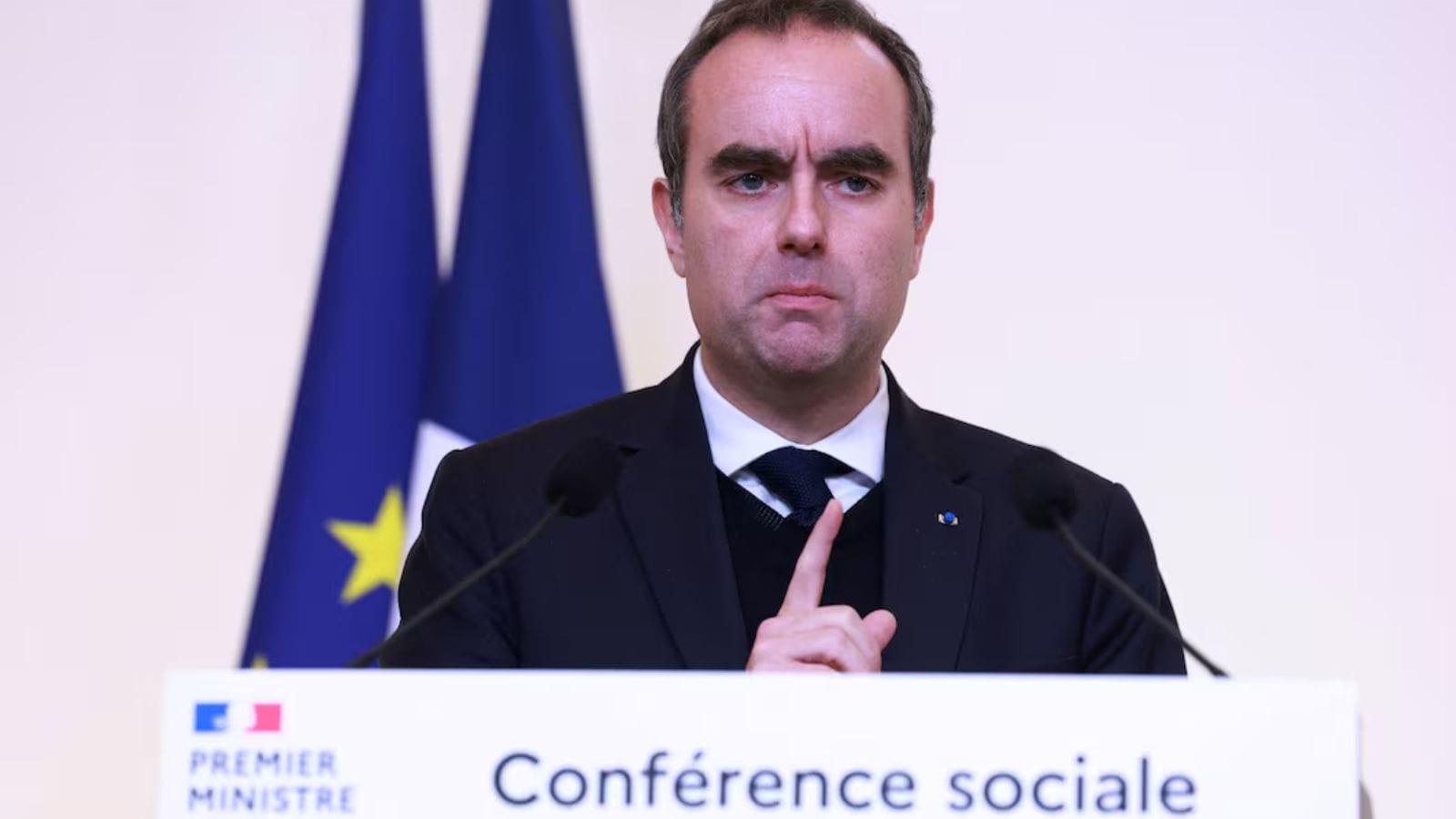
Accelerating a scheduled increase to France’s statutory minimum wage—known as the SMIC—is a classic political pressure valve designed to buy immediate quiet from street protesters, yet it rarely solves the underlying structural grievances driving civil unrest. When a French Prime Minister pulls a wage hike forward by a few months, the government is essentially offering workers money they were already legally guaranteed to receive later in the year. It is an optical concession. While it delivers a fractional, immediate boost to household liquidity, it leaves untouched the deeper economic friction of inflation, regional inequality, and tax burdens that actually mobilize the French public.
Understanding why this maneuver fails requires looking closely at the mechanics of French labor law, the history of street politics in the Fifth Republic, and the cold math of corporate payrolls. Don't forget to check out our earlier article on this related article.
The Illusion of the Early Payday
The Salaire Minimum Interprofessionnel de Croissance (SMIC) is unique among major Western economies. Unlike the United States federal minimum wage, which requires an act of Congress to budge and can sit stagnant for over a decade, the SMIC is mathematically tethered to reality. By law, it automatically adjusts every January 1 based on two factors: inflation measured for the lowest-earning 20 percent of households, and half of the purchasing power gain recorded in the average hourly wage of blue-collar workers. Furthermore, whenever consumer price inflation exceeds 2 percent since the last adjustment, an automatic mid-year indexation kicks in.
The money is already coming. If you want more about the background here, NBC News provides an in-depth breakdown.
When Matignon—the official residence of the French Prime Minister—announces that an upcoming SMIC increase is being brought forward, the state is not inventing new wealth or fundamentally altering the trajectory of worker compensation. It is altering the calendar. For a full-time worker earning the minimum wage, receiving a 2 percent bump in October rather than January amounts to a cumulative gain of a few dozen euros spread across three months. Once January arrives, the baseline resets to exactly where it would have been had the government done nothing at all.
Politicians love this tactic because it generates immediate, digestible headlines. A headline stating that the Prime Minister has raised the minimum wage projects decisiveness and empathy. The fine print—that this is merely an advance on a statutory obligation—gets lost in the noise of evening news broadcasts. Yet the people standing on roundabouts in high-visibility vests or marching down the Boulevard Voltaire are acutely aware of their bank balances. You cannot fool a household that is struggling to pay its heating bill with an accounting trick.
Anatomy of a French Street Concessions Playbook
To see where this strategy leads, you only have to look at the recent history of French social movements. Whenever protests threaten to paralyze transport networks, choke off fuel refineries, or damage the international image of Paris, the executive branch reaches for the same emergency toolkit.
Consider the Gilets Jaunes (Yellow Vests) uprising of late 2018. What began as a localized revolt against an eco-tax on diesel fuel rapidly metastasized into a nationwide fury over declining purchasing power and the perceived arrogance of the Parisian elite. As riot police clashed with demonstrators on the Champs-Élysées, the government scrambled to deploy financial pacifiers. They scrapped the fuel tax, introduced tax-free year-end bonuses for workers, and engineered an effective 100-euro monthly boost to the take-home pay of minimum-wage earners—not by forcing employers to pay more, but by expanding a state-funded wage top-up known as the prime d'activité.
Did it work? Temporarily. The protests lost their critical mass over the following months, but the underlying anger never dissipated; it merely went dormant, waiting for the next spark. That spark arrived repeatedly over the subsequent years, whether over pension reform, energy costs, or agricultural subsidies.
| Government Tactic | Immediate Fiscal Impact | Political Effect | Long-Term Economic Side Effect |
|---|---|---|---|
| Advancing SMIC Date | Low (shifts timing of existing obligations) | Brief media win; rarely satisfies union leadership | Compresses wage scales at the bottom end |
| Expanding State Top-Ups | High (borne directly by the national treasury) | Buys temporary calm by boosting net take-home pay | Subsidizes low-wage business models; widens deficit |
| Tax-Free Employer Bonuses | Moderate (loss of social security contributions) | Welcomed by corporations; viewed skeptically by unions | Creates one-off windfalls without permanent security |
| Fuel/Energy Price Shields | Massive (tens of billions in state expenditure) | Prevents acute transport blockades | Distorts market price signals; unsustainable debt |
Each time the state buys peace with an emergency fiscal patch, it reinforces a dangerous behavioral loop. Unions and grassroots organizers learn that disruption yields immediate monetary concessions. Meanwhile, the government depletes its fiscal reserves, leaving itself with less ammunition when a genuine macroeconomic crisis hits.
The Trap of Wage Compression
There is a hidden structural flaw in repeatedly pushing up the floor of the French wage market while leaving the rest of the pay scale untouched. Economists call it smicardisation—the steady gravitational pull of the minimum wage swallowing up lower-middle-class jobs.
Because the SMIC rises automatically with inflation, while wages above the minimum require protracted negotiations between employer federations and trade unions, the gap between an entry-level worker and an experienced technician narrows every single year. Imagine a hypothetical logistics warehouse outside Lyon. Five years ago, a newly hired forklift operator earned the SMIC, while the shift supervisor with a decade of experience earned 25 percent more. After several rapid inflation-linked hikes to the SMIC, the operator's pay has surged, while the supervisor's salary—subject to sluggish annual corporate reviews—has barely moved. Today, the supervisor makes only 8 percent more than the new hire, despite carrying vastly greater responsibility.
This phenomenon breeds quiet resentment among the working middle class. When the Prime Minister accelerates a minimum wage hike to appease protesters, millions of workers earning just above the threshold get nothing. Worse, they watch their purchasing power erode in real terms while the state focuses exclusively on the bottom rung.
Furthermore, France softens the blow of a high minimum wage on businesses by offering steep reductions in employer social security contributions for workers paid at or near the SMIC. The moment a company gives a minimum-wage worker a raise, those tax breaks evaporate rapidly. Giving a worker a 100-euro net raise can cost the employer over 250 euros once lost exemptions and payroll taxes are factored in. Consequently, companies face a massive financial disincentive to promote staff out of the minimum-wage bracket. Advancing a SMIC hike accelerates this trap, locking a growing share of the French workforce into a permanent low-wage ceiling.
What Protesters Are Actually Demanding
When international media outlets cover French unrest, they frequently reduce complex socio-economic revolts to a simple demand for more cash. That misreads the room. Money is the language protesters use to express a broader sense of disenfranchisement, but a premature tweak to the SMIC fails to address the core drivers of their anger.
First, there is the geography of disconnection. France remains one of the most centralized nations in the developed world. In Paris, Lyon, or Bordeaux, a household can survive without a car, relying on subsidized public transit while accessing high-paying service jobs. Thirty miles outside those urban cores, in the France périphérique, a car is not a luxury; it is an oxygen line. You drive to work, drive to the grocery store, and drive your children to school. When energy prices spike or environmental regulations restrict older vehicles, rural and suburban workers feel targeted by urban policymakers who do not understand their daily reality. An extra 20 euros a month from an early SMIC adjustment does not cover the cost of commuting in a region where factories closed twenty years ago.
Second, protesters are reacting to the erosion of public services. French citizens tolerate some of the highest tax rates in the developed world because of an implicit social contract: in exchange for heavy taxation, the state guarantees world-class healthcare, reliable rail networks, free education, and a dignified retirement. Over the past two decades, budget constraints have hollowed out that promise. Rural post offices have shuttered. Emergency rooms across provincial hospitals frequently close overnight due to doctor shortages. Class sizes have swollen. People do not march in the streets simply because their paycheck is small; they march because they feel they are paying first-class taxes for third-class infrastructure.
Third, there is a deep crisis of democratic legitimacy. When major economic reforms—such as raising the retirement age—are pushed through parliament using constitutional bypass mechanisms like Article 49.3, bypassing a direct vote by elected representatives, the public views the executive branch as authoritarian. Offering a minor wage calendar adjustment after circumventing democratic norms feels insulting to protesters. It treats citizens like children who can be distracted with pocket money while fundamental decisions about their lives are made without their consent.
The Corporate Blowback and Small Business Squeeze
While labor unions dismiss an early SMIC hike as insufficient crumbs, the business community views it from an entirely different angle—and with equal alarm. France’s economy is heavily reliant on small and medium-sized enterprises (SMEs), alongside hundreds of thousands of independent artisans, bakers, café owners, and local retailers.
Unlike multinational corporations listed on the CAC 40 index, which generate the bulk of their revenues overseas and possess vast capital reserves, a neighborhood bakery in Nantes or a family-run construction firm in Toulouse operates on razor-thin margins. For these employers, labor is their single largest fixed cost.
When the government unexpectedly brings forward a wage increase, small businesses have zero time to adjust their pricing models or operational budgets. They face an immediate binary choice:
- Absorb the cost: This shrinks already fragile profit margins, forcing owners to cancel equipment upgrades, freeze hiring, or cut their own personal income.
- Pass it to consumers: Raising the price of a baguette, a restaurant lunch, or a plumbing repair feeds directly back into local inflation—the very disease the wage hike was supposed to cure.
There is also a third, quieter outcome: automation and reduction of hours. Every time the cost of human labor jumps unexpectedly, self-checkout kiosks in supermarkets and digital ordering screens in fast-food restaurants become vastly more attractive investments. By forcing small employers to shoulder an unscheduled payroll bump to solve a political crisis in Paris, the government risks triggering job losses in the exact regions where protesters are angriest.
Fiscal Reality Meets Political Theater
Behind the scenes at the Ministry of Economy and Finance in Bercy, technocrats look at these politically motivated wage adjustments with quiet dread. France is already grappling with a bloated public deficit and a debt-to-GDP ratio exceeding 110 percent. Credit rating agencies scrutinize every unbudgeted expenditure, and bond markets punish fiscal indiscipline with higher borrowing costs.
Every time the SMIC rises, it triggers a cascade of secondary costs for the state. Because social security exemptions are tied to the minimum wage threshold, an early hike immediately reduces the tax revenue flowing into the state's coffers. Simultaneously, public sector pay scales—which legally cannot fall below the minimum wage—must be adjusted upward, adding hundreds of millions of euros to the government's own payroll.
This is the fundamental contradiction at the heart of modern French governance. The public demands protection from the harsh edges of global capitalism, expecting the state to cushion every inflationary shock and preserve generous social entitlements. Yet the state has exhausted its fiscal headroom. Bringing forward a minimum wage hike is the ultimate symptom of this paralysis: a gesture designed to look bold and compassionate while costing the treasury just enough to worsen the deficit, yet delivering too little to genuinely transform a worker's standard of living.
The barricades may clear for a weekend, and the television pundits will debate the Prime Minister's tactical agility, but until Paris confronts the structural rot of stagnant productivity, shrinking regional opportunity, and a broken social contract, the next wave of protests is already scheduled.


