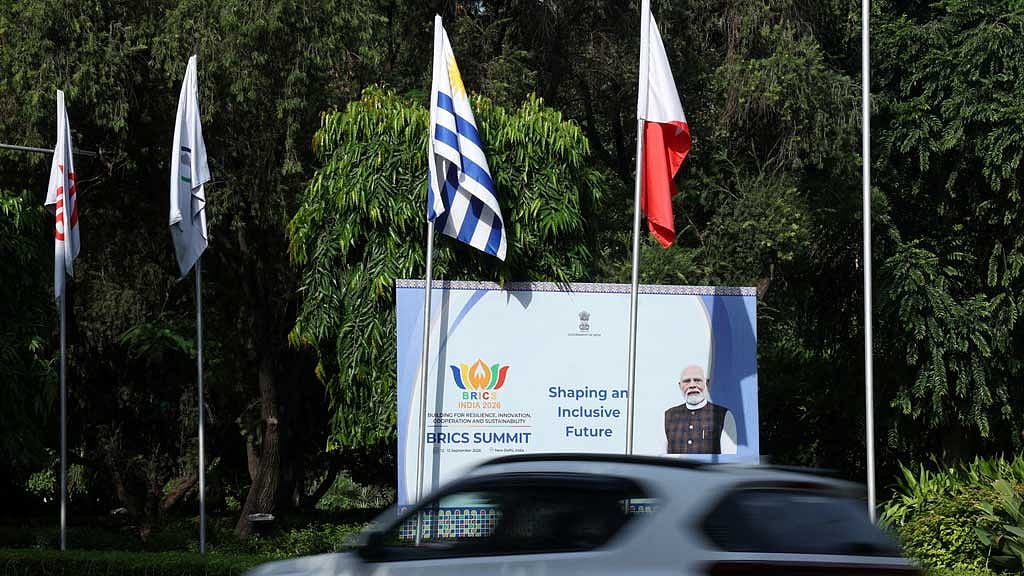
The Official Communique Versus Reality
Diplomats sitting behind heavy mahogany tables love smooth phrasing. They draft communiques celebrating uninterrupted trade channels, energy security, and resilient supply networks with practiced solemnity. The recent diplomatic posturing from the BRICS bloc follows this exact script. Member states issued grand declarations urging the unhindered flow of global commerce, positioning themselves as alternative architects of international trade.
Behind the polished rhetoric lies a much messier truth. BRICS nations are not a monolithic economic block moving in lockstep toward a unified commercial utopia. They are a loose coalition of competing giants, historical rivals, and disparate economies with conflicting monetary ambitions. When officials talk about securing supply chains, they are usually papering over deep structural friction.
Understanding what drives these nations requires looking past the press releases. Trade corridors do not function on goodwill or shared geopolitical grievances alone. They require synchronized customs protocols, mutual trust, and compatible currencies. None of these elements exist in abundance among the major players of this bloc.
The Structural Fracture Points
Consider the foundational tension between the two primary pillars of the coalition. Trade between Beijing and New Delhi has expanded significantly in volume over the past decade, yet the underlying relationship remains profoundly anxious. India restricts foreign direct investment from its northern neighbor while simultaneously trying to build domestic manufacturing capabilities that can compete directly with factory floors in Guangdong.
This is not an environment conducive to cooperative logistics. Every major supply chain initiative faces the gravitational pull of national self-interest.
Energy security presents an equally complex puzzle. Russia seeks reliable buyers for its crude oil under heavy international sanctions, turning to Asian markets as a financial lifeline. Yet the mechanics of moving these commodities involve complex maritime detours, shadow tanker fleets, and alternative insurance arrangements that add hidden costs to every barrel. Transactions settled in local currencies create persistent imbalances. Accumulating massive piles of rupees that have limited utility outside South Asia does not solve long-term capital allocation problems for Russian energy exporters.
Alternative financial messaging systems face similar hurdles. While leaders frequently champion de-dollarization and independent payment rails, commercial banks remain deeply tethered to traditional Western clearing mechanisms. The reason is simple. Liquidity goes where liquidity is safest and most abundant. Compliance officers in major financial institutions cannot easily abandon established risk frameworks just to satisfy a political talking point.
Logistics on the Ground
Physical trade corridors tell a similar story of aspiration colliding with geography. Developing alternative transit routes across the Eurasian landmass sounds magnificent on paper. Rail lines and overland shipping lanes require massive capital expenditure, maintenance agreements across politically unstable regions, and standardized gauge widths.
Border delays remain chronic. Bureaucratic inertia at transit checkpoints can stall shipments for weeks, turning theoretical efficiency gains into expensive administrative nightmares. Private sector logistics operators know that moving goods reliably requires more than a political memorandum of understanding. It demands predictable customs clearance, transparent dispute resolution, and security guarantees that governments often struggle to deliver.
The Currency Conundrum
The push for local currency settlement deserves careful scrutiny. Proponents argue that trading in domestic currencies bypasses currency conversion costs and shields economies from external monetary shocks. That part of the argument holds water in specific bilateral contexts.
The systemic complications emerge when trade is multilateral. If Country A runs a persistent trade deficit with Country B, Country A eventually runs out of acceptable assets to clear the balance unless Country B agrees to buy more goods in return or accept investments of dubious liquidity. Without a globally accepted neutral reserve asset, trade imbalances create structural blockages that no political decree can easily wave away.
Central bankers understand this math. That is why announcements regarding a unified BRICS currency routinely fail to materialize into actionable policy. No sovereign nation with an independent monetary policy wants to anchor its economic stability to the fiscal health or political whims of another developing state.
What Comes Next for Global Commerce
Supply chains are ultimately managed by corporate logisticians and risk analysts, not foreign ministers. These professionals care about lead times, freight rates, regulatory compliance, and cargo insurance. When geopolitical friction increases transaction costs, businesses adapt by diversifying suppliers rather than consolidating around ideological allies.
The real story of modern international trade is not about blocs neatly dividing the world into competing spheres of economic cooperation. It is about fragmentation, redundancy, and the high cost of political posturing in a system that demands absolute precision. As long as national ambitions override operational reality, the grand declarations from international summits will remain nothing more than ink on paper.
The market rewards efficiency and punishes friction. Until trade networks can resolve the fundamental contradictions embedded within their own membership, the promise of unhindered global commerce will remain out of reach.