Silence in St. Peter's Square is different from ordinary quiet. It is a dense, collective holding of breath, thousands of souls anchored to a single balcony. When Pope Leo XIV stood before the crowd to share a piece of private medical news, he did not cloak it in opaque ecclesiastical language. He simply told the truth. A shadow had been found tucked away in his lung, a localized nodule detected early during routine checks.
For anyone who has ever waited for a doctor to call back with test results, that moment needs no translation.
We live in a culture that treats the human body as an administrative oversight, something to be managed with productivity apps and vitamins until it loudly demands attention. Yet mortality is an equal-opportunity tenant. It does not check appointment schedules, nor does it defer to the global calendar of a pontiff. When the announcement came that a surgical team at Rome's Gemelli Hospital would step in, the invisible stakes of leadership came into sharp relief. Behind the robes, the security details, and the global policymaking lies a fragile, breathing human being facing the exact same quiet fears that keep ordinary people awake at 3:00 AM.
Consider the mechanics of what followed. Medical science has evolved past the brutal, sweeping interventions of the past century. Utilizing advanced robotic bronchoscopy and precise video-assisted thoracic surgery, Dr. Stefano Margaritora and his team prepared to approach a target no larger than a marble. The diagnosis pointed toward early-stage adenocarcinoma, the most common form of non-small cell lung cancer. Because it was caught before symptoms began to manifest, the narrative shifted from crisis management to preemptive grace.
Still, statistics offer cold comfort when you are the one being wheeled down a sterile corridor under fluorescent lights.
Vulnerability is rarely celebrated in public figures. We demand an impossible armor from those we look up to, expecting tireless stamina and unyielding health. When Pope Leo chose transparency over secrecy, choosing to inform the faithful directly rather than hiding behind a vague bulletin from the Vatican press office, he broke a long-standing pattern of institutional obfuscation. He acknowledged that he, too, is subject to the biological lottery. He walked into the hospital knowing that the lower lobe of his right lung would not return with him.
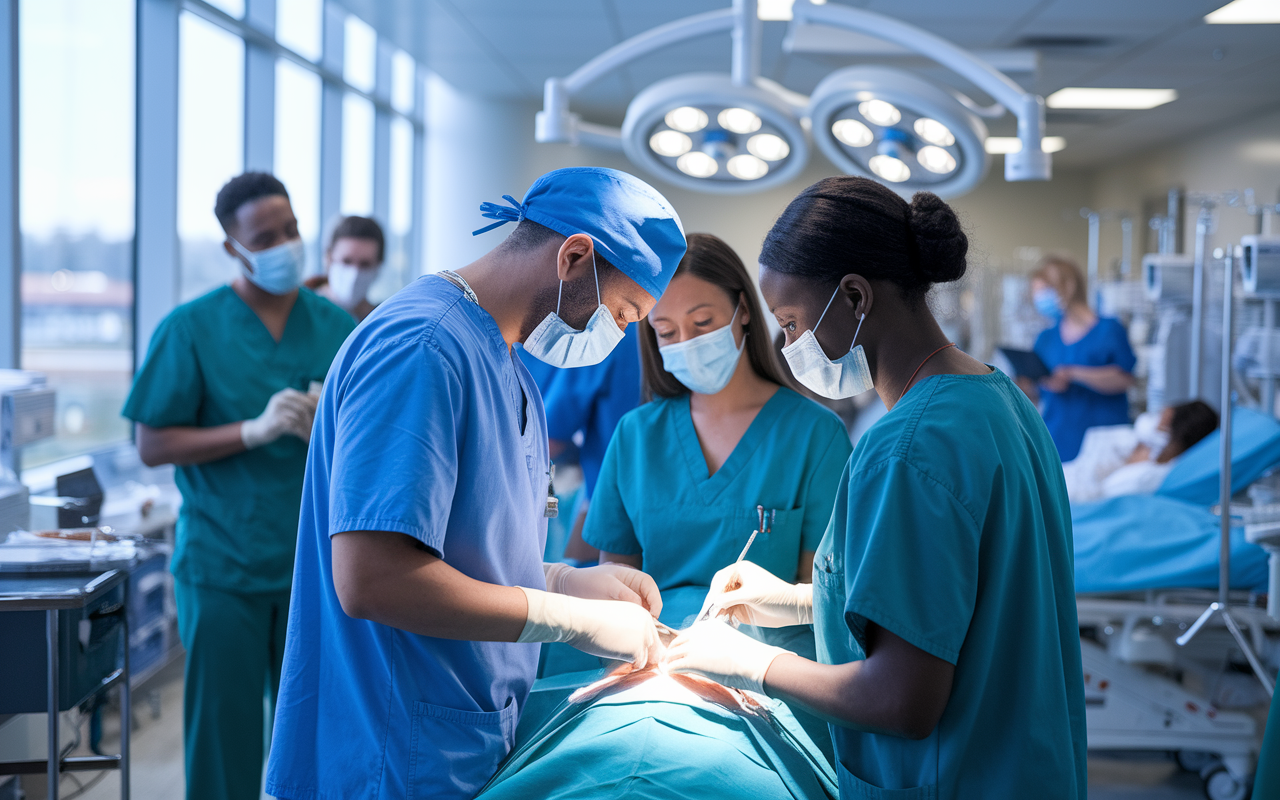
The operating room doors closed for roughly ninety minutes. Outside, vigils flickered. Inside, a team of surgeons worked with microscopic precision to excise the threat before it could claim territory.
Recovery, when it comes to major thoracic procedures, is a humbling masterclass in patience. Every
The Breath Before The Word
news, health
A breath is a quiet thing. Until it isn't.
Inside the Vatican, behind centuries of marble and the heavy velvet of tradition, a routine medical checkup has collided with human fragility. Pope Leo faces an imminent surgical procedure to remove a pulmonary nodule. It is a clinical phrase, sharp and sterile. Pulmonary nodule. A small shadow on an X-ray film, a smudge of uncertainty sitting quietly within the chest of a man whose entire life's work depends on the clarity of his voice.
Silence descends.
Consider what happens when a leader, a global figurehead carrying the spiritual weight of over a billion people, confronts the exact same physical vulnerability that humbles any ordinary human being. Age spares no one. Biology remains entirely indifferent to papal decrees, ancient titles, or sacred vestments. When the diagnostic machinery whirs to life, it recognizes only flesh, blood, and tissue.
The news broke not with a roar, but through the measured, deliberate cadence of the Holy See Press Office. Vatican announcements are rarely dramatic; they are designed to manage gravity, to project calm over a storm. Yet beneath the administrative polish lies an undeniable truth. A lung is not merely an organ. For a pontiff, it is the instrument of communion. It is the vessel that gathers air, shapes thought, and pushes sound out into St. Peter's Square, transforming breath into blessing.
To understand the weight of this upcoming surgery, one must look beyond the sterile walls of Gemelli Hospital in Rome, where pontiffs have historically gone to mend. Medicine has evolved. Modern thoracic surgery is precise, often relying on minimally invasive techniques that target anomalies with surgical grace. Surgeons will isolate the nodule, excise the threat, and test the cellular boundaries. They will look for malignancy, hoping against hope for benign certainty.
Wait. The anxiety of waiting is universal.
Imagine sitting in a waiting room, staring at the institutional grain of a linoleum floor, listening to the muffled hum of fluorescent lights. The clock slows down. Every tick of the second hand feels heavy, deliberate, almost mocking. That is the human core of this moment. Regardless of whether you wear white robes or work a night shift in a warehouse, the threshold of an operating room levels every hierarchy.
Papal health has always been a matter of intense global scrutiny. History is littered with the medical bulletins of pontiffs past—John Paul II navigating the long, slow shadow of Parkinson's disease, Francis managing respiratory challenges and mobility struggles. Each medical intervention becomes a public event, a mirror reflecting our own collective anxiety about decay, aging, and mortality. When the shepherd falls ill, the flock feels exposed to the elements.
Yet, there is profound strength in vulnerability.
Too often, leaders are expected to project invulnerability, as if strength means the absence of pain. But true authority, the kind that resonates deep within the human spirit, often emerges from the willingness to acknowledge limitation. By facing surgery openly, Pope Leo strips away the myth of permanence. He reminds the world that endurance is not about never breaking, but about continuing to show up despite the cracks.
The procedure approaches. The medical team reviews scans, checks vitals, and prepares sterile instruments. Outside, millions of people offer quiet prayers, lighting candles in darkened cathedrals, sending silent wishes across digital screens.
A single breath. In and out.
It anchors us to the present. As the Vatican prepares for the transition into hospital corridors and recovery rooms, the world waits for the steady rhythm of healing to begin. The voice may falter for a moment, hushed by recovery, but the human story—frail, resilient, and enduring—remains unchanged.