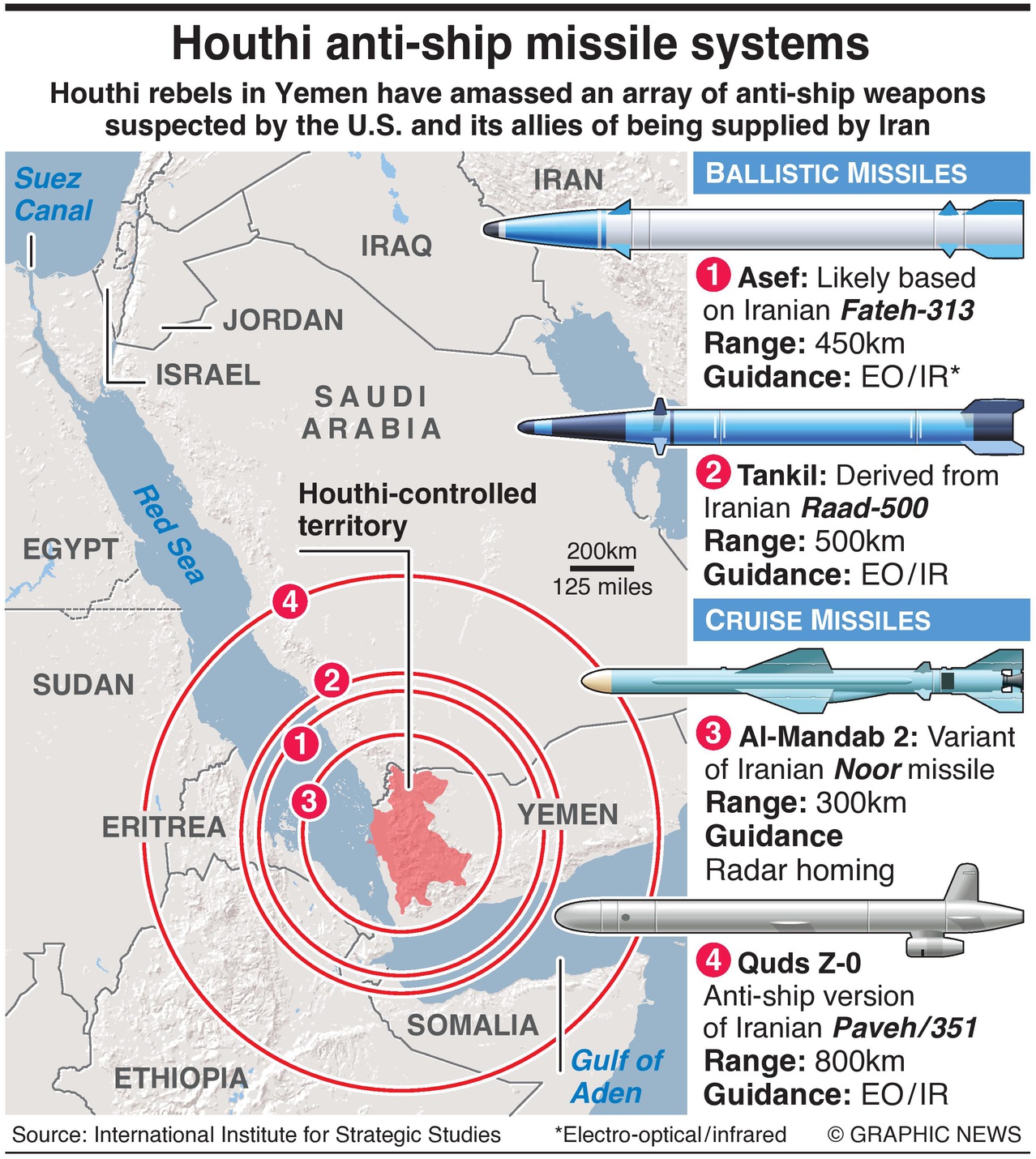
Halting the operational momentum of the Ansar Allah movement, commonly known as the Houthis, across Yemen requires a fundamental shift from reactive air campaigns to a calculated disruption of their political economy, logistics networks, and internal fracturing lines. Recent military maneuvers, including sudden thrusts toward southwestern Taiz and the southern coastline near the Bab al-Mandeb chokepoint, demonstrate that conventional deterrence has failed to freeze the frontlines. To deconstruct what can realistically arrest this expansion, one must evaluate the core mechanics driving Houthi advances: decentralized domestic extraction, structural fragmentation within the internationally recognized government, and resilient indigenous manufacturing of asymmetric munitions.
The Financial Engine of Territorial Control
Territorial expansion is fundamentally a resource allocation problem. The Houthis sustain their military campaigns not solely through external patron subsidies, but through institutionalized revenue extraction inside the territories they govern. Control over major urban population centers in the highlands enables systematic taxation, customs gate collection at ports, and monopolized telecommunication networks.
By centralizing economic governance and imposing strict religious and administrative levies, the movement secures a steady cash flow. This revenue funds frontline payrolls, maintains local security apparatuses, and finances the procurement of dual-use components for ballistic missiles and explosive uncrewed aerial vehicles. Any viable strategy to stall their territorial push must constrict this internal liquidity. Interdicting localized trade routes, disrupting the black-market fuel trade, and targeting the administrative nodes of financial collection are far more effective than striking hardened underground storage facilities.
Fractured Opposition and the Governance Deficit
The primary enabler of Houthi tactical advances is the systemic disorganization of their adversaries. The Presidential Leadership Council (PLC) and aligned southern factions suffer from acute internal rivalries, competing political objectives, and decentralized command structures. This fragmentation creates exploitable seams along territorial boundaries in Marib, Taiz, and Lahj.
Military defense requires a unified command architecture, standardized logistics, and shared intelligence. At present, pro-government forces operate as a patchwork of regional militias, tribal levies, and specialized brigades—such as the Giants Brigades and Nation Shield forces—with varying levels of coordination. When the Houthis concentrate force at a specific operational pivot, local defenders frequently lack the depth, reserves, and communication channels required to execute coordinated counter-offensives. Restoring balance demands a centralized operations center backed by consistent financial and material support from regional partners, ensuring that defensive lines act as a cohesive barrier rather than isolated pockets.
Indigenous Munitions Regeneration and Asymmetric Logistics
Traditional military analysis often evaluates a belligerent's combat readiness by counting stockpiles in static depots. This metric is obsolete in the modern Yemeni theater. The Houthis have transitioned from relying entirely on imported, Soviet-era systems or smuggled Iranian-supplied missile kits to establishing a decentralized domestic manufacturing base.
Workshops producing solid propellant, guidance electronic assemblies, and airframes are dispersed across urban environments, making them difficult to eradicate entirely via air interdiction. Even when coalition strikes destroy specific assembly plants, the localized supply chains adapt rapidly. Consequently, stopping the advance requires cutting off the high-precision inputs—such as specialized microchips, guidance components, and chemical precursors—that cannot be locally fabricated. Without these inputs, the sophistication of their long-range and tactical strike capabilities degrades, reducing their capacity to suppress opposing movements.
Tribal Co-optation and Coercion
Beyond direct military engagement, Houthi expansion relies heavily on a dual-track approach of tribal co-optation and heavy-handed internal repression. In areas peripheral to their core territory, they exploit local grievances, mediate tribal disputes to their advantage, and integrate cooperative leadership structures into their administrative network. Where co-optation fails, coercion, arbitrary detention, and strict security controls suppress dissent.
Countering this strategy requires an active political warfare campaign that offers local populations and tribal confederations a credible alternative. If anti-Houthi coalitions fail to provide effective local governance, basic services, and physical security in contested buffer zones, neutral or reluctant communities will submit to Houthi hegemony out of economic survival and administrative necessity.
Strategic Play
To reverse the current trajectory, military planners and regional stakeholders must abandon the pursuit of decisive battlefield victories and instead execute a multi-domain containment protocol. First, establish an integrated joint command structure for all anti-Houthi forces to eliminate command-and-control seams in southern Taiz and Lahj. Second, redirect intelligence and interdiction assets toward choking the illicit supply chains of missile guidance components and dual-use chemical precursors rather than chasing disposable launchers. Third, condition all economic and diplomatic engagement on unifying the anti-Houthi political front, transforming a collection of rival militias into a functional, resilient governing alternative capable of sustaining prolonged territorial defense.