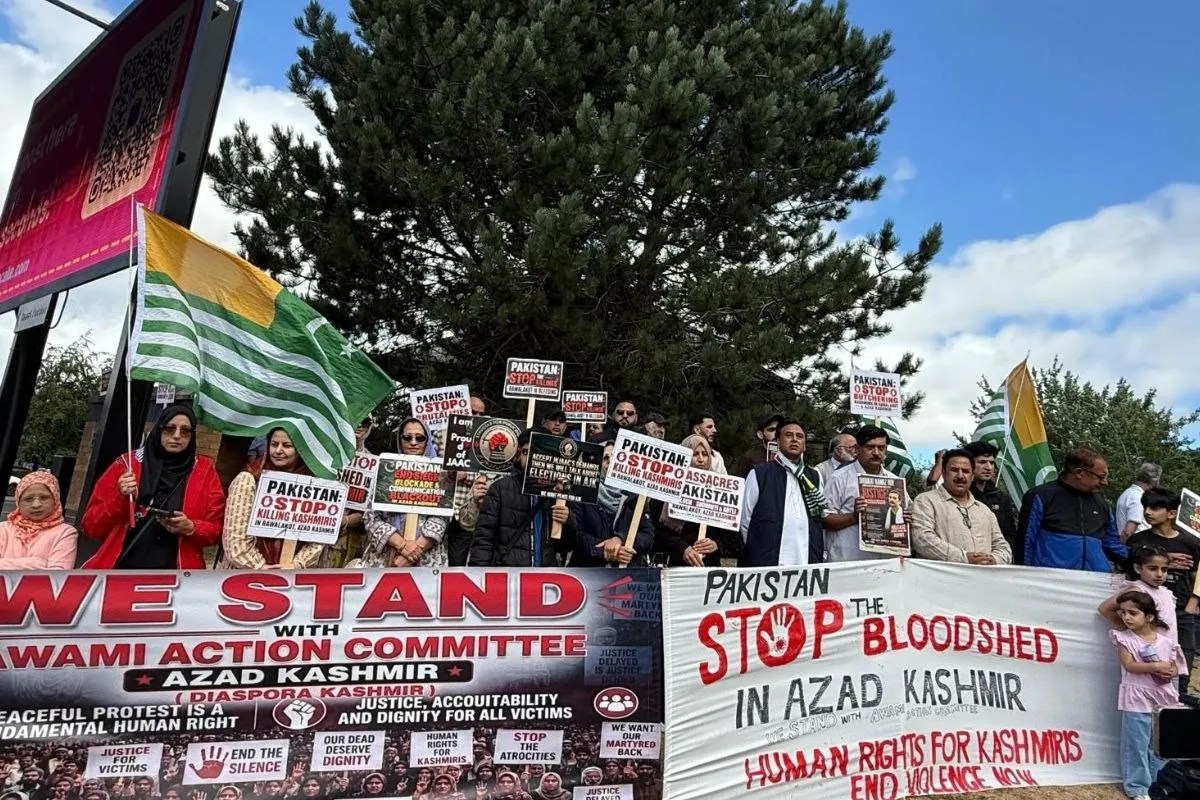
Demonstrations spilling onto the streets of Bradford over recent developments in Pakistan-administered Kashmir reveal a persistent disconnect between diaspora political expression and the complex realities on the ground. When hundreds gathered outside civic buildings in West Yorkshire to voice fury over crackdowns, internet blackouts, and economic grievances thousands of miles away, they did more than simply wave flags. They highlighted how hyper-local British communities remain tethered to transnational disputes, weaponizing geographic distance to sustain decades-old narratives.
Understanding why these protests erupted requires looking past the immediate chants and examining the structural pressures building inside the region itself.
The Boiling Point in Mirpur and Beyond
The recent unrest in Pakistan-administered Kashmir—often referred to locally as Azad Kashmir—was not born in a vacuum. Decades of economic marginalization, combined with soaring inflation, heavy taxation on basic utilities like electricity, and acute resource management failures, created a powder keg. For years, local populations watched as resources generated locally, particularly hydroelectric power, were diverted outward while residents faced punishing tariffs and rolling blackouts.
When citizens organized peaceful demonstrations to demand relief, the state response was heavy-handed. Security forces deployed tear gas and live ammunition, leading to casualties, injuries, and sweeping arrests. Information flow was deliberately throttled. Authorities severed mobile internet lines, attempting to isolate the region and prevent footage of state crackdowns from reaching international networks.
Yet, digital authoritarianism rarely succeeds in total containment. Grainy mobile videos leaked through the digital blockade, capturing images of baton charges and burning vehicles. These digital fragments traveled instantly from Muzaffarabad and Mirpur straight to smartphones in British cities.
Why Bradford Became the Epicenter
Bradford hosts one of the largest concentrations of Kashmiri diaspora members in the United Kingdom, with a significant majority tracing their roots directly to Mirpur—the very district most affected by the construction of the Mangla Dam decades ago and subsequent economic displacement.
This diaspora is not a monolithic bloc, but generational shifts have altered how homeland politics are consumed and acted upon. Older generations arrived in the industrial North of England during post-war labor shortages, maintaining emotional ties to the subcontinent while focusing primarily on establishing economic footing in British society. Their children and grandchildren, born and raised in the UK, operate through a different lens. Equipped with British political literacy and access to social media algorithms that amplify outrage, younger activists mobilize with speed and intensity.
When news of the crackdown hit feeds in West Yorkshire, the reaction was immediate. Protesters flooded Centenary Square and arterial roads, demanding that the British government intervene diplomatically and condemning the Pakistani state's security apparatus.
"Distance does not dilute identity; it often amplifies it. When people feel helpless watching their families targeted abroad, the local street becomes their only global megaphone."
This dynamic transforms British municipal spaces into proxy stages for geopolitical grievances. Local councils find themselves issuing statements on international human rights violations, while Members of Parliament receive inbox floods from constituents demanding parliamentary debates on governance thousands of miles away.
The Policy Blind Spot in Westminster
British foreign policy regarding the Kashmir dispute has long danced on a diplomatic tightrope. Whitehall favors a bilateral framework between India and Pakistan, resisting direct interference in administrative regions governed by Islamabad or New Delhi.
This cautious approach creates acute frustration within diaspora communities. Activists argue that human rights abuses committed by Pakistani security forces in Azad Kashmir receive far less Western scrutiny than issues in the Indian-administered portion of the territory. This selective outrage, critics claim, allows systemic governance failures to persist unchecked behind a shield of geopolitical indifference.
Furthermore, domestic British political parties often court diaspora votes by making broad declarations of solidarity during election cycles, only to pivot toward pragmatic trade and security partnerships with Islamabad once safely in office. This cycle of political pandering followed by diplomatic silence breeds deep cynicism among younger activists, fueling radicalized rhetoric and hardening polarization.
Economic Realities Beneath the Flags
Strip away the political slogans, and the core of the crisis remains starkly economic. Pakistan-administered Kashmir operates under a convoluted administrative arrangement that limits fiscal autonomy. Local industries are underdeveloped, youth unemployment remains stubbornly high, and heavy reliance on remittances from the diaspora in places like Bradford, Birmingham, and Luton masks chronic structural deficiencies.
When the Pakistani federal government attempted to enforce austerity measures and levy steep utility hikes, it struck a population already pushed to the brink by national inflation. The protests were fundamentally a cry against economic asphyxiation disguised as political dissent.
Yet, mainstream media coverage both in Pakistan and parts of the UK frequently misdiagnoses the situation, framing the unrest solely through the lens of traditional nationalist separatism rather than a socio-economic rebellion against administrative neglect. By reducing bread-and-butter economic demands to eternal geopolitical friction, state authorities justify heavy-handed security interventions under the guise of national security.
The Transnational Feedback Loop
The protests in Bradford demonstrate how modern globalization short-circuits traditional boundaries. Local grievances in a Himalayan valley trigger traffic gridlock in West Yorkshire, which in turn generates diplomatic ripples back in Islamabad and Islamabad's embassies worldwide.
As long as governance in Pakistan-administered Kashmir remains defined by heavy policing, economic extraction, and denial of basic civic freedoms, the diaspora will continue to make its presence felt on British streets. The placards may fade, and the traffic will eventually clear, but the underlying fracture lines remain active, waiting for the next spark to ignite the cycle anew.