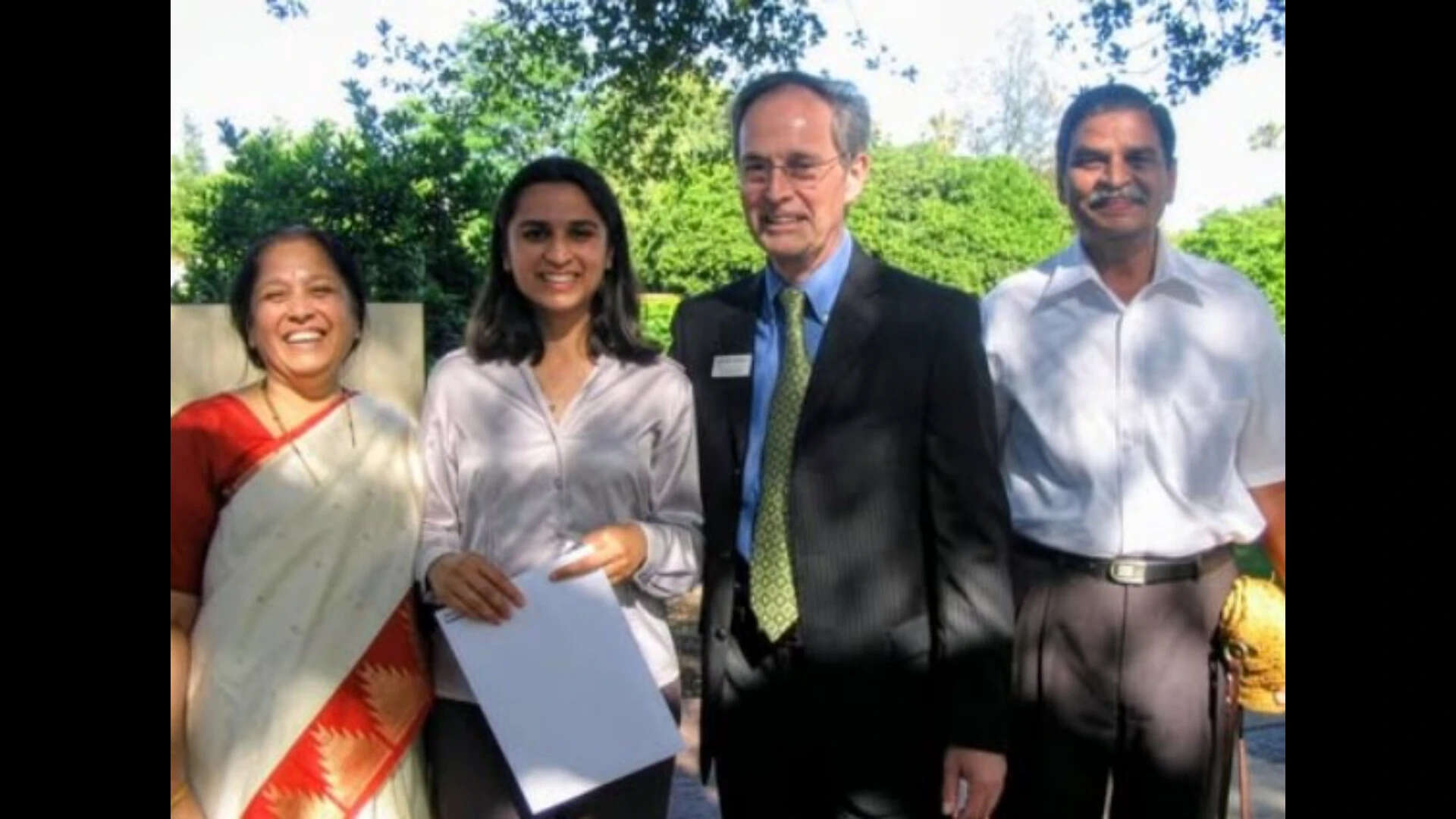
Private philanthropy in higher education has a transparency problem. Most university donations arrive wrapped in layers of bureaucracy, directed toward massive building funds or highly specific, restricted research chairs. A recent endowment at the California Institute of Technology flips this script entirely.
An Indian-origin mathematician has established a summer research fellowship at Caltech, his alma mater, designed to bypass traditional academic red tape. Named in honor of his parents, the fellowship is built around a simple, high-stakes philosophy: fund the smartest minds early, remove the pressure for immediate results, and let them take massive intellectual risks.
It is a calculated gamble on raw talent over safe projects. In a university funding system that increasingly favors predictable outcomes, this endowment serves as a deliberate counter-weight.
The Friction in Modern Academic Funding
To understand why a flexible summer fellowship matters, look at how academic research is normally financed. Federal grants from bodies like the National Science Foundation require researchers to project their outcomes years in advance. This setup creates a structural bias against radical ideas.
Academia has grown risk-averse. Researchers spend up to 40% of their time writing grant proposals instead of doing actual science. Because funding panels want to see a high probability of success, scientists routinely pitch projects where the groundwork is already laid.
This dynamic leaves undergraduate and early-career graduate students out in the cold. They lack the institutional track record required to secure independent funding. The new Caltech fellowship attacks this specific bottleneck by offering immediate financial security for summer research, allowing students to pursue unproven theories without the fear of losing their funding if an experiment fails.
The "Jump" Philosophy In Practice
The endowment is anchored by a piece of advice passed down through the donor’s family: "We'll figure it out. Jump!"
In practical terms, this means funding researchers before they have a proof of concept. In mathematics and theoretical physics, breakthroughs rarely happen on a neat schedule. They come from periods of deep frustration, false starts, and unexpected pivots. Traditional grants do not tolerate false starts.
Consider how a typical university summer program operates. A student is assigned to a professor’s existing project, essentially acting as a pair of hired hands to compile data or run simulations. Their intellectual trajectory is bounded by the parameters of a grant someone else wrote three years prior.
The Caltech fellowship alters that dynamic by giving students the capital to initiate their own inquiries. They can approach a faculty member as a peer with funding already secured, changing the power balance and encouraging genuine, bottom-up discovery.
Why Caltech Remains the Testing Ground
Caltech is uniquely suited for this style of unstructured funding due to its sheer lack of scale. With around 1,000 undergraduate students and a tiny student-to-faculty ratio, the institution operates more like an elite research laboratory than a massive university system.
| Metric | Caltech Institutional Profile |
|---|---|
| Student-to-Faculty Ratio | 3 to 1 |
| Undergraduate Population | Approximately 1,000 |
| Focus Area | High-intensity STEM and fundamental research |
Because the community is small, a student chasing a wild mathematical hypothesis cannot easily hide in the crowd. They are visible. They are constantly forced to defend their logic in casual conversations with world-class faculty. This hyper-focused environment acts as a natural filtering mechanism, ensuring that "flexible funding" does not degrade into aimless wandering.
The Blind Spots of Unrestricted Philanthropy
Giving money to young researchers without strings attached sounds ideal, but it comes with distinct operational hazards. The strategy relies entirely on the assumption that institutional selection processes can identify true exceptionalism before it has produced measurable results.
History shows this is incredibly difficult. For every brilliant non-conformist who changes a field, there are dozens of brilliant students who simply hit dead ends. When private donors fund open-ended research, they must be willing to accept a high failure rate.
Furthermore, relying on individual wealth to patch the holes in academic funding introduces an element of unpredictability. A system dependent on the personal whims and nostalgic gratitude of alumni is inherently uneven. It favors elite, wealthy institutions like Caltech while leaving state schools and less famous research hubs struggling under the weight of bureaucratic federal grants.
Rewriting the Value of an Alumni Base
The broader significance of this gift lies in how it challenges the standard template of alumni giving. The typical billionaire donor wants their name etched into the limestone of a new student center or a basketball arena. Those are visible monuments to ego.
Funding an invisible pool of summer researchers represents a shift toward intellectual infrastructure. It recognizes that the true asset of a university is not its real estate, but the uncommitted time of its sharpest minds. By shielding students from economic pressure during the crucial summer months, the fellowship treats mathematical inquiry as a long-term discipline rather than a series of quarterly deliverables.
The financial model of elite institutions is shifting, and the donors who understand how breakthroughs actually happen are moving away from concrete and steel. They are investing in the moments of uncertainty before a major discovery takes shape.