The lazy consensus of modern geopolitics runs on a simple script. A natural disaster hits a sensitive border zone. Information slows down. Local activists cry foul. International media picks up the feed, shouts about an information blackout, and points an accusing finger at Beijing. Rinse, repeat, publish.
It is a neat, emotionally satisfying narrative. It is also fundamentally lazy and detached from the physical reality of high-altitude disaster management.
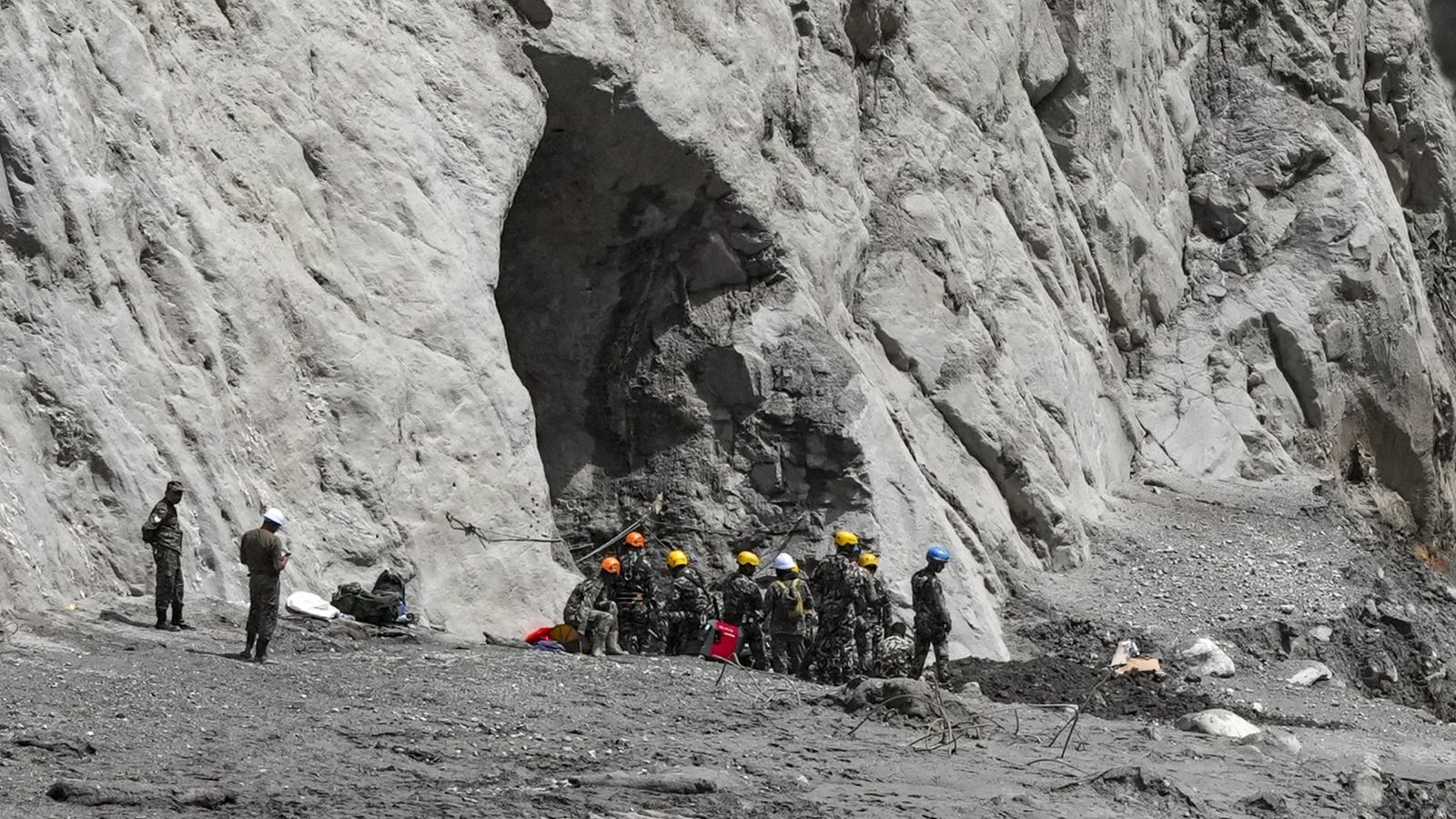
When floods tore through the border regions between Tibet and Nepal, destroying bridges, washing out roads, and severing fiber-optic lines, the immediate knee-jerk reaction from various diaspora groups wasn't to assess the physical wreckage—it was to demand international media access. They framed a standard infrastructural failure caused by violent geography as a sinister political conspiracy.
I have spent years analyzing cross-border crisis communications and infrastructure vulnerabilities in the Himalayas. I have seen international NGO reports blow massive budgets chasing ghost narratives while ignoring the actual physics of why communications vanish in a gorge three miles above sea level.
Let us dismantle the core premise of the complaint: the idea that a lack of real-time streaming from a disaster zone equals a deliberate state-engineered cover-up.
The Geography of Silence
To understand why an information blackout happens in the Himalayas, you have to look past the rhetoric and look at a topographical map.
The borderlands between Tibet and Nepal are not suburban counties with redundant cellular towers and fiber rings. They are some of the most violent, unstable vertical landscapes on Earth. When glacial lake outburst floods or torrential monsoons trigger massive landslides, the first things to go are power grids and transmission lines.
Imagine a scenario where a wall of mud and boulders sweeps down a narrow river valley, taking out three bridges, a hydroelectric station, and the sole microwave relay station clinging to a cliff face. The result is total physical isolation. Power drops to zero. Generators run out of fuel within hours. Satellites can be blocked by heavy cloud cover and deep canyon walls.
Yet, critics expect local authorities to maintain pristine, high-definition live feeds for global consumption while rescue workers are pulling bodies out of mud.
The demand for international media access in the immediate aftermath of a disaster is not about saving lives. It is about narrative control. Activist groups want cameras on the ground not to clear rubble, but to validate a pre-written political grievance.
The Myth of the Transparent Crisis
Let us address the expertise gap here. People assume that modern communication is ubiquitous, resilient, and immune to geography. This is a dangerous delusion.
In any major catastrophe, whether in rural Texas, remote Tibet, or Western Nepal, the first 72 hours are defined by an information vacuum. Governments restrict movement not necessarily to hide misdeeds, but because letting untrained journalists into an active search-and-rescue zone with compromised infrastructure creates a secondary rescue hazard.
When international media outlets demand immediate access to restricted border zones, they are asking for preferential treatment over emergency logistics. Heavy machinery, medical teams, and engineers need those roads and air corridors. A convoy of satellite-truck-toting journalists does not help restore a washed-out bridge; it clogs the single-lane mud track that emergency crews are using to bring in food and medicine.
Furthermore, let us look at the data regarding disaster response speed in high-altitude environments. Local and regional disaster response teams possess heavy lift capabilities and local geological data that foreign crews simply do not have. The Chinese and Nepali civil defense networks, whatever their political flaws, mobilize heavy engineering units faster in these specific terrains than any international NGO or foreign press pool ever could.
The irony is thick. The same critics demanding open access would be the first to scream about callous incompetence if an international reporter wandered into an unstable landslide zone, triggered another slip, and required a multi-million-dollar rescue operation that diverted resources from actual victims.
The Real Agenda Behind the Outrage
Why do diaspora groups and certain international advocacy networks push this specific button every single time? Because victimhood is a currency.
By framing a geographical disaster as an ethnic or political information blackout, they keep their fundraising engines running and their geopolitical patrons engaged. It transforms a tragic weather event into a human rights indictment.
I admit the downside of this perspective: it leaves zero room for romanticized notions of citizen journalism saving the day. In a modern crisis, raw chaos reigns before order is restored. State authorities, authoritarian or democratic, always clamp down on information flow during chaos because panic management is a core survival metric for any government.
Blaming a government for a communication blackout caused by a destroyed cell tower is like blaming a doctor for not updating your social media profile while performing emergency surgery on your heart.
Stop treating every natural disaster in a contested region as a political conspiracy. Nature does not care about your geopolitical grievances. When the mountains come down, the wires break.
Get out of the way of the engineers, stop weaponizing mudslides for political leverage, and accept that some places on Earth are too brutal for live-tweeting.