The rain in Manchester does not care about global fiscal policy. It simply falls, relentless and cold, streaking the windows of a small, independent coffee shop on the edge of the Northern Quarter. Inside, Sarah wipes down the espresso machine. The steam rises, smelling of rich, roasted beans and hard work.
Sarah knows exactly what she owes the world. Every quarter, her accountant presents her with a spreadsheet. It is a precise, unyielding map of her liabilities. Value Added Tax. National Insurance contributions. Business rates. Corporation tax. When the numbers say Sarah owes money to His Majesty’s Revenue and Customs, the money leaves her bank account. There is no negotiation. There is no island in the Caribbean where her flat whites can be digitally roasted to avoid the British state. She pays for the roads her customers walk on, the streetlights that guide them to her door, and the schools that educate her young staff.
Now, shift the lens. Travel south down the M1, past the suburban sprawl, into the glass towers of London, and then leap across the Atlantic Ocean entirely.
In a boardroom in Silicon Valley, a software algorithm flickers. It registers a sale made by a customer sitting right in Sarah’s coffee shop, using the shop’s Wi-Fi to download a premium productivity app. The user is British. The coffee is British. The physical infrastructure facilitating the transaction is British. Yet, through a dazzling sequence of intellectual property holding companies, debt-shifting mechanisms, and entities that exist only as brass plaques in tropical micro-states, the profit from that sale vanishes from the UK tax registry. It evaporates like the steam from Sarah's espresso wand.
This is not a story about rogue corporate villains operating in the shadows. It is about a system working exactly as it was designed to. And according to a sobering assessment from a cross-party group of British Members of Parliament, the grand global blueprint meant to fix it is currently crumbling.
The Promise of the Grand Bargain
For a brief, shining moment a few years ago, it looked like the world’s financial architecture was finally growing up.
Governments worldwide had realized they were trapped in a race to the bottom. To attract multinational giants, countries were consistently slashing their corporate tax rates, competing against each other like desperate vendors in a dying market. The Organization for Economic Co-operation and Development (OECD) stepped in to broker what was hailed as a once-in-a-generation treaty.
The plan was elegant in its ambition. It rested on two pillars.
Pillar One aimed to rewrite the rules of geography. It declared that if a massive multinational makes huge profits selling goods or digital services to people in the UK, the UK should get to tax a slice of those profits—regardless of whether the company has a physical headquarters in London or Manchester.
Pillar Two was the safety net: a global minimum corporate tax rate of 15 percent. If a company tried to hide its profits in a zero-tax haven, its home country could levy a "top-up" tax to bring it up to 15 percent, completely removing the incentive to hunt for tax shelters.
It felt like the beginning of fairness. It felt like the system was finally acknowledging Sarah.
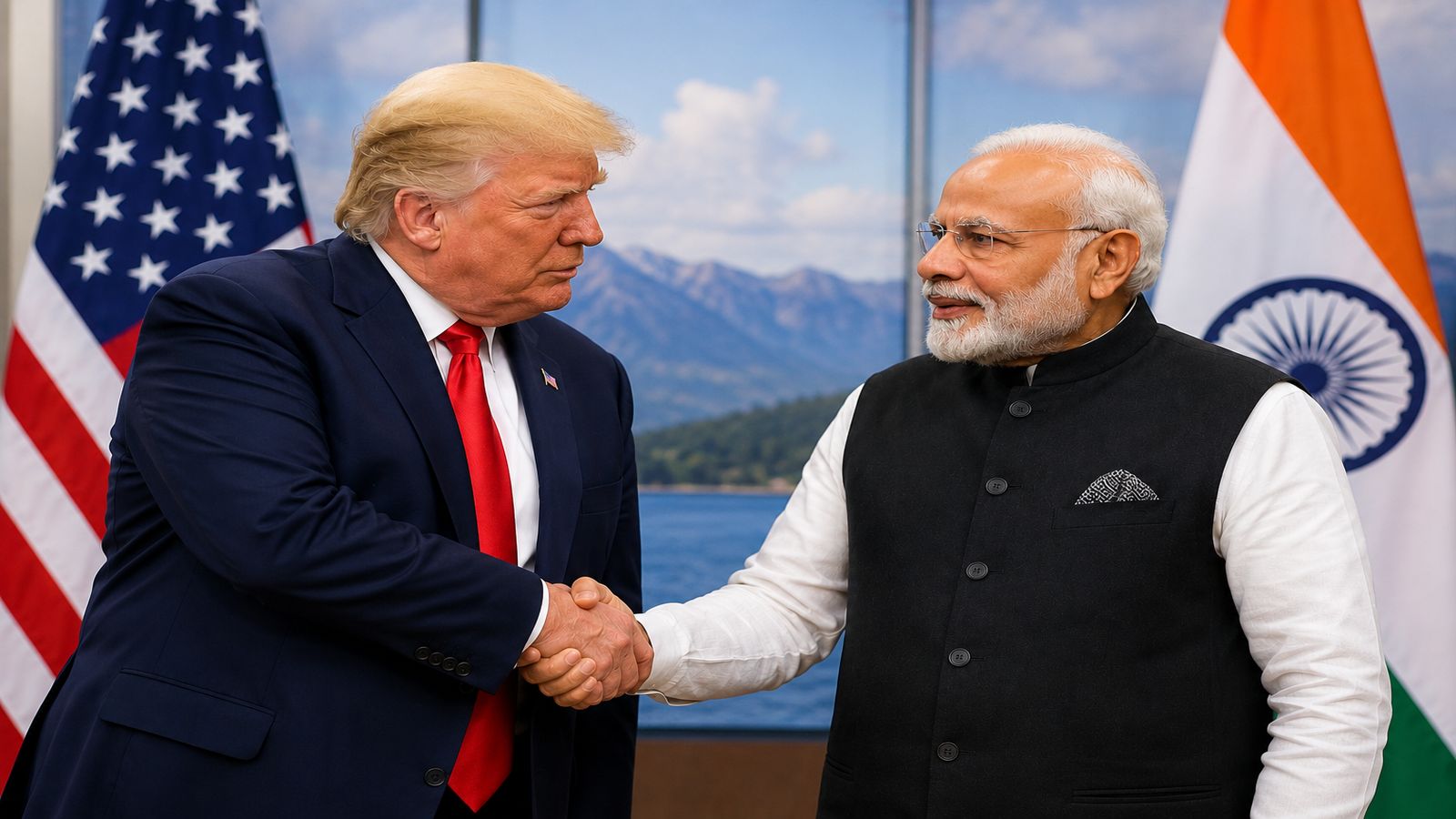
But treaties are signed by politicians, and politicians are bound by domestic realities. The entire architecture of this global tax reform depended on one crucial, monolithic pillar: the cooperation of the United States.
The American Withdrawal
The United States is home to the vast majority of the world’s dominant digital and technological multinationals. Without Washington's signature, a global treaty targeting multinational profit-shifting is like a international shipping agreement that ignores the ocean.
When the political winds shifted in Washington, the American appetite for these global reforms chilled. Lawmakers argued that the rules unfairly targeted American success stories. They saw it as a European revenue grab disguised as global equity. Political gridlock took hold. The US effectively pulled back, opting out of the critical components required to make the global framework truly universal.
When America stepped away from the table, the dominoes began to fall.
In Westminster, the House of Commons Public Accounts Committee watched this slow-motion collapse with growing alarm. Their recent report is stripped of bureaucratic politeness. They warned that because of the US opt-out and the subsequent stalling of international momentum, multinational corporations are continuing to avoid billions of pounds in UK tax.
The loopholes remain unplugged. The brass plaques in the sun-drenched islands remain screwed tightly to the walls.
Consider the sheer scale of what is slipping through the net. We are not talking about pennies. We are talking about the funding required to keep a crumbling healthcare system functioning. The money that could repair potholes, pay striking teachers, and insulate the drafty homes of the elderly.
When a multinational corporation successfully avoids its tax burden, the financial requirement of the state does not magically decrease. The cost is simply redistributed. The burden slides off the balance sheet of the silicon giant and lands squarely on the shoulders of the high street shop owner, the nurse, the factory worker.
You pay it. Sarah pays it.
The Ghost in the Machine
To understand how this happens without anyone breaking a single law, we have to look at how we define value in the modern world.
A century ago, wealth was heavy. It was steel mills, coal mines, railway tracks, and vast textile factories. You could see it, touch it, and most importantly, tax it where it stood. If you ran a factory in Sheffield, the British government could walk through the front gate and count the furnaces.
Today, the most valuable assets on earth are ghosts.
They are algorithms. Brand trademarks. Patented code. Data sets. If a multinational company invents a brilliant piece of software, it can assign the ownership of that intellectual property to a subsidiary company located in a country with a zero percent tax rate.
Let us use a hypothetical scenario to illustrate this machinery. Imagine a digital advertising giant called Omnicorp. When a British business pays Omnicorp £100,000 to run an ad campaign targeted at British consumers, Omnicorp UK receives the money. But Omnicorp UK then turns around and pays a £95,000 "royalty fee" to Omnicorp International, based in a tax haven, for the right to use the corporate logo and software platform.
On paper, the British branch made a tiny, negligible profit of £5,000. They pay tax on that pocket change. The remaining £95,000 sits safely offshore, untouched by the British Treasury.
This is the invisible reality that British MPs are warning against. The technology has evolved at exponential speeds, while our tax laws are still wearing top hats and carrying pocket watches.
The Fragility of Unilateral Action
Faced with global gridlock, why doesn't the UK simply act alone?
It tried. The UK introduced the Digital Services Tax, a temporary measure designed to levy a charge on the revenues of search engines, social media platforms, and online marketplaces operating within its borders. It was a bold move, but it was always meant to be a stopgap—a placeholder until the comprehensive OECD agreement took effect.
But acting alone is a dangerous game in a globalized economy.
When a single country tries to force international corporations to pay their share without a global consensus, those corporations have levers of their own. They threaten to pull investment. They threaten to move data centers. They warn that they will pass the extra costs directly down to the small businesses who rely on their platforms to advertise.
The MPs on the Public Accounts Committee highlighted this exact vulnerability. Without the shield of a unified, global agreement backed by the economic might of the United States, the UK is left exposed. It is trying to police a global ocean with a handful of coastal patrol boats.
The reality is uncomfortable. The UK tax authority, HMRC, is locked in a permanent game of cat-and-mouse against an army of corporate lawyers and accountants whose entire career purpose is to minimize tax liabilities legally. It is an asymmetrical war. HMRC has strict budgets and public accountability; the advisory firms have seemingly infinite resources funded by a percentage of the billions they save for their clients.
The True Cost of Fairness
We often talk about corporate tax avoidance in terms of dry economic percentages and fiscal deficits. We look at charts, graphs, and political white papers. But the real erosion isn't just financial.
It is social.
The foundational contract of a democratic society relies on the perception of shared obligation. We tolerate the tax inspector because we believe, or want to believe, that everyone is participating in the maintenance of the civilization we share. We accept the deduction on our payslips because we believe the system possesses a basic, underlying integrity.
When that belief dies, something vital within a society breaks.
When the owner of a small coffee shop in Manchester realizes she is paying a higher effective tax rate than a multi-billion-pound digital conglomerate that utilizes the same roads, the same legal system, and the same educated workforce, the social contract fractures. It breeds a quiet, pervasive cynicism. It makes the honest feel like fools.
The warning from the MPs is not merely a critique of policy failure. It is a klaxon signaling that the window for fixing this structural imbalance is closing. As international cooperation stalls and the United States looks inward, the global tax system is drifting back toward inequality.
Outside the coffee shop, the Manchester rain continues to fall, washing over pavement paid for by local taxpayers, while across the digital network above the city, millions of pounds flow silently away, completely untaxed, into the ether.