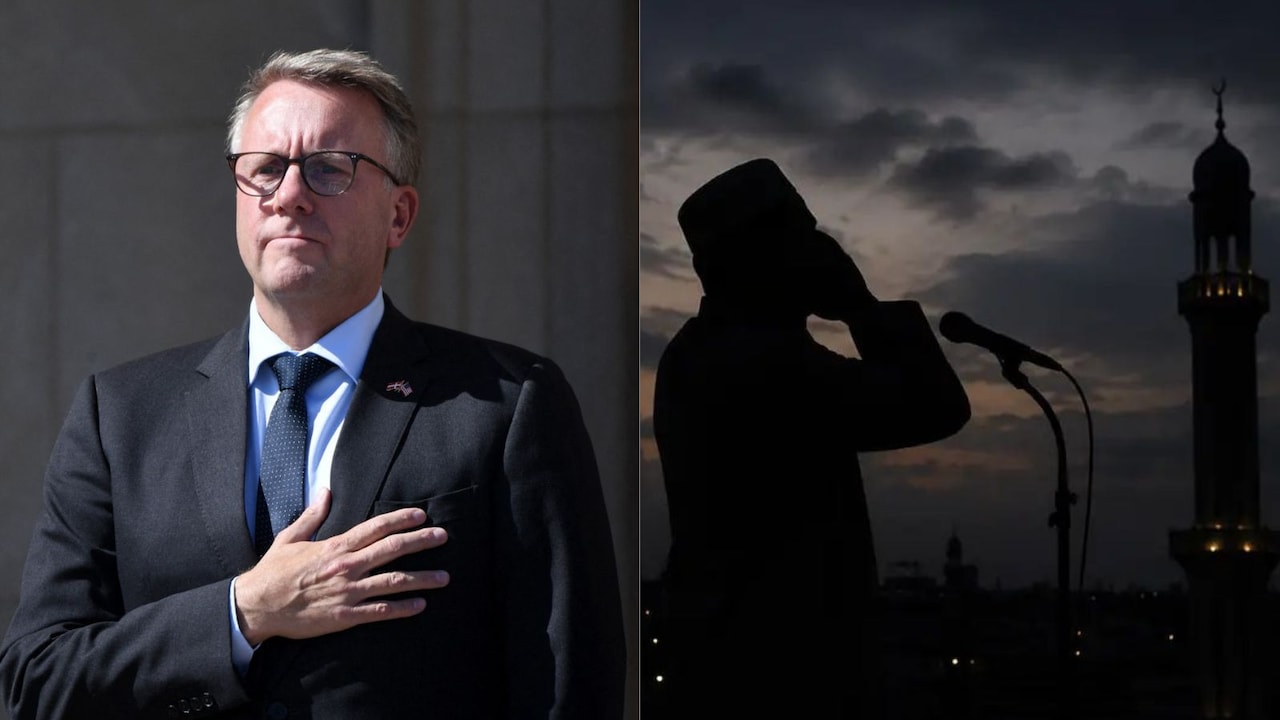
The pre-dawn air in Copenhagen carries a crisp, saline chill that rolls in off the Øresund strait. At 5:00 AM, the city is a study in muted monochromatic tones. The only sound is the rhythmic, metallic click of a solitary commuter’s bicycle chain and the soft hum of an electric street sweeper. For centuries, this specific auditory canvas—quiet, punctuated only by wind, gulls, and the occasional bronze tolling of a Lutheran church bell—has formed the baseline of Danish public life.
But sound is never just acoustic waves traveling through the air. It is a territorial claim. It is an architecture of identity.
When a petition reached the Danish parliament aiming to ban the public broadcast of the Islamic call to prayer, the Azaan, it was not triggered by a deafening roar echoing through the streets. In fact, the call to prayer is rarely heard in the open air of Denmark’s cities; most mosques restrict the sound to their interior walls out of respect for local norms. The debate erupted from a profound, burning anxiety about what the future sounds like, and who gets to control the volume knob of society.
The controversy crystallized around a blunt, provocative warning from a prominent political figure: Denmark must not become an Islamabad suburb.
To understand why a few minutes of amplified Arabic poetry can shake the foundations of a Nordic welfare state, one has to look past the political grandstanding and stand on a cobblestone street in Nørrebro.
The Unspoken Social Contract
Consider a hypothetical resident named Henrik. Henrik is not a caricature of intolerance; he is a schoolteacher who prides himself on his secular humanist values. He votes for center-left policies, happily pays a 45 percent tax rate, and believes the state should protect individual freedoms. But Henrik’s sense of peace relies on an invisible, unwritten agreement that governs Danish life: Hygge and social cohesion depend on a shared, predictable public sphere.
In Henrik’s worldview, religion is like a winter coat. You wear it warmly in private, but you take it off, or at least unbutton it, when you enter the neutral space of civic life.
When the proposal to outlaw the public Azaan gained traction, it tapped directly into Henrik’s quiet discomfort. For him, the melodic call rising above the rooftops is not just an expression of faith. It is an acoustic boundary marker. It signals a shift from a culture where faith is deeply private to one where it demands a permanent presence in the shared air.
Now change the lens. Walk three blocks down the same street and consider Amina, a second-generation Danish Muslim who runs a graphic design studio. For Amina, the sound of the Azaan is the sound of home, continuity, and belonging. It is a beautiful, familiar thread connecting her heritage to her current reality. When she hears politicians debating a preemptive ban on a sound that is barely even broadcast in the country, she does not hear a defense of secularism. She hears a message aimed directly at her: You are tolerated, but your presence must remain silent.
This is where the real problem lies. The legislative push is not a reaction to noise pollution. It is a preemptive strike in a culture war over integration, assimilation, and the definition of Danishness.
The Friction of the Amplified Word
Denmark’s relationship with religion is deeply paradoxical. The Evangelical Lutheran Church is technically the state church, embedded in the constitution. Church bells ring out across Danish towns every Sunday morning, and during weddings or funerals. Yet, the population is overwhelmingly secular. The bells are grandfathered into the landscape; they have transitioned from religious summons to cultural wallpaper. They sound like history, not ideology.
The Azaan, however, carries a completely different linguistic and cultural weight for the average Dane. It is not an instrumental chime; it is a spoken proclamation of theological supremacy delivered via a microphone.
When Danish lawmakers debate the ban, they are wrestling with a fundamental question of architectural asymmetry. If a society permits the historical ringing of bells, is it legally and morally obligated to permit the modern amplification of the call to prayer?
Supporters of the ban argue that the two cannot be equated. They claim church bells are a non-verbal, traditional marker of time that belongs to the historical heritage of the land. The Azaan, they counter, is a literal confession of faith broadcast to a captive audience of believers and non-believers alike.
But the legal machinery of a democracy cannot easily split hairs based on how much a sound "feels" like heritage. To ban one specific religious sound while protecting another requires navigating a minefield of human rights laws and freedom of expression protections. It forces a secular state to decide which religions are culturally compatible and which are foreign.
The Geopolitics of a Suburb
The invocation of Islamabad was not accidental. It was a calculated rhetorical device designed to trigger a specific visual and auditory image: a bustling, densely populated metropolis where the state and religion are inextricably fused. For many Danish voters, that image represents the exact opposite of the quiet, hyper-organized, secular Nordic model.
The real tension is driven by a fear of fragmentation. Denmark’s welfare system relies entirely on high levels of social trust. People willingly give a massive portion of their income to the state because they believe everyone else shares the same fundamental values and responsibilities. When neighborhoods begin to look—and sound—markedly different from the traditional norm, that fragile, subterranean trust begins to fray.
The debate is a symptom of a deeper realization that integration is not a simple checklist of learning the language and paying taxes. It is an ongoing negotiation about how much a society is willing to change to accommodate its new citizens, and how much those citizens must change to fit into their new home.
The air remains still over Copenhagen as the morning progresses. The sun finally breaks through the grey mist, catching the copper spires of the old stock exchange and the modern glass facades of the waterfront. The city’s soundscape fills with the roar of morning traffic, the chatter of children walking to school, and the ambient hum of a thriving metropolis.
For now, the silence regarding public calls to prayer remains a product of voluntary restraint by the local communities. But the legislative ghost stays in the room. The true test of the Danish model will not be found in whether parliament can draft a watertight law to police the airwaves, but in whether Henrik and Amina can look out across the same misty skyline and agree on what a peaceful morning sounds like.


