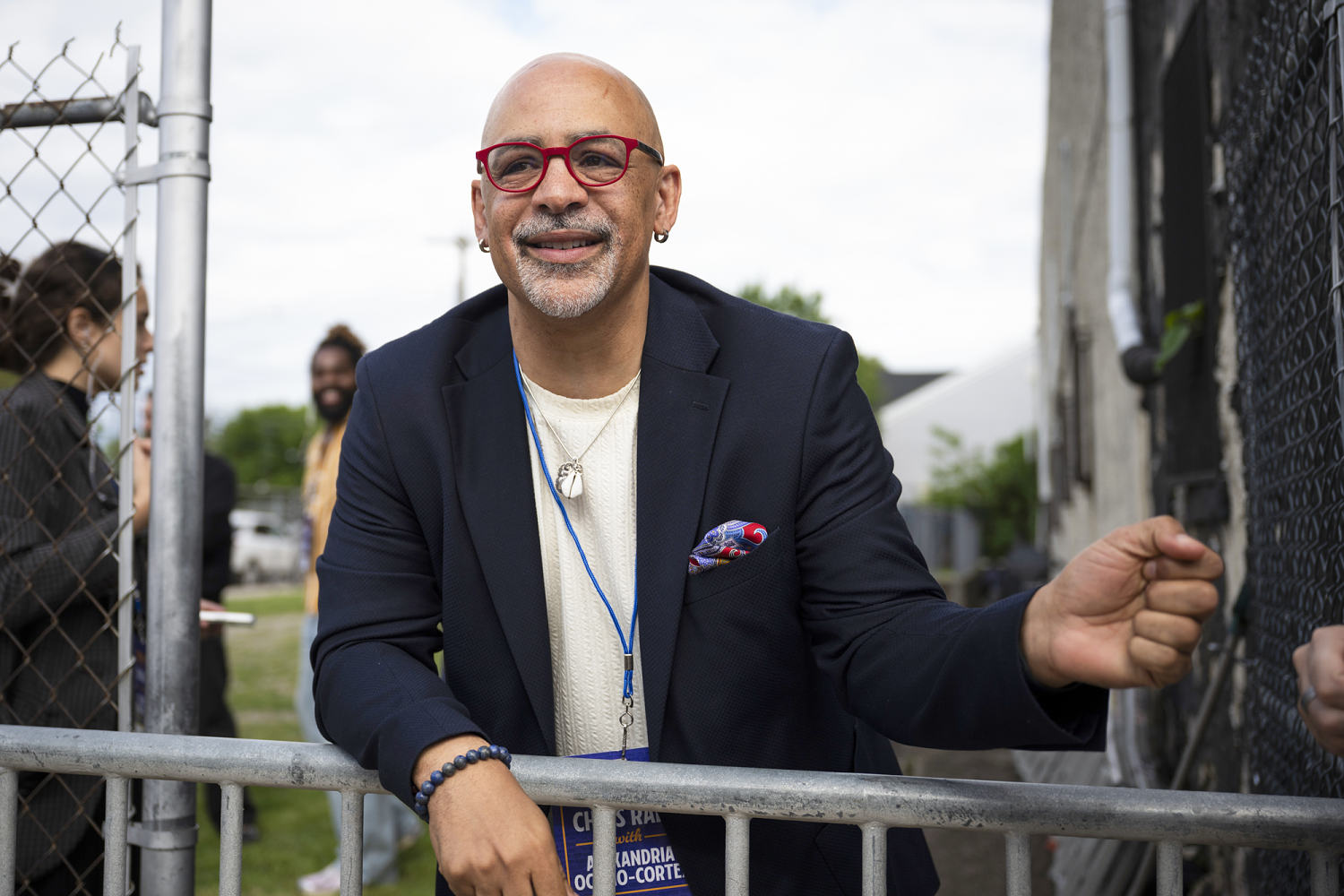
The air in the South Bronx smells of exhaust, frying plantains, and the distinct, metallic tang of anticipation. It is a Tuesday evening, and inside a cramped community center on Grand Concourse, the radiator is knocking a relentless, rhythmic beat. Fifty people sit on plastic folding chairs. They are not here for a dry civic lecture. They are here because their rent went up again, because the local emergency room is choked with kids suffering from asthma, and because they are being told that their vote in a primary election few outsiders care about is the most important thing they will do all year.
This is New York’s 15th Congressional District. By almost every conventional metric, it is the bluest pocket of America. Registered Democrats outnumber Republicans by a staggering margin. Whoever wins the Democratic primary wins the seat. Period. General elections here are a mere formality, a rubber-stamping of a decision made months prior in the heat of June.
For decades, national political pundits treated districts like this as monolithic strongholds, reliable ATMs for votes and campaign contributions that required little thought. But look closer. Beneath the overwhelming blue statistics lies a fierce, tectonic fracture. This is not a debate between Democrats and Republicans. This is an ideological civil war for the future of the left, playing out on the asphalt of America’s poorest congressional district.
The Ghost in the Voting Booth
To understand what is happening here, you have to understand the invisible stakes. Imagine a voter named Maria. She is a composite of the three different women I spoke to on 149th Street, women who work back-to-back shifts in home healthcare and retail. Maria does not read political white papers. She does not care about factional warfare in Washington, D.C.
What Maria cares about is the fact that her grocery bill has doubled while her paycheck remains stubbornly flat. When she walks into the voting booth, she carries the weight of a system that feels fundamentally broken.
For a long time, the establishment option was the default. The establishment promised stability. They promised seniority in Washington, the kind of quiet backroom influence that supposedly brings home federal funds for housing and infrastructure. They represented the old guard, politicians who viewed governance as a game of incremental progress, a chess match played over decades.
But incrementalism is a hard sell when the ceiling is leaking.
Enter the progressives. Over the last several election cycles, a highly organized, deeply passionate movement has targeted these deep-blue districts. They looked at the map and realized something crucial: you don’t need to convince swing voters in Ohio to change the country. You just need to mobilize the disillusioned, ignored working class of New York, Boston, and Chicago.
The strategy proved its worth with the political earthquake of 2018, when a political newcomer upset a high-ranking incumbent just a few miles away in Queens. That wasn't a fluke. It was a proof of concept. Now, progressives are looking for another definitive victory in the 15th District, seeking to prove that the future of the Democratic Party belongs to the insurgent left, not the cautious center.
Two Versions of the Same Future
The debate inside the 15th District boils down to a fundamental disagreement about power. How do you actually change a life like Maria's?
The establishment candidate argues that power is institutional. You get things done by building coalitions, compromising with moderates, and playing by the rules of the house. They point to millions of dollars secured in community project funding—money for a park renovation here, a hospital wing there. It is tangible, pragmatic, and safe. They warn that ideological purity tests do not feed hungry children; legislation does.
The progressive insurgent views that approach as a form of managed surrender. To them, the system itself is the crisis. They do not want a seat at the table; they want to change the menu. They argue that accepting corporate donations ties a politician’s hands before they even take the oath of office. Their platform is unapologetically sweeping: Medicare for All, a Green New Deal, federally guaranteed affordable housing.
It is an intoxicating vision. It treats politics not as the art of the possible, but as the fight for the necessary.
Yet, as you sit in that humid community center, you can feel the anxiety beneath the enthusiasm. Change is terrifying. The working class has been burned by big promises before. Urban renewal projects in the mid-20th century promised vibrant communities and delivered sliced-up neighborhoods segregated by massive highways. The scars of those promises are still visible in the elevated tracks of the subway lines cutting through the Bronx sky.
When a progressive candidate stands up and promises a complete overhaul of the American economic system, some hear salvation. Others hear a gamble they cannot afford to lose. If a radical agenda fails in Washington, the pundits in D.C. lose a talking point. The people in the Bronx lose their lifeline.
The Arithmetic of Apathy
The real enemy in the 15th District isn't the opposing faction. It is the silence.
In these marquee primary battles, national media outlets descend with television trucks and high-priced pollsters. They frame the race as a gladiator match between national figures, a proxy war between congressional leadership and the progressive "Squad." They analyze social media metrics and fundraising reports filled with small-dollar donations from California and Texas.
But on the ground, the reality is sobering. Primary turnout in midterm or off-year cycles in these districts can dip into the single digits. Think about that. A fraction of a fraction of the population decides who will hold a seat for the next decade.
Why? Because poverty takes time. If you are working sixty hours a week, navigating unreliable public transit, and trying to keep your kids safe, standing in line at a polling place on a Tuesday morning is a luxury.
The campaign that wins here won't be the one with the best television ads or the most high-profile endorsements. It will be the one that physically knocks on the doors of the fifth-floor walkups. The one that speaks to voters in the languages they speak at home. The one that convinces a cynical, exhausted electorate that their vote is not a scream into the void, but a lever that can actually move the world.
The Ripple Effect
What happens in this corner of New York does not stay here. The national implications are profound.
If the establishment holds the line, it sends a clear signal to the Democratic leadership in Washington: the progressive wave has crested. It signals that the party should anchor itself in the center-left, focusing on economic stability and mainstream appeal to protect vulnerable moderates in swing states. It reinforces the idea that the path to a national majority runs through the suburbs, not the urban core.
If the progressives win, the shockwaves will be felt instantly in the halls of Congress. Every moderate Democrat in a safe blue seat will look over their shoulder, suddenly terrified of a primary challenge from their left. The gravitational pull of the party will shift. Bold, structural reforms that were once dismissed as politically impossible will suddenly become the baseline expectations for the national platform.
This is the irony of the 15th District. It is a community that has been marginalized, underfunded, and overlooked for generations. Yet, for a few weeks every two years, it becomes the center of the political universe. The choices made by voters on these blocks will shape the policy debates of the entire nation.
The meeting at the community center draws to a close. The crowd spills back out onto the Grand Concourse. The sun has dipped below the apartment buildings, leaving the sky a bruised purple. A train roars by on the elevated tracks above, drowning out the sound of shouting children and car horns.
The candidates will continue to debate. The money will continue to pour in from across the country. But tomorrow morning, Maria will still wake up at 5:00 AM to catch the bus. She will walk past the campaign posters plastered on the chain-link fences. She will look at the names, the bold fonts, the promises of a better tomorrow, and she will decide whether to believe them one more time.


