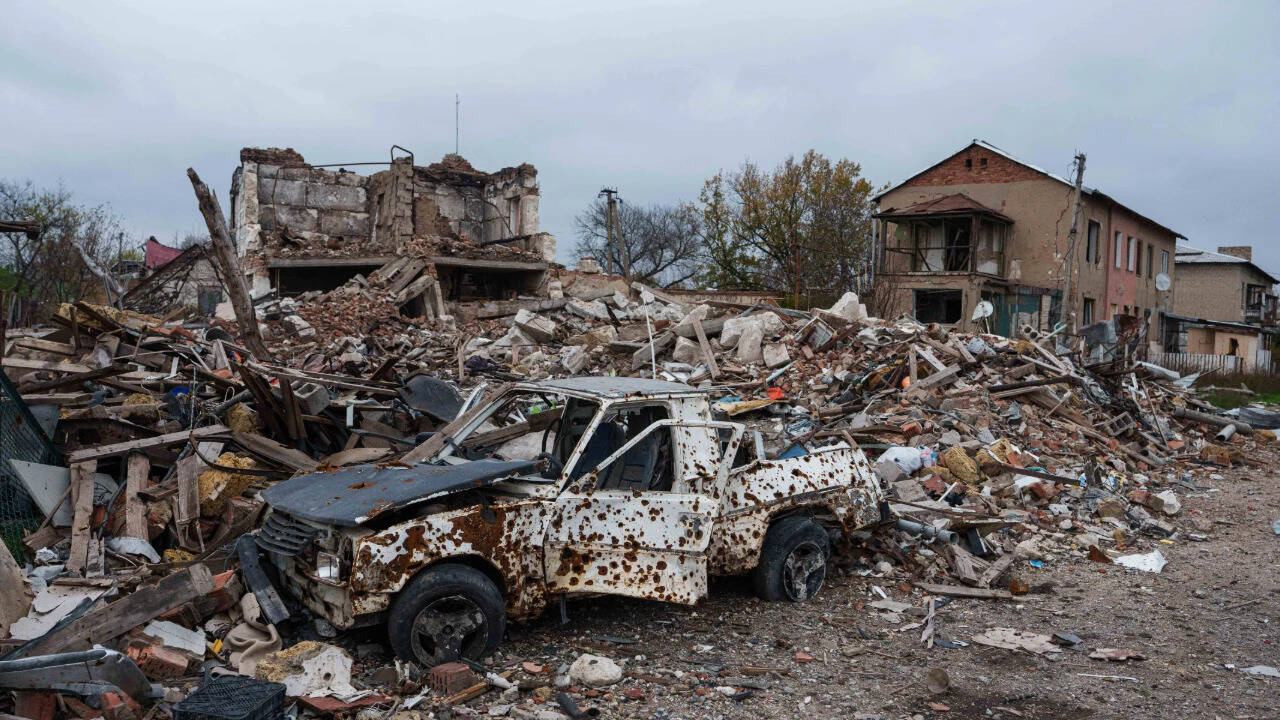
When 146,000 demonstrators flooded French streets for a fourth consecutive weekend, the international press largely reduced the story to familiar visuals of burning bins, tear gas canisters, and riot police clashing with black-clad protesters. That framing misses the real story. These France protests are no longer merely a reactive outburst against a single piece of legislation or a sudden spike in the cost of living; they represent a structural breakdown in how the French state negotiates social consent, exposing a widening gulf between an insulated executive branch and an electorate that feels permanently locked out of institutional decision-making.
To understand why tens of thousands of citizens continue to risk injury, arrest, and lost wages week after week, you have to look past the smoke on the boulevards. You have to examine the mechanics of French governance, the evolution of grassroots mobilization, and the quiet exhaustion of a middle and working class watching their purchasing power erode while executive authority grows more centralized. Meanwhile, you can explore other developments here: Why Donald Trump Wants Cage Fighters Behind the Resolute Desk.
The Anatomy of a Persistent Movement
Street mobilization in France carries a distinct historical weight, yet the current wave differs sharply from the traditional union-led marches of the twentieth century. In past decades, major confederations like the CGT or CFDT acted as predictable gatekeepers. They negotiated routes with police prefectures, deployed internal stewards to keep order, and ultimately sat down with ministers to hammer out compromises.
That choreography has largely collapsed. To see the full picture, we recommend the detailed report by NBC News.
Today’s demonstrations are characterized by decentralized networks, spontaneous offshoots, and a deep skepticism toward traditional intermediaries. While official Interior Ministry figures pegged nationwide attendance at 146,000 during this fourth weekend—a number union organizers routinely dispute as artificially low—the raw headcount tells only half the story. The geographic dispersion is what keeps security planners awake at night. Rather than concentrating exclusively in Paris, significant flashpoints have emerged in mid-sized provincial cities like Nantes, Rennes, Lyon, and Toulouse, where local economies feel the sharpest sting of inflation and public service reductions.
Why Traditional Compromise Fails
In a healthy parliamentary democracy, street pressure eventually translates into legislative amendment. In France, the Fifth Republic’s constitutional architecture often short-circuits that release valve. Mechanisms like Article 49.3, which allows the government to push bills through the National Assembly without a direct vote unless the opposition musters enough support to topple the cabinet, have become routine instruments of governance rather than emergency measures.
When citizens see parliamentary debate bypassed, the street becomes the only remaining arena for political expression. This creates a dangerous feedback loop:
- Executive insulation: Ministers view concessions to street protesters as a sign of weakness that will invite endless demands.
- Protester radicalization: Peaceful marchers grow disillusioned when massive turnouts yield zero policy shifts, creating space for more confrontational tactics.
- Policing fatigue: Law enforcement units deployed weekend after weekend operate under immense psychological and physical strain, increasing the likelihood of disproportionate force.
The Economics Beneath the Anger
Media coverage often treats civil unrest as a purely political or cultural phenomenon, ignoring the cold math driving people out of their homes on a Saturday morning. Behind the slogans lies a sustained squeeze on household budgets that statistical averages fail to capture.
While macroeconomic indicators occasionally suggest inflation is cooling, those metrics measure the rate of increase, not a return to previous price levels. For a family living in the outer suburbs or rural departments, the cumulative rise in grocery bills, energy tariffs, and fuel costs over the past several years represents a permanent reduction in living standards. Housing costs in urban centers continue to outpace wage growth, pushing workers further from their jobs and making them entirely dependent on vehicles that are increasingly expensive to run and maintain.
The Erosion of the Social Contract
France’s high tax burden has historically been tolerated because citizens received world-class public infrastructure in return—reliable regional rail, accessible healthcare, and well-funded local schools. That bargain is fraying. Across rural and peri-urban France, residents point to closing maternity wards, understaffed classrooms, and shuttered post offices as evidence that they are paying more for less.
When a government asks those same citizens to accept austerity measures, delayed retirement, or tighter unemployment benefits while corporate tax cuts remain untouched, the grievance shifts from economic frustration to moral outrage. Protesters are not simply asking for handouts; they are demanding fairness in how national sacrifices are distributed.
Inside the Policing Dilemma
Every fourth-weekend headline focuses on clashes, yet few examine the doctrinal shift in French crowd control that makes violent confrontation almost inevitable. Historically, French policing relied on keeping a distance, using mobile units to contain crowds while avoiding direct physical contact with peaceful demonstrators.
Over the past decade, that approach has evolved toward aggressive, rapid-intervention tactics. Specialized units, such as the BRAV-M (motorized brigades designed to move quickly through urban streets), operate alongside traditional riot police (CRS). While the Interior Ministry argues these units are essential for neutralizing small groups of violent agitators—often referred to as casseurs—civil liberties monitors and legal observers argue the opposite.
Rapid charges into dense crowds frequently trap ordinary families, journalists, and union members alongside violent elements. Indiscriminate use of tear gas and stun grenades turns orderly marches into chaotic stampedes. Once panic sets in, the distinction between peaceful protest and civil disorder vanishes entirely, producing the dramatic images of burning barricades that dominate evening news broadcasts while obscuring the peaceful majority marching blocks away.
The Data Deficit in Crowd Counting
One of the most contentious aspects of any major French protest is the battle over numbers. The Interior Ministry’s tally of 146,000 participants stands in stark contrast to organizers’ estimates, which frequently run two to three times higher. Understanding how these numbers are generated reveals why public trust in official narratives continues to decline.
| Metric Source | Methodology | Primary Blind Spots |
|---|---|---|
| Interior Ministry | Police observers positioned at fixed chokepoints manually count passing rows. | Misses protesters who join late, leave early, or march on parallel streets due to police blockades. |
| Union & Organizers | Estimates based on crowd density across the total square footage of the route. | Tends to overestimate density in looser sections of the march to project maximum political strength. |
| Independent Media Audits | Overhead drone footage and automated video counting at specific intersections. | Limited to major cities where funding and airspace permissions allow aerial monitoring. |
Neither official nor organizer figures tell the whole truth, yet the ritualistic dispute over headcount distracts from a more critical metric: persistence. A single massive march can be weathered by any administration. Four consecutive weekends of sustained mobilization across dozens of cities indicates a deep-seated grievance that will not simply evaporate when the weather turns or the news cycle moves on.
What Conventional Commentary Misses
Pundits routinely frame these protests as a binary struggle between a reforming government trying to modernize the economy and a nostalgic public clinging to unsustainable entitlements. That framing is both lazy and inaccurate.
First, it ignores the internal divisions within the protest movement itself. Marching side by side are public sector workers, private sector employees, retirees, students, and small business owners. They do not share a single manifesto. Some want radical wealth redistribution; others simply want lower taxes on fuel and small enterprises. Treating them as a monolithic bloc prevents observers from seeing how fragile—and simultaneously volatile—this coalition actually is. Because there is no central leadership capable of negotiating a truce, there is no off-ramp for the government to exploit.
Second, commentators often overlook the generational shift occurring in the streets. Younger protesters, many entering a job market defined by precarious short-term contracts and stagnant entry-level salaries, view the current political establishment with total detachment. For them, electoral politics feels like a closed loop where turnout changes nothing. Street action is not a supplement to voting; for a growing demographic, it has replaced voting as the primary mechanism of civic engagement.
The Risk of Normalization
Perhaps the most troubling consequence of four straight weekends of unrest is how quickly extraordinary levels of state force and street violence become normalized. When riot gear, preventative arrests, and armored vehicles become standard weekend fixtures in European capitals, the threshold for democratic crisis lowers permanently.
Local businesses in city centers bear an immediate, uncompensated financial toll, forced to board up storefronts every Friday afternoon and losing crucial weekend revenue. Meanwhile, municipal budgets strain under the cost of repairing damaged street furniture, clearing debris, and paying overtime for emergency services. Over time, this attrition breeds resentment among urban residents caught in the crossfire, further polarizing society between those who support the protests’ aims and those who simply want their streets back.
The Unresolved Standoff
History offers a clear warning to governments that rely purely on attrition to outlast public anger. Even when street numbers eventually dwindle due to exhaustion, arrest records, or financial strain, the underlying grievances do not disappear. They go underground, festering until the next spark—a sudden tax hike, a controversial decree, a viral video of police misconduct—ignites an even larger explosion.
France has seen this cycle repeat with predictable regularity over the past decade. Each wave leaves behind deeper institutional cynicism, weaker intermediary bodies, and a wider chasm between Paris and the provinces. Until the architecture of decision-making opens up to genuine democratic negotiation rather than top-down imposition, the barricades will never stay down for long.