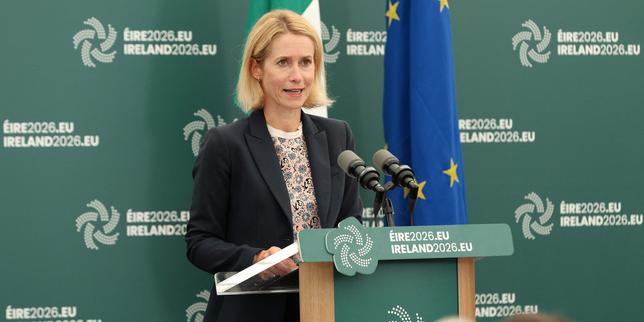
Brussels loves a grand gesture. Nothing makes bureaucrats feel like geopolitical heavyweights quite like slamming a stamp on a desk and shutting a door. The latest consensus sweeping European capitals demands a complete clampdown on tourist and Schengen visas for Russian citizens, framing the move as moral clarity against the Kremlin.
It is not moral clarity. It is strategic illiteracy.
For decades, the quiet genius of Western power was not our aircraft carriers or our sanctions regimes. It was our gravity. We built open societies, universities, cultural hubs, and economic corridors that acted like a massive intellectual vacuum cleaner. We pulled the best minds, the restless youth, the skeptical engineers, and the dissidents out of autocratic states and showed them an alternative.
Now, policymakers want to bolt the steel shutters closed and pretend that punishing a twenty-two-year-old software developer in St. Petersburg hurts Vladimir Putin. It does not. It hurts us.
The Lazy Logic of Collective Punishment
The argument for total visa bans rests on a lazy, emotionally satisfying premise. If the Russian state is waging war, every Russian citizen is an active combatant, or at least complicit by virtue of paying taxes inside a closed economy. Therefore, keeping them out denies the regime legitimacy and pressures the domestic population into revolt.
This is fantasy. Dictatorships do not fall because middle-class families cannot spend a weekend in Milan. In fact, cutting off escape valves and communication channels achieves the exact opposite of what Brussels intends.
Isolation strengthens the bunker. When you lock a population inside a cage, you hand the autocrat a monopoly on reality. Every state-run television channel in Moscow is currently screaming that the West hates all Russians, that Russophobia is a biological reality of European culture, and that ordinary citizens have nowhere to turn except the protective embrace of the motherland.
By restricting visas indiscriminately, European foreign ministries are doing Kremlin propagandists' work for them. We are confirming the lie. We are telling the Russian opposition, the independent thinkers, and the tech talent who despise Putin that they are persona non grata in the very societies they hope to emulate.
The Brain Drain We Are Paying to Stop
Let us look at what actually happens when you close the borders to human capital.
During my time tracking tech migration and intelligence flows across Eastern Europe, I have watched brilliant engineers leave Moscow not because they wanted to wave European flags, but because they wanted to build things without the FSB breathing down their necks. These people are walking intellectual property. They carry institutional knowledge, coding frameworks, and economic potential that left unchecked, could fuel innovative ecosystems in Berlin, Lisbon, or Warsaw.
When the European Union makes it bureaucratically impossible for them to secure a Schengen visa, where do they go? They go to Dubai. They go to Almaty. They go to Yerevan or Beijing.
We are not starving the Russian economy of talent; we are redistributing it to jurisdictions that do not care about human rights.
Imagine a scenario where every competent dissenting voice, every independent journalist, and every tech worker under thirty is safely sealed inside the Russian Federation with no access to foreign bank accounts, independent media, or cross-border travel. Who do you think wins that long-term demographic chess match? Putin does. He gets a homogenous, captive populace stripped of external influences, ready to be conscripted into his economic and military machine without friction.
Sanctions vs. Spite
Sanctions are tools of economic coercion designed to degrade industrial military capacity. They target supply chains, dual-use semiconductors, and petrodollar revenues. They are surgical instruments meant to bleed a war machine dry.
Visa restrictions on tourists, students, and family members are not surgical. They are emotional shrapnel.
The standard defense from Brussels is that security vetting becomes too difficult during wartime. That is an administrative cop-out. Intelligence services exist to vet threats. If a country with sophisticated counterintelligence apparatuses cannot process individual tourist or student visa applications without compromising national security, then the apparatus is broken. Instead of fixing the vetting process, politicians chose the lazy blanket ban because it plays well on evening news broadcasts.
We must separate the oligarchs from the citizens, and more importantly, we must distinguish between state actors and potential allies. The oligarch parking his superyacht in Limassol was never deterred by a Schengen visa ban anyway; he has three alternative passports and a shell company in the Caymans. The person who suffers is the student who saved for two years to attend a physics conference in Munich, or the daughter trying to visit her aging mother in Vienna.
The Uncomfortable Truth About Dissidents
There is a comfortable myth in Western political circles that real resistance looks like a mass street protest in Red Square, ending in the glorious overthrow of the regime. History laughs at this naive script.
Authoritarian regimes in the twenty-first century are not toppled by pitchfork mobs. They rot from the inside out when their talent bleeds away, when their brightest minds refuse to participate in the machinery of state, and when a critical mass of the population realizes that the outside world offers dignity that the dictator cannot match.
By slamming the door, we cut the cord. We tell the Russian middle class that their geopolitical fate is permanently fused with the man in the Kremlin, whether they voted for him or not.
If we genuinely want to accelerate the end of the war in Ukraine, our posture should be the exact opposite of what Brussels is proposing. We should be issuing visas like confetti to anyone willing to leave Russia. We should empty their universities, drain their tech sectors, and welcome every intellectual dissident who wants to trade a passport of an aggressor state for a future in the free world.
Make fleeing easy. Make staying hard.
That is how you wage a war of attrition against an autocracy. Anything else is just political theater designed to make comfortable people in Western capitals feel like they are doing something hard while actually doing the enemy's work for them.