The lazy consensus in Washington and across the mainstream media is that if you sign a piece of paper barring foreign-made high-voltage transformers, you have secured the electrical grid from foreign sabotage. This is a comforting delusion for politicians who prefer symbolic pageantry over industrial reality.
Donald Trump’s recent declaration of a national emergency under the International Emergency Economic Powers Act targets bulk-power system equipment from sanctioned nations, specifically aiming at hardware nodes associated with China. The mainstream narrative praises this as a masterstroke of economic defense.
It is actually a dangerous distraction. The American power grid is not dying because of a sneaky microchip hidden inside an imported substation transformer. It is failing because the domestic manufacturing base for heavy electrical equipment is hollowed out, lead times are stretching past four years, and utilities are forced to run antique infrastructure past its structural expiration date.
The Substation Mirage
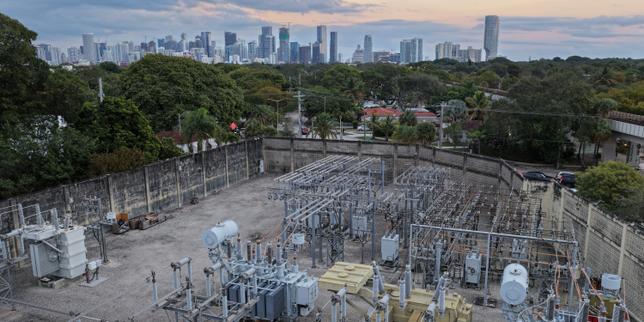
Let us define the core mechanism clearly. A bulk-power system relies on massive high-voltage transformers, circuit breakers, and grid-connected inverters. These are heavy, copper-and-steel monoliths weighing hundreds of tons. They are not consumer electronics. You cannot slip a malicious backdoor into a 500-kilovolt transmission transformer the way you update smartphone firmware.
The security panic focuses on digital control systems and firmware. But here is what the talking heads miss: most high-voltage transformers operating across the United States are entirely analog core-and-coil assemblies. They do not have an internet connection. They do not ping Beijing.
When digital components are integrated into substations, they sit in local supervisory control and data acquisition networks. If an adversary wants to compromise those systems, a border-crossing hardware ban does nothing to stop malicious software injection through third-party enterprise vendor networks, which is how actual modern cyberattacks occur. You can ban every physical component from a target country, and a domestic utility contractor using an off-the-shelf laptop with compromised remote-access credentials will still leave the front door wide open.
The Manufacturing Reality Check
I have watched companies burn millions of dollars trying to source domestic heavy electrical components in an environment where the supply chain simply does not exist at scale. The United States does not have enough domestic factories to build the transformers required to replace current stock, let alone handle the load growth demanded by data centers and advanced manufacturing.
When you ban imports without an existing domestic production equivalent, you do not protect the infrastructure. You freeze it in place. Utilities are forced to keep aging, decaying equipment online because there is literally nothing to swap it with.
Imagine a scenario where a critical substation transformer fails in the Midwest during a peak summer heatwave, and the replacement queue stretches out for forty-eight months. That is not national security. That is a self-inflicted blackout.
The Wrong Question
People ask: How do we keep foreign hardware out of our critical infrastructure?
This is the wrong question. It assumes the vulnerability is imported. The true vulnerability is structural brittleness. A grid stretched to its absolute thermal and volumetric limits by surging power demands from artificial intelligence and industrial reshoring will fail whether its transformers were wound in Pennsylvania or imported from overseas.
The obsession with country-of-origin labeling acts as a political placebo. It gives regulators a mechanism to wave a flag while ignoring the fact that our physical security depends on redundancy, rapid manufacturing surge capacity, and rigorous local network segmentation.
Stop pretending that signing an executive order replaces the hard, unglamorous work of pouring concrete, training domestic high-voltage engineers, and rebuilding heavy industrial manufacturing from the ground up. Until the United States can build a heavy transformer domestically in weeks instead of years, protectionist paper shuffling is just whistling past the graveyard.