The operational stability of a correctional facility depends on maintaining a strict monopoly on internal commerce and communication. When this monopoly breaks down, the resulting black market destabilizes the institution, converting manageable detention environments into high-risk zones for staff and inmates alike. In Quebec’s provincial detention network, this destabilization is occurring at the intersection of an unresolved labor dispute and an asymmetric technological threat: the deployment of low-cost autonomous unmanned aerial vehicles (UAVs) by organized crime.
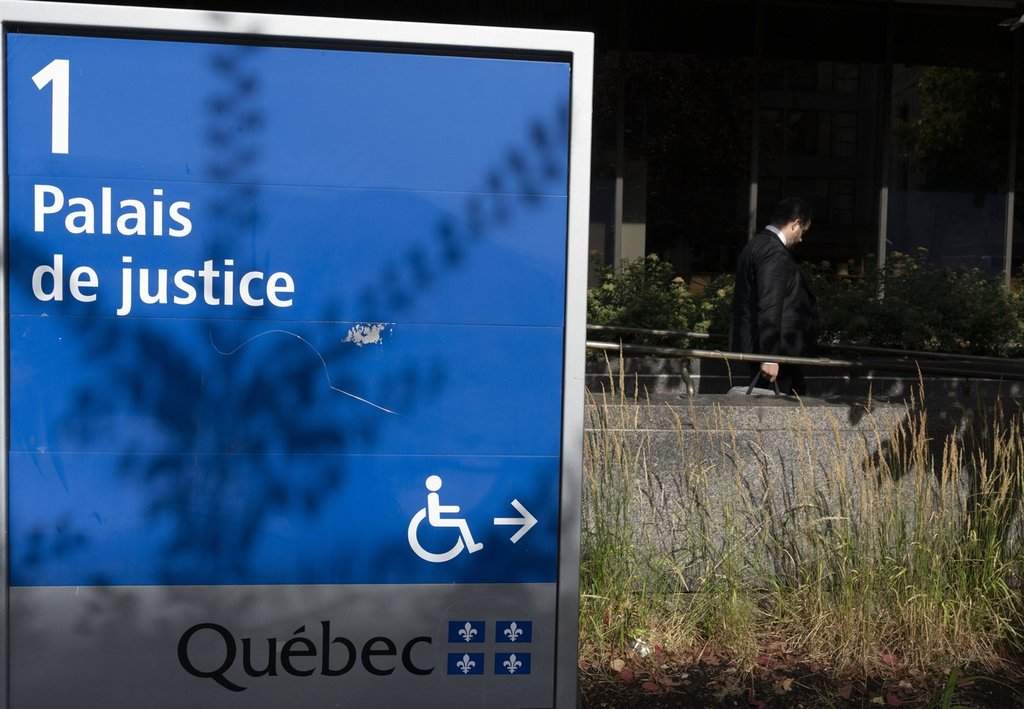
On May 20, 2026, the Syndicat des agents de la paix en services correctionnels du Québec (SAPSCQ)—representing 2,900 correctional officers across 17 provincial institutions—initiated province-wide demonstrations outside judicial and public security infrastructure. While the proximate trigger is a collective bargaining deadlock following the expiration of their contract in 2023, the underlying operational friction is driven by an unprecedented surge in airborne contraband logistics. The current crisis cannot be understood merely as a labor dispute over compensation; it is a structural failure where the velocity of technological adaptation by street gangs has far outpaced the capital deployment and staffing elasticity of the state.
The Microeconomics of the Correctional Black Market
To understand why drone incursions have become a systemic threat, one must analyze the hyper-inflationary economy inside a detention facility. In an environment where goods are artificially scarce, the risk premium shifts the supply curve vertically. A single gram of cannabis or a standard package of tobacco can command a 500% to 1,000% price premium inside a facility compared to its street value. Smart devices, which allow gang leaders to maintain command-and-control structures over external illicit enterprises, represent the highest-yield assets.
This economic reality dictates the capital allocation strategies of organized crime syndicates. The traditional methods of contraband introduction—mules, corrupt staff, or perimeter throws—carry high variable costs, including human capital risks and legal exposure. Drones fundamentally alter this cost function by decoupling the smuggler from the point of detection.
The Cost-Benefit Symmetry of Drone Delivery
Consider the operational ledger of an organized crime cell utilizing a commercial off-the-shelf (COTS) drone:
- Fixed Capital Expenditure: A high-payload commercial drone costs between $2,000 and $5,000 CAD.
- Variable Operational Cost: Minimal. The operator remains 1.5 to 3 kilometers away from the facility perimeter, hidden in dense terrain or a vehicle, rendering the risk of apprehension near zero.
- Payload Capacity: Modern COTS drones easily transport 500 grams to 2 kilograms of high-density contraband (narcotics, cellphones, SIM cards, cutting tools).
- Return on Investment (ROI): A single successful delivery of two cellphones and 100 grams of synthetic narcotics can generate upwards of $20,000 CAD in internal prison currency or external electronic transfers.
Under this model, even if a drone is intercepted and seized by correctional staff, the asset pays for itself within the first 15 minutes of a single successful flight. The loss of a drone is classified not as a critical failure, but as a minor cost of goods sold (COGS). Historical ministry data highlights this relentless volume: between January and March alone, 274 drone flights were officially logged over provincial facilities. Of those, 195 carried active payload packages. Even with a reported 69% seizure rate by guards, the remaining 31% of successful drops deliver sufficient volume to flood the internal market, sustain gang networks, and fuel an escalating cycle of inmate debt and systemic violence.
The Asymmetric Attrition of the Security Vector
The introduction of automated supply lines changes the operational reality for the 2,900 correctional officers on the ground. When contraband enters a facility via a drone drop—either directly to a compromised cell window where bars have been manipulated, or into the exercise yard during recreational hours—it triggers an immediate sequence of institutional friction points.
+------------------------+      +------------------------+      +------------------------+
|  Autonomous Drone Drop | ---> |  Contraband Ingestion  | ---> |   Internal Debt Cycle  |
|  (Low Cost/Zero Risk)  |      |   (Rapid/Sub-Cavity)   |      |  (Gang Enforced/Power) |
+------------------------+      +------------------------+      +------------------------+
                                                                            |
                                                                            v
+------------------------+      +------------------------+      +------------------------+
|  Guard Attrition &     | <--- |   Staff Interdiction   | <--- |  Institutional Violence|
|  Overtime Bottlenecks  |      |   (High Risk/Reactive) |      |  (Assaults/Lockdowns)  |
+------------------------+      +------------------------+      +------------------------+
The first friction point is the Velocity of Ingestion. When a package hits the yard, the window for staff interdiction is measured in seconds. Inmates operate coordinated interception teams; the package is recovered, broken down, and concealed within body cavities or structural hiding places almost instantly. This forces staff into highly volatile, reactive positions: executing unannounced cell extractions, conducting intrusive body searches, and managing the immediate fallout of localized gang turf wars driven by internal debt collection.
The second friction point is the Structural Overtime Loop. To combat the influx of contraband and the resulting spikes in violence, facility managers rely on lockdowns and exhaustive physical searches. However, the provincial corrections sector faces a chronic labor shortage. When guards are forced into mandatory overtime to manage heightened risk profiles, physical fatigue increases, situational awareness degrades, and turnover rates accelerate. This creates a self-reinforcing loop: staffing deficits lead to unmonitored blind spots in the facility, which invites more drone incursions, which elevates violence, which further decimates staff retention.
The Mitigation Deficit: Infrastructure vs. Bureaucracy
In response to the escalating threat, the Ministry of Public Security has attempted to deploy capital-intensive technological interventions. In mid-2025, the province announced an allocation of $38.5 million CAD dedicated to anti-contraband infrastructure. The deployment strategy relies on two primary defensive layers:
1. Physical and Imaging Barriers
The state has focused heavily on passive containment, deploying reinforced perimeter fencing and window grates designed to prevent drones from flying directly to cell windows. Concurrently, the province initiated the rollout of dual-energy X-ray body scanners and detection arches across its 17 facilities, with full installation lagging into late 2026 and March 2027. While highly effective at identifying metallic objects and concealed organic matter within body cavities during initial intake or post-yard returns, these systems are fundamentally reactive. They address the symptom (the presence of the item on an inmate) rather than the vector (the airborne delivery mechanism).
2. Signal Disruption and Electronic Warfare
The most critical technical vulnerability in the state's defense is the regulatory and bureaucratic delays surrounding active counter-UAV (C-UAV) technologies. While commercial drone operators rely on unlicensed radio-frequency bands (typically 2.4 GHz and 5.8 GHz) or GPS/GNSS signals for navigation, the state cannot easily deploy active electronic countermeasures.
The use of radio-frequency jammers to sever the command-and-control link of a drone or spoof its GPS coordinates falls under federal telecommunications jurisdictions. Interferences with these bands carry significant collateral risks, including the accidental disruption of commercial cellular networks, emergency services communications, and legitimate civilian aviation systems outside the prison perimeter. Consequently, while federal pilot projects for localized jamming have been authorized, the bureaucratic friction required to deploy operational, automated jam-to-kill systems across all provincial facilities has left the vast majority of institutions reliant on visual detection and manual recovery.
The Collective Bargaining Disconnect
The concurrent labor protests outside provincial courthouses and public security offices highlight a deeper structural flaw in the government's management strategy: the Treasury Board is treating capital infrastructure and labor expenditure as independent variables.
While Chair France-Élaine Duranceau’s office indicates that the government has successfully ratified agreements with 99% of other public sector entities—granting a benchmark 17.4% salary increase over five years—this macro-level metric fails to account for the unique hazard profiles of correctional environments. The government’s response to the current demonstrations has been legalistic rather than structural, filing an immediate application with the provincial labor tribunal to enforce strict compliance with essential services laws and suppress disruptive labor actions.
This legal maneuvering ignores the labor market reality. An institutional framework that offers a flat salary growth profile across the public sector fails to adjust for the shifting risk premiums of specific roles. When a correctional officer’s operational environment is degraded by automated contraband networks, street gang proliferation, and constant staffing shortages, a standardized salary increase functions as a real-term reduction in risk-adjusted compensation. If the baseline working conditions are not stabilized by mitigating the drone threat, a 17.4% wage increase will not solve the underlying recruitment and retention failures.
Strategic Playbook for Institutional Equilibrium
To resolve the systemic instability within Quebec’s correctional facilities, the strategy must pivot away from isolated infrastructure projects and legal suppression. The state must execute a synchronized, two-pronged strategy that links technical containment with labor stabilization.
Immediate Kinetic and Electronic Upgrades
The provincial government must bypass long-term procurement delays by declaring an operational emergency across the five highest-risk regional facilities. This declaration must be used to fast-track the deployment of localized, geofenced automated C-UAV mitigation systems.
Instead of waiting for comprehensive federal radio-frequency jamming clearances, facilities must deploy passive acoustic and optical tracking arrays coupled with kinetic interception options—specifically, automated perimeter netting systems and low-collateral-damage pneumatic net guns. These systems provide immediate, localized defense against low-altitude window deliveries without risking broader telecommunications disruption.
Introduction of Risk-Indexed Labor Addendums
The Treasury Board must decouple the SAPSCQ negotiations from the generic public sector framework. The unique operational hazards introduced by automated contraband vectors require a specialized Institutional Security Premium.
This premium should not be structured as a flat wage increase, but as a dynamic, facility-dependent hazard index tied directly to documented drone incursions, local gang concentration metrics, and staffing deficits. By indexing compensation directly to the operational volatility of each specific institution, the state can disincentivize guard attrition in high-attrition facilities like Rivière-des-Prairies and Montreal, directly breaking the mandatory overtime cycle.
Realignment of the Legal Risk Function
Finally, the Ministry of Justice must realign the legal consequences for external drone operators. The current legal framework treats drone smuggling primarily as a property or contraband infraction. The state must introduce legislative amendments that reclassify the unauthorized operation of a UAV over a correctional facility as an explicit threat to national and institutional security, carrying mandatory minimum sentences equivalent to armed trafficking offenses.
By aggressively increasing the human capital cost for the external operators—shifting the penalty from a simple asset seizure to certain, long-term incarceration—the state can finally disrupt the asymmetric economic calculus that currently favors organized crime. Only when the external risk profile matches the internal value of the black market will the skies above the province's detention centers be cleared.