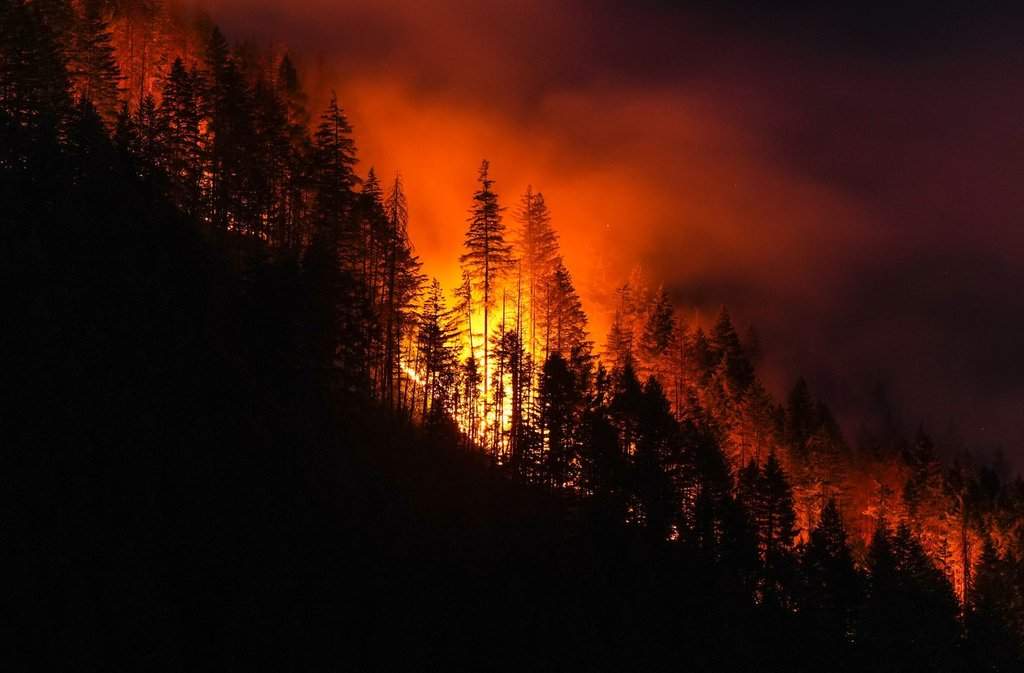
The sky didn’t turn black that day in May 2016. It turned a sickly, bruised orange—the color of a dying ember, suffocating under a blanket of charcoal smoke.
I remember the sound most vividly. Not the roar of the fire, though that was present, a low-frequency hum that vibrated in the marrow of my bones. It was the sound of silence inside the car. My neighbor, a man who usually spent his Saturday mornings meticulously detailing his truck, sat in his passenger seat staring at his hands. He wasn’t crying. He was simply gone. The part of him that belonged to the present—the man who worried about his lawn or the price of gas—had vanished somewhere behind us on Highway 63.
We were part of the 88,000.
For many, the story of the Fort McMurray wildfire ended when the flames were extinguished, or when the insurance adjusters finished their tally of the wreckage. We were told to move on. We were given pamphlets about "resilience." We were congratulated for surviving the largest evacuation in Alberta’s history.
But trauma doesn’t have an evacuation order. It doesn’t follow a timeline, and it certainly doesn't respect the arbitrary closing of a file.
The invisible damage began the moment we were safe. That’s the part the headlines rarely capture. They focus on the hectares burned, the cost of reconstruction, the political maneuvers. They rarely focus on the grocery store run where the smell of burnt toast triggers a frantic, irrational need to find your car keys, even if you are nowhere near a stove.
Think of the human brain during a disaster as a house undergoing a sudden electrical surge. The wires fray. The breakers trip. Most of us assume that once the power is cut and the danger passes, the system will simply reset. We flip the switch, expecting the lights to come back on. But sometimes, the wires have melted.
Years later, we see the ripple effects in the quiet moments. It is the veteran of the evacuation who checks the rear-view mirror every three minutes, convinced that the horizon is closing in. It is the child who keeps a "go-bag" under their bed, hidden from their parents, filled with a flashlight and a single favorite toy. It is the community that remains collectively hyper-vigilant, scanning the tree line for wisps of gray every time the summer heat climbs too high.
We carry the wildfire in our lungs, not because of the smoke we inhaled then, but because of the breath we still struggle to draw today.
Some call this Post-Traumatic Stress Disorder. It is a sterile, clinical term for a deeply messy, visceral reality. It sounds like a box you can put your feelings into. But there is no box deep enough for the sensation of your life being reduced to the contents of a backseat in under an hour. When you lose the physical markers of your existence—the photos, the childhood drawings, the mismatched coffee mugs—you don’t just lose objects. You lose the anchors that tether your identity to the world.
Rebuilding a city of wood and steel is a matter of engineering. Rebuilding a person is a matter of alchemy.
Consider the survivor who tries to explain this to a spouse or a colleague. They use words like "anxious" or "stressed." The listener nods. They offer a sympathetic sound. But they cannot feel the ghost heat. They cannot understand why a warm breeze on a dry day makes your heart hammer against your ribs like a trapped bird.
This is where the true work happens. Not in the government grants or the zoning permits, but in the slow, agonizing process of learning to trust the ground beneath your feet again. It is a process of reclaiming the present from the shadow of the past.
Experts often talk about "processing" trauma, a term as clinical as it is frustrating. It suggests that you can put your memories through a mill and have them come out the other side as something manageable. But trauma isn't something you process. It’s something you learn to inhabit. You learn to live with the sudden spikes of panic. You learn to recognize when your nervous system is lying to you, telling you that the world is ending when the reality is just a dry, windy afternoon.
The real challenge for those of us who lived through the orange sky is the struggle for acknowledgment. When the world demands we be "back to normal," it creates a chasm between who we were and who we are expected to be. There is a profound, aching loneliness in being surrounded by people who have never had to run for their lives, trying to explain why you are suddenly trembling in the middle of a mundane Tuesday.
But there is power in the admission.
When survivors step forward—not to discuss the logistics of the fire, but to speak of the wreckage left in the mind—the atmosphere changes. It creates a space where the invisible can finally be named. It validates the frantic heartbeat. It confirms that the ghost heat isn't a symptom of weakness, but a testament to how much we had to lose.
We are not victims. We are survivors. But the definition of that word has been hollowed out by those who use it to suggest a triumphant, clean ending. There is no clean ending. There is only the long, winding road that leads away from the fire.
Perhaps the most important thing we can do for one another is to stop asking when the recovery will be finished. Instead, we should start asking how the weight feels today. We need to stop treating the memory of the fire as a shameful secret that belongs in the past, and start treating it as a permanent part of our collective landscape.
The air in the north is clear now. The trees have begun to grow back, their green needles pushing through the scarred, blackened earth. It is a slow, quiet miracle.
We, too, are growing back.
But even as the forests flourish and the new buildings stand tall, there are days when the wind shifts just right. There is a scent in the air—a faint, lingering trace of wood smoke. In that moment, the years evaporate. The present dissolves. And for a few seconds, the sky turns that familiar, terrible shade of orange.
You stand there. You feel the panic rise. You wait for the world to catch fire.
And then, you breathe.
You look at the horizon, steady and cool and blue. You tell your heart that it is safe, even when your body screams that it is not. You realize that you have survived the fire, and every day since has been an act of defiance against the ashes.
The fire is gone, but the lesson remains: you can be broken by the heat, and you can still find the strength to stand in the light of a morning that is, at long last, just a morning.


/i.s3.glbimg.com/v1/AUTH_1f551ea7087a47f39ead75f64041559a/internal_photos/bs/2025/P/p/LLF10DRp2WoUISXryrUQ/whatsapp-image-2025-12-02-at-20.06.57.jpeg)