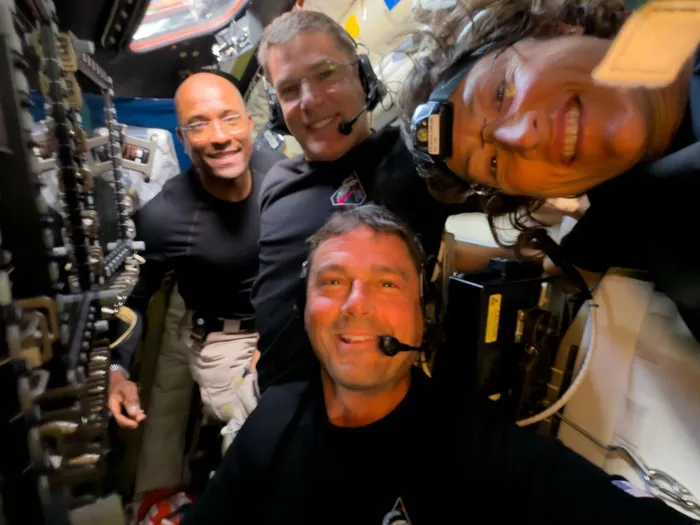
The wait is over. Just a few hours ago, the Orion capsule hit the Pacific Ocean at nearly 25,000 miles per hour before bobbing safely in the waves off the coast of San Diego. It’s a relief. It’s a triumph. Most of all, it’s a loud signal that humans are no longer stuck in low Earth orbit.
After ten days of looping around the moon, the Artemis II crew—Reid Wiseman, Victor Glover, Christina Koch, and Jeremy Hansen—is back on solid ground. They didn't land on the lunar surface this time. That wasn't the point. This mission was the ultimate stress test for the life-support systems that will keep people alive during the much more complex Artemis III landing. Watching the three massive orange-and-white parachutes unfurl over the horizon felt like a bridge between the Apollo era and a future where living on the moon is just another Tuesday. If you found value in this piece, you should read: this related article.
Why this splashdown is different than the ones you remember
If you’ve seen footage of the old Apollo missions, the scene looks familiar. A charred capsule, a carrier ship waiting nearby, and frogmen jumping into the water. But the tech inside Orion is light years ahead of what Neil Armstrong and Buzz Aldrin used.
Orion had to handle a "skip reentry." This is a maneuver where the capsule actually bounces off the atmosphere once—like skipping a stone across a pond—to bleed off speed and heat before the final descent. It makes the landing much more precise. NASA didn't want to just land "somewhere" in the Pacific. They wanted to land exactly where the recovery teams were waiting. They nailed it. For another perspective on this development, check out the recent update from Wired.
The heat shield took the brunt of the work. It faced temperatures around 5,000 degrees Fahrenheit. That's about half the temperature of the sun. If that shield had a single flaw, the mission would have ended in tragedy. Instead, the crew walked out of the recovery ship, the USS San Diego, looking remarkably healthy for people who just spent a week and a half in a pressurized tin can.
The crew didn't just sit there and look at the stars
A lot of people think Artemis II was just a glorified flyby. That's wrong. These four astronauts were basically high-stakes test pilots.
During their 10.3-day journey, they pushed the Orion spacecraft to its limits. They tested the manual handling of the ship near the Moon, ensuring that if the computers ever fail during a landing, a human can still steer the thing. Christina Koch and Victor Glover spent hours monitoring radiation levels. Space is a radioactive shooting gallery once you leave the protection of Earth's magnetic field. Collecting this data is the only way we’ll know how to build long-term habitats on the lunar surface without the residents getting sick.
Jeremy Hansen, the first Canadian to leave Earth orbit, helped manage the complex communication handoffs between NASA’s Deep Space Network and the capsule. We take Wi-Fi for granted. In deep space, even a tiny lag can mean the difference between a successful course correction and drifting into the void.
Breaking down the San Diego recovery operation
The recovery off San Diego isn't just about pulling a bucket out of the water. It’s a choreographed dance involving the U.S. Navy and NASA’s Exploration Ground Systems team.
As soon as the capsule hit the water, "swimmers" deployed from helicopters to inspect the capsule for any propellant leaks. You don't want the astronauts breathing in toxic fumes the second the hatch opens. Once the "all clear" was given, they attached a winch line and pulled Orion into the flooded well deck of the USS San Diego.
- Precision Descent: Orion targeted a specific corridor to ensure it stayed within range of the recovery fleet.
- Heat Dissipation: The skip entry reduced the G-forces on the crew, making the "hit" much softer than it was in the 1960s.
- Medical Assessment: The crew underwent immediate checks. Spending ten days in microgravity messes with your inner ear and blood pressure.
- Capsule Transport: Orion is now being hauled back to the Kennedy Space Center in Florida for a "post-flight autopsy" to see how the hardware held up.
What everyone gets wrong about the Artemis timeline
I hear this a lot: "Why is it taking so long? We went to the moon in 1969 with the computing power of a calculator."
The truth is that Apollo was incredibly risky. We got lucky. In 2026, our safety standards are much higher. Artemis II had to prove that the life support system—the stuff that scrubs CO2 and manages oxygen—is 100% reliable. You can't just "open a window" 240,000 miles away from home.
This splashdown clears the path for Artemis III. That's the big one. That’s the mission that will put the first woman and the first person of color on the lunar south pole. But Artemis III can't happen without the data we just got from this San Diego splashdown. We needed to see how the electronics handled the Van Allen radiation belts. We needed to see if the water recycling system worked under the stress of four active adults.
This wasn't just a NASA win
It’s easy to forget that this was an international effort. The European Space Agency (ESA) built the Service Module—the "powerhouse" that sat below the Orion capsule and provided electricity, water, and air. Without that European hardware, the crew wouldn't have made it past the first day.
The successful recovery in San Diego is a win for the global space community. It proves that the "Moon to Mars" architecture actually works. We aren't just visiting the moon to plant a flag and leave. We're building a system that can be reused, refined, and eventually extended to the red planet.
The immediate next steps for the Artemis program
NASA doesn't get a day off. Engineers are already pouring over the telemetry data transmitted during the reentry. They'll be looking for any tiny anomalies in the heat shield or the parachute deployment timings.
If you want to stay ahead of the curve on what happens next, keep an eye on the Starship development in Texas. While Orion is the taxi that gets astronauts to lunar orbit, SpaceX’s Starship is the elevator that will actually take them down to the surface for Artemis III. The success of this splashdown puts immense pressure on SpaceX to get their landing system ready.
You should also look for the official crew debriefings. Over the next month, Wiseman, Glover, Koch, and Hansen will be sharing their personal accounts. Their "human" feedback on how the ship felt, smelled, and moved is often more valuable than the sensor data.
The moon is closer than it's been in fifty years. Today’s splashdown wasn't the end of a mission. It was the beginning of the next era of human history. Go read the technical specs of the Orion heat shield if you want to see the real unsung hero of today. It’s a masterpiece of material science that just saved four lives.