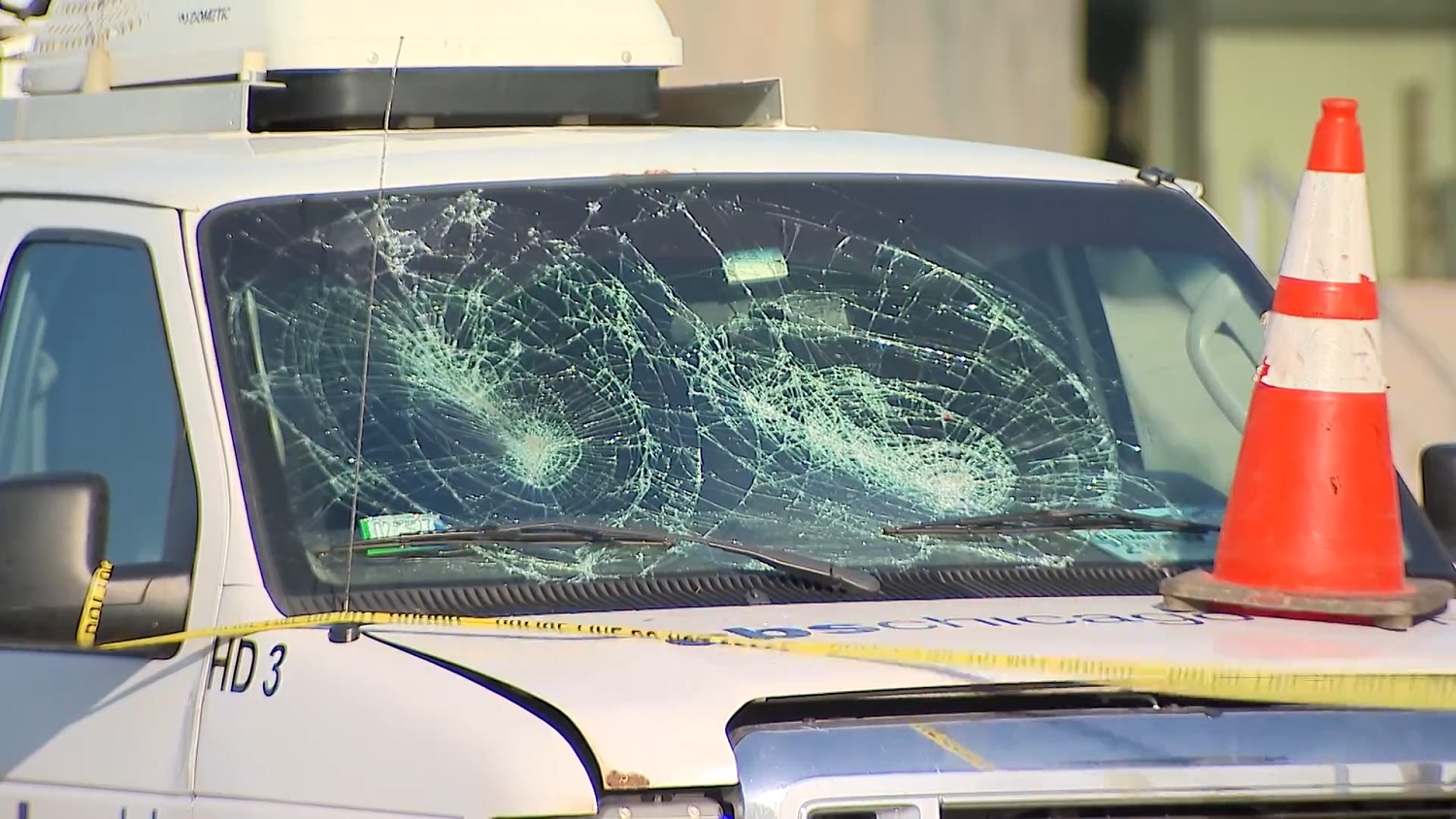
On August 28, 2023, a Univision Chicago news crew was robbed at gunpoint in the West Town neighborhood while filming a report on a series of robberies. Less than two weeks prior, on August 16, a standard broadcast team operating near the Adler Planetarium on Chicago's lakefront was swarmed, assaulted, and robbed of their electronic field production (EFP) equipment. These incidents are not isolated anomalies; they represent a structural shift in the risk profile of urban news-gathering operations.
Broadcast journalism relies on a highly predictable operational model: deploy high-value capital assets into public spaces with minimal physical security to capture real-time information. When the baseline threat level of an urban environment changes, this operational model breaks down. To secure field crews, media organizations must abandon reactive scheduling and adopt a rigorous, risk-modeling framework that treats news gathering as a high-value asset deployment in an unsecure environment.
The Economic and Tactical Drivers of Field Crew Targeting
Field news crews are highly attractive targets for criminal enterprises due to a specific convergence of economic value and tactical vulnerability. This dynamic can be expressed through a simple risk equation:
$$Risk = Threat \times Vulnerability \times Asset\ Value$$
Understanding why media personnel are targeted requires breaking down the variables of this cost-benefit calculus from the perspective of the threat actor.
Liquid Capital Asset Profiling
A standard Electronic Field Production (EFP) configuration—consisting of a broadcast-grade shoulder-mount camera (e.g., Sony FX9 or Panasonic P2 variants), wireless audio systems, stabilized lenses, and portable cellular bonding transmission units (e.g., LiveU or Dejero)—carries a capital value ranging from $25,000 to $70,000. These assets suffer from a high degree of "liquidity" on secondary black markets. Because digital video equipment is modular, components can be stripped, wiped of internal firmware tracking, and redistributed globally through digital marketplaces with minimal friction.
Tactical Pre-Occupation and Cognitive Load
During a field broadcast, a two-person crew (typically a reporter and a photojournalist) operates under intense cognitive load. The photojournalist is visually isolated behind a viewfinder or monitor, balancing framing, exposure, and audio levels while tethered to physical equipment. The reporter is focused on editorial delivery, script reading, or live interaction with a control room. This creates an acute deficit in situational awareness. Threat actors exploit this operational blindness, executing approaches within the crew’s blind spots with a near-total guarantee of tactical surprise.
Predictable Geographic and Temporal Footprints
News operations are inherently formulaic. Live broadcasts are synchronized to rigid station programming blocks (typically 4:00 PM, 5:00 PM, 6:00 PM, and 10:00 PM). Crews must arrive at a location 30 to 60 minutes prior to airtime to establish cellular or microwave links and set up lighting. This creates a highly visible, static footprint. A marked or even an unmarked media vehicle parked in a public space for an extended duration serves as a beacon, allowing threat actors to observe, plan, and execute an approach with minimal variance.
The Three Pillars of Field Risk Mitigation
To counter these vulnerabilities, media management must move away from ad-hoc safety advisories and implement a structured, three-tiered security framework.
                  [Field Risk Mitigation Framework]
                                  │
         ┌────────────────────────┼────────────────────────┐
         ▼                        ▼                        ▼
┌─────────────────┐      ┌─────────────────┐      ┌─────────────────┐
│ 1. Operational  │      │ 2. Tactical     │      │ 3. Technological│
│    Decoupling   │      │    Hardening    │      │    Redundancy   │
└─────────────────┘      └─────────────────┘      └─────────────────┘
1. Operational Decoupling
The primary point of failure in traditional news gathering is the tight coupling of the reporter, the photojournalist, and the heavy equipment. Operational decoupling breaks this dependency by shifting to asymmetric production models:
- Low-Profile Deployment (Mojo): Transitioning high-risk assignments from traditional EFP gear to Mobile Journalism (Mojo) setups. Utilizing high-end smartphones paired with compact, encysted directional microphones reduces the visual signature of the crew by an order of magnitude. A crew operating a smartphone is indistinguishable from the general public, neutralizing their profile as a high-value target.
- Remote Asset Positioning: Utilizing long-focal-length lenses from secure, elevated, or long-range positions rather than deploying crews at ground level in the immediate center of a high-risk zone.
2. Tactical Hardening
When high-profile equipment must be deployed, the physical environment around the asset must be actively managed. This requires treating the broadcast location as a temporary tactical site.
- Dedicated Close Protection Personnel: Executive management must allocate budget lines for armed or unarmed security assets whose sole operational mandate is perimeter surveillance. If a security guard is looking at the news event or assisting with equipment, the configuration has failed. The guard's eyes must remain outward, establishing a hard buffer zone around the cognitive blind spots of the news crew.
- Vehicular Egress Prioritization: Media vehicles must be parked to allow immediate, unblocked egress. Vehicles should never be boxed into dead ends or tight parking spots. The engine should remain operational during high-risk, short-duration live hits, with the driver's seat cleared of obstructions to allow for immediate evacuation.
3. Technological Redundancy and Asset Tracking
If an asset is compromised, the objective shifts from defense to loss mitigation and investigative utility.
- Continuous Cloud Synchronization: Traditional workflows store footage locally on SD or CFast cards until ingest. High-risk protocols require continuous, real-time proxy uploading via cellular bonding networks. If a camera is stolen, the captured data up to the moment of the infraction must already reside on a secure cloud server.
- Embedded Geofencing and Telemetry: Integrating discrete, power-independent GPS and cellular trackers into the chassis of high-value components. These trackers must operate independently of the camera's main battery system, allowing law enforcement to track the asset's velocity and location post-theft.
Quantifying the Cost Function of Security Integration
Implementing comprehensive security protocols introduces friction into the economic models of local newsrooms. A clear trade-off exists between risk reduction and operational efficiency.
| Metric | Traditional Workflow | Hardened Workflow | Impact Assessment |
|---|---|---|---|
| Setup Time | 15 Minutes | 35 Minutes | Reduces daily story output volume |
| Capital Expenditure (per crew) | $45,000 (Standard Gear) | $52,000 (With Tracking & Comms) | Increases upfront infrastructure costs |
| Operational Cost (per shift) | Baseline Salary | Salary + Security Contractor Fees | Increases per-story variable costs |
| Asset Loss Probability | Moderate-High (in unmitigated zones) | Low-Negligible | Protects long-term insurance loss ratios |
The second limitation of the hardened workflow is organizational inertia. Newsrooms operate under intense deadline pressure. Forcing crews to conduct a formal site risk assessment before deployment slows down the immediate acquisition of breaking news. However, failing to account for this cost results in systemic asset depreciation through theft and psychological attrition among the workforce, which ultimately carries a much higher structural cost than operational delays.
Implementing the Threat-Level Deployment Matrix
News directors must replace emotional decision-making with an objective deployment matrix. Assignments should be graded using standardized criteria before a crew leaves the station.
Phase 1: Environmental Assessment
Assign a numerical value (1-5) to the geographic location based on real-time crime data, historical incidents involving media, and crowd density. A low-density, high-crime index area receives a higher threat score due to the lack of natural surveillance.
Phase 2: Visibility Profile
Determine the equipment footprint required for the story. A live hit with external lighting and a tripod ranks as a Level 5 visibility profile. A single reporter with a concealed mobile device ranks as a Level 1.
Phase 3: Tactical Execution
Combine the scores to dictate the mandatory security posture:
$$Score = Environmental\ Assessment + Visibility\ Profile$$
- Score 2–4 (Low Risk): Standard two-person deployment. No external security required. Continuous monitoring via newsroom desk.
- Score 5–7 (Moderate Risk): Mandatory low-profile equipment configuration OR standard equipment with a designated spotter from the newsroom staff who performs no production duties.
- Score 8–10 (High Risk): Mandatory dedicated security personnel. No live hits after civil twilight. Complete transition to cloud-proxy sync enabled devices.
Station management must empower field crews with absolute veto authority. If the on-scene variable assessment exceeds the pre-departure matrix calculation—due to changing crowd dynamics, structural blockages, or hostile surveillance—the crew must possess the contractual and cultural backing to abort the broadcast immediately. Treating safety as an absolute operational variable rather than a discretionary luxury is the only mechanism that preserves capital assets and human life in increasingly volatile urban operating theaters.