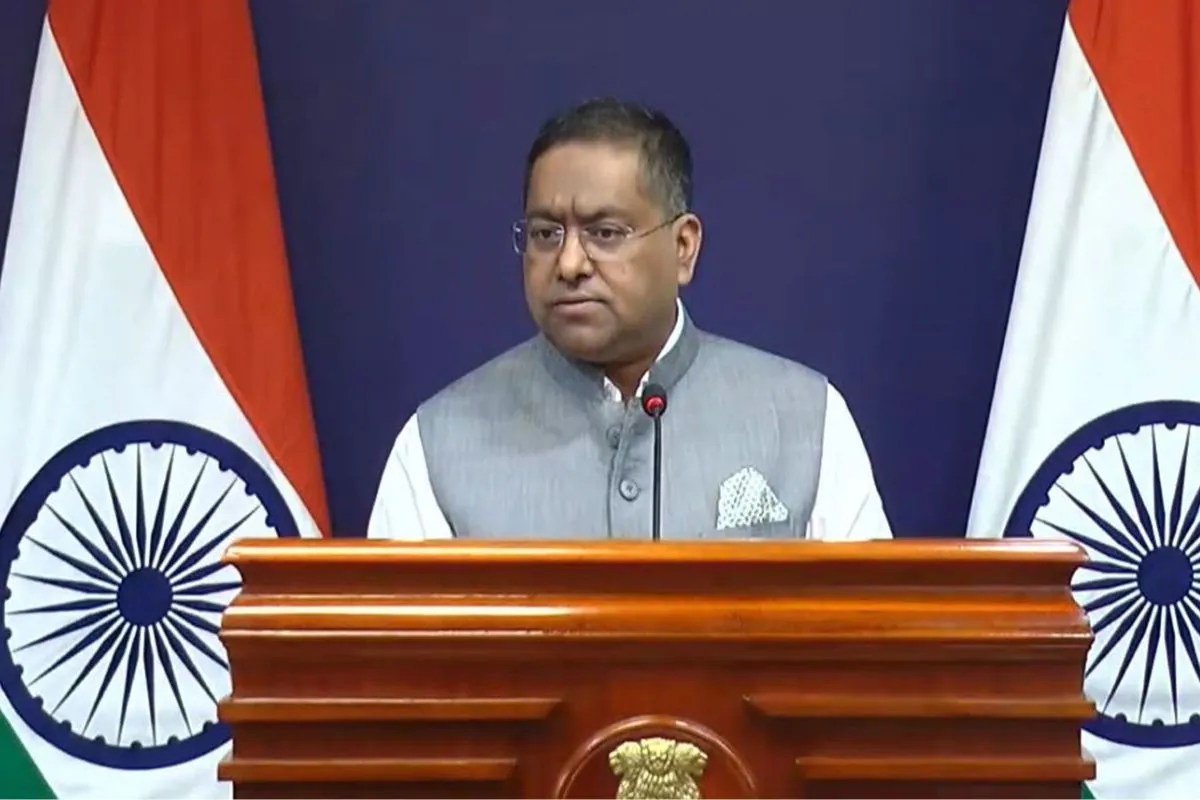
The signing of the Mecca Joint Defence Agreement between Saudi Arabia, Turkey, and Pakistan establishes a formal collective security framework that alters traditional security alignments across West Asia and South Asia. By binding three militarily capable states under a mutual defense clause—wherein an armed attack against one is treated as an attack against all—the pact introduces structural changes to regional deterrence equations. For New Delhi, evaluating this development requires moving past superficial diplomatic readouts to analyze the underlying mechanics of capability aggregation, technological transfer, and strategic hedging.
The Tripartite Capability Matrix
To understand the operational weight of the trilateral agreement, one must evaluate the distinct inputs each state contributes to the alliance. Security architectures of this scale function through resource pooling, where individual deficits are offset by partner surpluses.
- Saudi Arabia contributes capital reserves, strategic depth in the Gulf, and critical energy infrastructure protection requirements. Having faced persistent asymmetric threats to oil installations from regional actors, Riyadh's primary objective is risk mitigation and the diversification of its security dependencies beyond traditional Western guarantees.
- Turkey supplies advanced defense industrial output, notably in unmanned aerial systems, electronic warfare, and military training doctrines. Ankara’s inclusion brings NATO-standard interoperability concepts and manufacturing capabilities directly into a non-Western security matrix.
- Pakistan provides manpower scaling, operational military experience, and institutionalized defense personnel deployment frameworks that have historically serviced Gulf security architectures.
This combination creates a self-reinforcing security loop. Capital from the Gulf finances industrial production in Anatolia, while personnel and operational frameworks from South Asia anchor the physical presence on the ground.
The Mechanics of Collective Deterrence
The core of the Mecca agreement rests on the doctrine of extended collective defense. However, the operationalization of this doctrine remains constrained by structural geography and logistical realities.
Unlike integrated regional blocs with contiguous borders, the three signatories are separated by significant physical distances. This geographic discontinuity means that rapid military reinforcement relies heavily on air and maritime corridors controlled by intervening sovereign nations. Consequently, the pact functions primarily as a political deterrent and a institutional umbrella for bilateral defense cooperation rather than an integrated standing military command like NATO.
The agreement formalizes three distinct operational vectors:
- Intelligence sharing mechanisms designed to unify threat perceptions across the Red Sea, the Persian Gulf, and the South Asian periphery.
- Standardized joint military exercises aimed at harmonizing command procedures between disparate military doctrines.
- Defense industrial integration, allowing technology transfers and joint procurement strategies that bypass traditional Western export controls or protracted bureaucratic approvals.
Implications for Indian Strategic Calculus
For India's Ministry of External Affairs, monitoring these developments involves assessing how bilateral partnerships morph into multilateral blocs that could impact regional stability. The immediate challenge is not the emergence of an operational invasion force, but the institutionalization of defense supply chains and diplomatic coordination that could systematically tilt regional votes and security cooperation against Indian interests.
The convergence of Turkish military hardware with Pakistani operational integration inside Gulf security frameworks introduces a complex variable into New Delhi's western security perimeter. While economic and energy ties between India and the Gulf monarchies remain robust, security alignments of this nature institutionalize closer military coordination between Pakistan and key Middle Eastern states. This requires Indian defense planners to factor in multilateral threat multipliers rather than treating West Asian and South Asian security environments as discrete, isolated theaters.
Furthermore, the diffusion of misinformation surrounding regional counter-strategies—such as fabricated reports regarding emergency defense pacts with external states—underscores the psychological and information warfare dimensions that accompany major geopolitical shifts. Rigorous statecraft requires filtering out digital noise to focus purely on institutional military outputs, procurement contracts, and verified troop deployment metrics.
Strategic Execution
Monitor the specific implementation timelines of joint military exercises and technology transfer agreements emerging from the Mecca framework. Assess whether the pact evolves past a political statement of solidarity into standardized interoperability protocols, particularly regarding naval logistics in the Arabian Sea and Western Indian Ocean. Prioritize intelligence collection on defense industrial co-production ventures between Ankara and Islamabad financed by Gulf capital, as these represent the most durable long-term shifts in regional military capabilities.