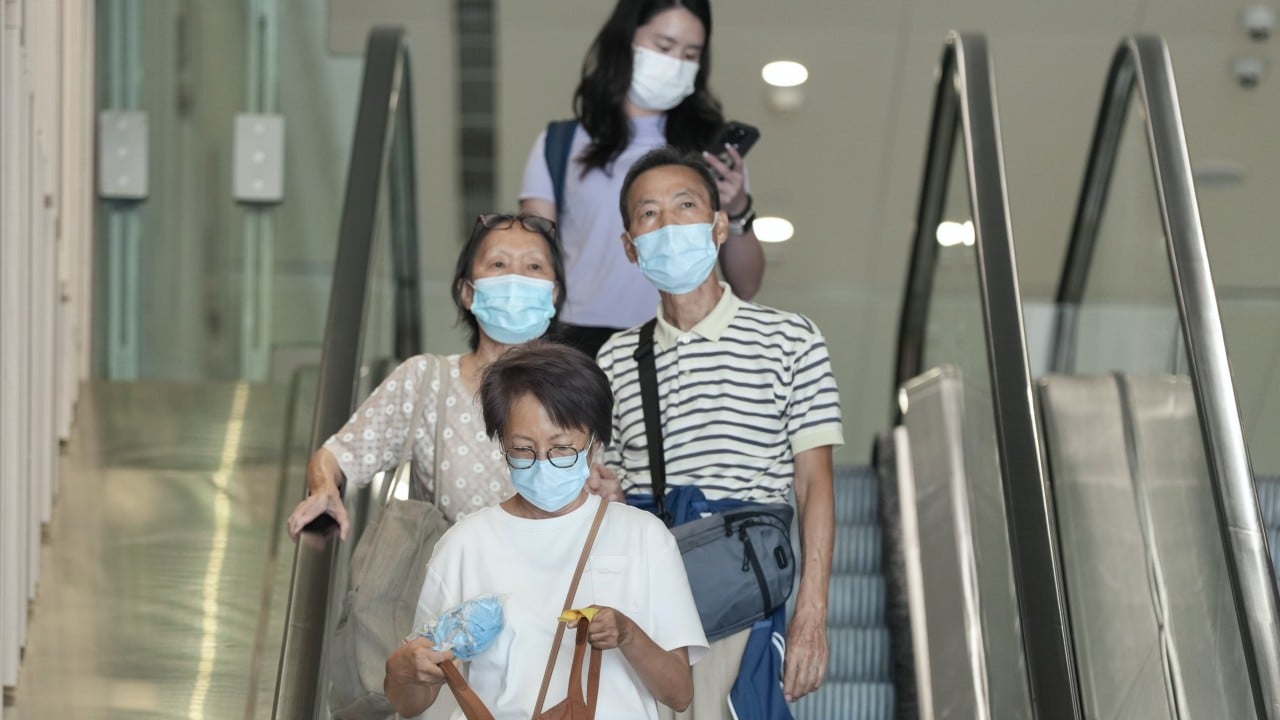
Hong Kong faces an unseasonable and accelerated surge in seasonal influenza transmission, with health authorities projecting a peak as early as late June or July. This epidemiological shift stems directly from a structural disruption in the city's traditional biannual viral cycle. The complete absence of a winter influenza wave in the first quarter of the year has fundamentally altered population-level immunity mechanics. When a respiratory pathogen experiences a prolonged period of low transmission, it does not merely delay its arrival; it builds a deficit in community immunity that increases the velocity and viral load of the subsequent wave.
The Centre for Health Protection has confirmed that local influenza activity has escalated continuously since May. Understanding the operational threat of this early peak requires moving beyond simple public health warnings and analyzing the specific biological and systemic constraints governing the current crisis.
The Mechanics of Immunological Debt
The conventional transmission model for influenza in Hong Kong relies on a dual-peak framework: a primary winter wave occurring between January and March/April, followed by a secondary summer wave between July and August. This systemic rhythm was disrupted when the previous summer season extended uncharacteristically from September through January. This prolonged transmission tail suppressed the traditional early-year cycle, creating a five-month vacuum of low viral exposure.
This phase of low viral circulation introduces a specific epidemiological vulnerability known as immunological debt. The phenomenon operates through three distinct pressures:
- Antibody Decay Rates: Neutralizing antibodies derived from both prior infection and vaccination degrade predictably over time. Without intermittent sub-clinical exposure to maintain baseline antibody titers, a population's collective immunity falls below critical herd thresholds.
- The Naïve Population Multiplier: Newborns, individuals who avoided infection over the last year, and those who missed the previous vaccine cycle accumulate into a dense, immunologically naïve sub-section of the population. This increases the effective reproduction number ($R_e$) of the virus upon re-introduction.
- Transmission Velocity Acceleration: Because the baseline resistance of the community is diminished, the transmission chain encounters fewer dead ends. The virus spreads across networks at an accelerated pace, compressing the timeline between initial community spread and peak hospitalization volume.
This compressed timeline forces a compounding operational bottleneck. Because individual immune systems have not been primed by recent low-level exposures, the clinical presentation of cases trending upward since May indicates a high probability of increased clinical severity.
The Dual-Vaccine Expiration Chokepoint
The logistical challenge of managing this early summer peak is severely compounded by an overlapping expiration timeline for available biological counter-measures. Public health interventions are currently restricted by a hard technical constraint: the city's existing supply of seasonal influenza vaccines is scheduled to expire at the end of July.
This creates a high-stakes operational paradox. The current inventory belongs to the formulation deployed for the previous cycle. A refreshed, updated batch of seasonal influenza vaccines is not scheduled to arrive until September. This leaves a critical two-month structural vulnerability through August—the exact period during which the early summer wave is projected to plateau.
Simultaneously, the city is experiencing a parallel escalation in COVID-19 activity, which has risen steadily since early May. This co-circulation introduces the threat of a twin-peaks phenomenon, where both respiratory pathogens peak concurrently, doubling the diagnostic and triaging burden on emergency departments.
The defense against this secondary vector is similarly constrained: the current government inventory of COVID-19 vaccines for children and adults will hit its definitive shelf-life expiration in mid-July and early September, respectively. Replacement stocks featuring updated variant compositions will not be integrated into the clinical supply chain until the fourth quarter of the year.
This mismatch between viral acceleration and vaccine availability means the clinical window to convert immunological vulnerability into resistance is exceptionally narrow. It requires roughly two weeks for an individual to develop full antibody protection post-injection. Individuals who delay vaccination past mid-June will lack sufficient biological defenses when the peak transmission phase hits.
Systemic Vulnerabilities and Strategic Cascades
The intersection of compressed viral timelines, expiring vaccine inventories, and multi-pathogen co-circulation exposes several severe constraints within the broader urban health infrastructure:
- The Diagnostic Bottleneck: Because early-stage symptoms of seasonal influenza, COVID-19, and low-pathogenic avian strains like influenza A (H9N2)—which was recently detected in a localized containment incident at Wo Che Market—overlap significantly, clinical facilities must deploy rapid multiplex PCR testing at scale. A surge in volume risks exhausting reagent supplies and slowing turnaround times, stalling triage efficiency.
- Bed Capacity Elasticity: Public hospitals consistently run near maximum capacity. A sharp, unseasonal influx of influenza admissions immediately threatens the suspension of elective surgeries and non-critical care treatments, shifting resource allocation from preventative medicine to crisis stabilization.
- Workforce Depletion: Healthcare personnel face identical transmission risks. High infection rates among clinical staff during a compressed peak create an inverse relationship between patient volume and available care providers, forcing mandatory overtime and increasing clinical error risk.
Strategic Interventions for High-Density Environments
Mitigating an accelerated viral peak under fixed resource constraints requires deploying highly targeted, non-pharmaceutical interventions alongside immediate immunization efforts. Because the timeline does not allow for long-term capacity building, public health management must focus on transmission suppression inside high-density vectors.
+------------------------------------------------------------------------+
|                      COMMUNITY TRANSMISSION MATRIX                     |
+------------------------------------------------------------------------+
|                                                                        |
|  [Vulnerable Population] ---> (High-Density Transit/Workspaces)        |
|                                     │                                  |
|                                     ▼                                  |
|                        [Critical Exposure Points]                      |
|                                     │                                  |
|            ┌────────────────────────┴────────────────────────┐         |
|            ▼                                                 ▼         |
|   (Air Exchange Deficit)                           (Surface Fomite Load)
|            │                                                 │         |
|            ▼                                                 ▼         |
|   [Targeted Masking &                              [Environmental UV-C &       |
|    HEPA Filtration]                                 Sanitation Protocols]      |
|                                                                        |
+------------------------------------------------------------------------+
High-risk demographics—specifically individuals over the age of 50, pediatric cohorts under 18, and those presenting with metabolic or cardiovascular comorbidities—must prioritize immediate inoculation before the July expiration chokepoint.
Beyond individual prophylaxis, commercial real estate operators, transport authorities, and corporate entities must adjust environmental controls to suppress aerosol transmission. This requires mandating surgical mask usage across public transportation networks and optimizing mechanical ventilation systems to maximize fresh air exchange rates, driving the indoor virus concentration below infectious thresholds.
The immediate priority for corporate and institutional operators is the deployment of localized containment strategies. Given that the transmission chain is accelerating through workplace and transit density, introducing staggered shifts, universal masking policies in open-plan offices, and strict symptomatic self-isolation protocols will reduce the peak infection velocity, flattening the hospitalization curve before the healthcare infrastructure reaches its breaking point.