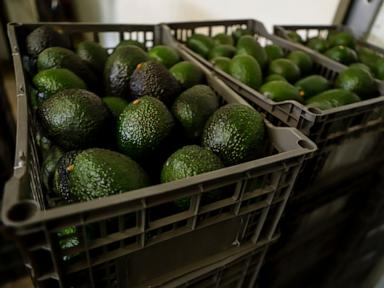
The United States Department of Agriculture operates under a strict operational constraint when importing fresh produce from sovereign nations: physical verification by federal inspectors. When the Animal and Plant Health Inspection Service halts field operations in Michoacán, Mexico, the multi-billion-dollar agricultural pipeline freezes instantly. This structural vulnerability stems from an over-reliance on a single geographic node for over eighty percent of American avocado consumption, creating a high-leverage choke point for localized cartel violence and systemic extortion.
Understanding why these trade suspensions occur requires dissecting the mechanics of agricultural supply chain governance, regulatory dependency, and criminal rent-seeking. If you found value in this piece, you might want to check out: this related article.
The Regulatory Dependency Loop
The import mechanism governed by the United States-Mexico-Canada Agreement relies on mandatory on-site oversight. USDA-APHIS personnel must physically verify packinghouses and orchards to certify that produce is free from regional pests, such as the seed weevil. This creates an absolute regulatory dependency. Without an active USDA sign-off at the source, commercial transit corridors crossing the border through logistics hubs like the Pharr International Bridge in South Texas stall.
The legal architecture of this trade agreement assumes a stable civil security environment. When regional safety metrics degrade, diplomatic protocol mandates immediate evacuation or suspension of government personnel. The recurrence of export halts points to a systemic failure in risk mitigation: the security of foreign agricultural inspectors is directly tied to the stability of a region dominated by competing criminal organizations. For another perspective on this development, check out the recent coverage from Reuters Business.
The Economics of Agricultural Extortion
Michoacán generates billions of dollars in annual agricultural revenue, earning the local crop the moniker of green gold. This massive cash flow attracts organized crime syndicates that have diversified past traditional narcotics trafficking into horizontal extortion rings.
The cost function for local producers involves multiple layers of illicit taxation:
- Orchard-level protection fees levied per harvested kilogram.
- Packing and transit tolls paid to ensure trucks reach state borders unmolested.
- Administrative bribes required to navigate municipal security forces.
When high-profile law enforcement actions dismantle cartel leadership—such as the recent capture of regional kingpins targeted by international warrants—the localized criminal ecosystem undergoes violent fragmentation. Factional infighting spikes, and residual cells redirect threats toward high-visibility foreign targets to exert political leverage against state authorities. The USDA suspension functions as an automated institutional reflex to these localized security shocks.
Geopolitical Friction and Alternative Sourcing Limits
The recurring disruption of Mexican agricultural imports places pressure on domestic alternatives, yet structural supply inelasticity prevents a quick substitution. Domestic production regions, primarily centered in California, supply only a minor fraction of total consumer demand. Scaling domestic output requires long-term capital allocation, intensive water rights management, and years of orchard maturation, rendering local farms incapable of absorbing sudden multi-week supply shocks from international partners.
At the same time, regulatory expansion into secondary Mexican states like Jalisco has introduced incremental diversification, but Michoacán remains the dominant market maker. Trade restrictions function as a blunt instrument of economic statecraft. By conditioning market access on civil security improvements, importing governments incentivize federal and state military deployments to secure agricultural zones.
Deploying thousands of federal troops to protect packinghouses and inspection routes temporarily suppresses cartel interference, yet it treats symptoms rather than the root economic incentive of criminal rent-seeking.
Strategic Supply Chain Architecture
Mitigating systemic trade halts requires structural decoupling from single-origin dependency. Importers and enterprise-scale distributors must redesign procurement frameworks away from centralized geographic reliance through three operational shifts:
- Multi-Origin Portfolio Balancing: Accelerate the integration of certified orchards in secondary international jurisdictions and emerging Latin American markets to dilute systemic geographic risk.
- Pre-Clearance Protocol Modernization: Transition toward digitized phytosanitary tracking and remote-sensor verification technologies that reduce reliance on vulnerable physical inspection footprints in high-threat zones.
- Buffer Stock Optimization: Maintain strategic cold-chain inventory reserves designed to absorb a standard two-week regulatory shutdown without triggering retail price spikes or stockouts.
The ongoing cycle of trade freezes will persist as long as agricultural profit margins outpace the enforcement capabilities of local security apparatuses. Long-term supply stability depends on shifting the economic equation of the region through secure logistics corridors that isolate primary production from criminal interference.