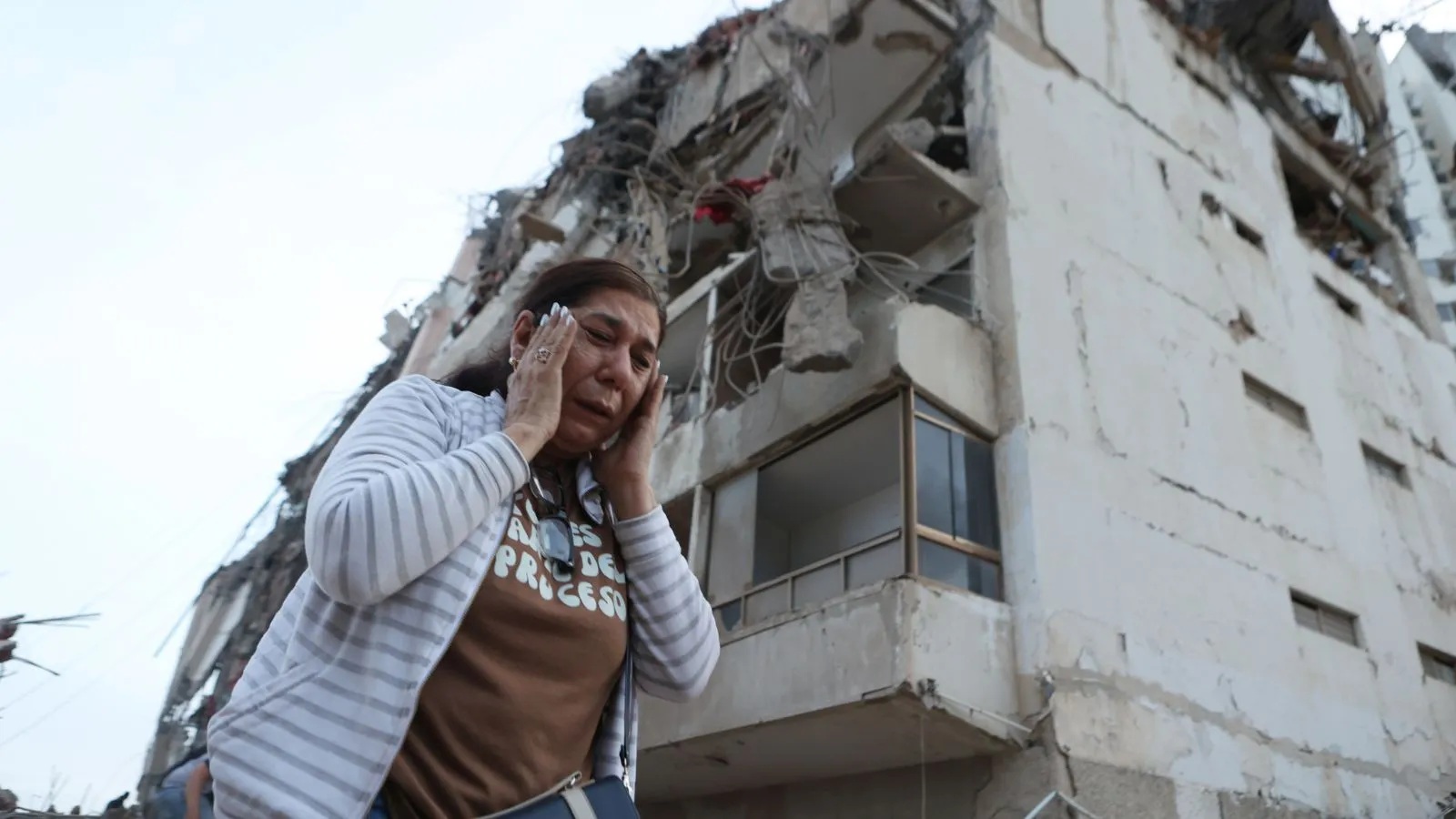
The primary determinants of mortality in urban seismic events are not the initial shockwaves, but the architectural vulnerabilities of the built environment and the subsequent structural bottlenecks that impede emergency medical responses. On June 24, 2026, northwestern and central Venezuela experienced a rare tectonic sequence: a magnitude 7.2 foreshock followed exactly 39 seconds later by a magnitude 7.5 mainshock. This doublet event concentrated immense kinetic energy along the San Sebastián fault system at a shallow depth of 10 kilometers. By examining the physical mechanics of this disaster—including the viral account of an emergency obstetric delivery occurring within structural debris—we can map the precise intersection of strike-slip geomorphology, structural engineering failures, and extreme triage environments.
The Kinematics of the Doublet Event
To understand why structural destruction was so complete across Caracas and La Guaira, the physical properties of the rupture must be separated into three distinct phases. You might also find this similar coverage useful: Why Disaster Diplomacy in Venezuela Could Backfire for Washington.
- The Accumulation Phase: The Caribbean Plate maintains an eastward displacement relative to the South American Plate at a rate of approximately two centimeters per year. This constant strike-slip friction builds localized shear stress across the Boconó-Morón-El Pilar fault network.
- The Primary Rupture (Foreshock): At 18:04 local time, an initial $M_w$ 7.2 rupture occurred near San Felipe, Yaracuy. This strike-slip movement propagated horizontal S-waves (secondary waves) through regional sediment basins, pre-weakening structural joints across an engineering landscape highly susceptible to lateral acceleration.
- The Secondary Rupture (Mainshock): Exactly 39 seconds later, before building foundations could shed the kinetic energy of the foreshock, an adjacent fault segment failed near the Yumare-Morón area, releasing an $M_w$ 7.5 mainshock.
This 39-second interval created a destructive compounding effect. Civil structures are engineered to damp and dissipate energy over time. When a secondary, higher-amplitude shock hits a structure whose internal reinforcement has already suffered micro-fracturing and plastic deformation, the building's capacity to absorb additional lateral force drops precipitously. The result was instantaneous structural failure in buildings that might have otherwise survived a single isolated event.
Structural Failure Mechanics in the Urban Core
The high casualty concentration within specific Caracas neighborhoods, such as Los Palos Grandes and Altamira, highlights a direct correlation between architectural typology and collapse mechanics. The destruction was characterized by pancake collapses, a failure mode where vertical support columns fail completely, causing upper floors to fall flat onto lower floors with minimal structural spacing left behind. As discussed in detailed reports by TIME, the implications are significant.
The engineering vulnerability of these structures can be modeled using a basic structural load equation:
$$F_{\text{lateral}} = m \cdot a_{\text{ground}}$$
Where $m$ represents the mass of the building floors and $a_{\text{ground}}$ represents the horizontal acceleration experienced during the strike-slip rupture. Because strike-slip faults release energy horizontally rather than vertically, structures lacking robust shear walls or ductile frame detailing experience unmanageable lateral forces.
In multi-story residential buildings like the 14-floor partial collapse of the Petunia Residences or the total collapse of the 22-story tower in Altamira, vertical support columns suffered brittle shear failure. When the concrete columns cracked at their joints, the lack of continuous steel rebar reinforcement allowed the massive mass of each concrete slab to drop directly onto the floor beneath it.
This specific collapse topology minimizes the formation of internal survival voids—pockets of space formed when falling walls wedge against intact structural components or furniture. The absence of these voids explains why thousands of individuals remain missing, as the compressed debris layer leaves no macro-spaces for oxygen retention or physical movement.
Obstetric Traumatology in Confined Space Environments
Within this high-density debris field, the viral report of a woman giving birth inside a collapsed structure in La Guaira serves as an extreme case study in survival physiology and disaster triage. While social media channels treat such occurrences as anomalies, military and disaster medicine frameworks analyze them through the lens of acute stress-induced physiological adaptation.
The onset of precipitate labor—childbirth occurring within three hours of the initiation of contractions—in a highly traumatic environment is driven by a profound neuroendocrine response:
- Systemic Sympathetic Discharge: The physical entrapment triggers an immediate surge of epinephrine and norepinephrine from the adrenal medulla.
- Hyper-Acute Uterine Activity: While sustained high levels of adrenaline can sometimes inhibit uterine contractions by binding to beta-2 adrenergic receptors, severe physical trauma and the perception of immediate mortality can trigger a paradoxically rapid, dysregulated cascade of oxytocin and cortisol. This rapidly accelerates cervical dilation.
- The Perinatal Extrapolative Risk: In a confined space, both mother and neonate face an immediate, three-pronged threat environment:
- Hypoxia via Particulate Inhalation: Dust composed of pulverized concrete, gypsum, and silica fills the air space. For the mother, this induces acute respiratory distress, reducing maternal blood oxygen saturation. For the newborn, immediate exposure to this particulate matter can obstruct upper airways, preventing the critical clearance of amniotic fluid from the lungs during the first breath.
- Hypothermia via Environmental Exposure: Despite ambient tropical temperatures, individuals trapped deep within structural debris frequently experience a rapid drop in core body temperature due to shock, blood loss, and prolonged contact with dense concrete masses acting as heat sinks.
- Postpartum Hemorrhage Isolation: The leading cause of maternal mortality post-delivery is uterine atony (failure of the uterus to contract after childbirth). In standard clinical settings, this is managed via active intervention like intravenous oxytocin. In an isolated rubble void, the absence of this clinical management increases the probability of fatal hypovolemic shock.
Operational Bottlenecks in Urban Search and Rescue
The deployment of international urban search and rescue teams highlighted severe infrastructural bottlenecks that directly altered the survival curve of trapped individuals. The logistics of extraction after a doublet earthquake are constrained by time-sensitive survival probabilities.
The primary operational constraint was the immediate closure of Simón Bolívar International Airport due to severe runway and terminal structural damage. This forced international disaster response teams and specialized heavy equipment to reroute through secondary overland corridors, extending transport timelines by 24 to 48 hours.
The delay impacts what disaster medicine terms the Golden 24 Hours—the window during which trapped victims without severe internal injuries have an optimal chance of survival before dehydration, crush syndrome, or positional asphyxiation becomes fatal.
When rescue teams arrived at high-rise collapse sites, operations were further slowed by secondary tactical challenges:
- Aftershock Frequency: More than 30 distinct aftershocks, including a major magnitude 4.5 event, forced rescue personnel to repeatedly evacuate unstable debris mounds, resetting the structural stabilization process each time.
- The Mechanical Lifting Bottleneck: Because the collapses resulted in tightly packed concrete layers rather than loose rubble piles, rescue crews could not utilize standard earth-moving equipment without risking further shifting of the debris field. Operations required highly precise shoring, hydraulic lifting jacks, and concrete-cutting diamond saws.
- Crush Syndrome Pathophysiology: For survivors pinned under heavy slabs, rescuers face a profound medical dilemma during extraction. When a limb is compressed for hours, muscle tissue undergoes necrosis, releasing massive quantities of myoglobin, potassium, and lactic acid into the isolated vascular bed of the limb. The moment the structural weight is lifted, blood flow returns, flushing these toxins into the central circulatory system. Without immediate intravenous fluid resuscitation prior to release, this sudden toxic influx causes acute kidney injury and cardiac arrest.
Tectonic Risk Mitigation and Infrastructure Allocation
The long-term strategic trajectory for northern Venezuela requires an immediate transition away from reactive crisis management toward structural engineering enforcement. The June 2026 doublet demonstrated that current regional building codes fail to account for the unique horizontal resonance frequencies generated by back-to-back strike-slip ruptures.
Future capital allocation must prioritize the seismic retrofitting of existing high-density residential structures using carbon-fiber-reinforced polymer wraps around vertical columns to improve ductility. Additionally, municipal planning must mandate the construction of open-air seismic sanctuaries within urban zones—clear geographic zones devoid of high-rise structures where populations can safely congregate during aftershock sequences without exposing themselves to structural fallback zones.