The Mechanics of Forced Maritime Displacement
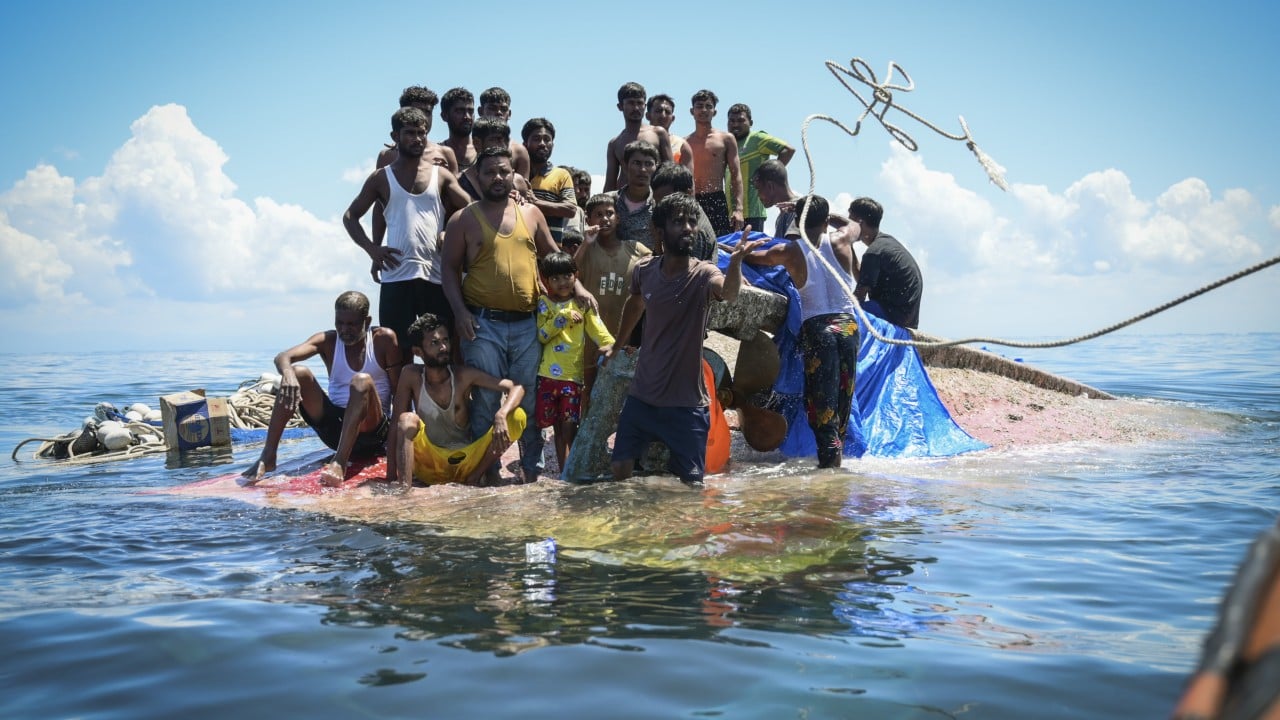
The reported loss of more than 500 Rohingya refugees in the Bay of Bengal highlights a systemic failure in regional migration management. When two vessels carrying approximately 530 passengers capsized between late June and early July 2026, the catastrophe was not an isolated maritime accident. Instead, it represented the predictable outcome of structural pressures interacting with seasonal weather risks.
To understand why these tragedies occur, observers must look past the immediate symptoms of rickety boats and treacherous waters. The crisis is driven by three distinct systemic drivers: local security deterioration within Rakhine State and Cox's Bazar, economic resource compression in refugee settlements, and the operational mechanics of human smuggling syndicates.
The Push-Pull Dynamics of High-Risk Migration
Refugee migration patterns are dictated by asymmetric risk calculations. For a Rohingya individual, the decision to board an unseaworthy vessel during the monsoon season represents a rational choice under extreme duress.
[Systemic Push Factors] ------------> [The Transit Bottleneck] ------------> [Target Destination]
- Armed conflict in Rakhine          - Unseaworthy wooden hulls            - Economic survival (Malaysia/Indonesia)
- Ration cuts in Cox's Bazar         - High-risk monsoon sailing           - Escape from statelessness
- Zero legal status                  - Minimal search-and-rescue
1. Structural Security Collapse in Rakhine State
The primary driver of departure remains the active armed conflict between the Myanmar military and regional ethnic armed organizations. Rakhine State has become a highly volatile combat zone, leaving the remaining Rohingya population trapped between warring factions. This physical insecurity is compounded by severe state-enforced restrictions on movement, employment, and humanitarian access, which renders long-term survival in local internment camps impossible.
2. Resource Compression in Cox's Bazar
For those who previously fled to Bangladesh, the situation has decayed systematically. Cox's Bazar now hosts roughly 1.2 million stateless individuals. Global humanitarian funding fatigue has resulted in severe budget cuts, leading to drastic food ration reductions. The reduction of daily food allowances, combined with rising gang violence, extortion, and arson inside the camps, has degraded the baseline quality of life below the threshold of human sustainability.
3. The Seasonal Sailing Anomaly
Historically, maritime departures from the Bay of Bengal peak between November and March, when the northeast monsoon brings calmer seas. The departure of these two vessels in late June—at the height of the southwest monsoon—indicates a shifting threshold of desperation. Smuggling networks are increasingly capitalizing on refugees who are willing to accept extreme maritime risks to escape immediate localized threats.
Quantifying the June-July Maritime Casualties
The specific mechanics of the recent shipwrecks demonstrate how overcrowding and environmental conditions intersect to produce high mortality rates.
- Vessel Alpha (Late June): This craft departed Rakhine State with an estimated payload of 250 passengers. The vessel lost communication shortly after embarkation. Given the structural limitations of traditional wooden fishing boats used by regional syndicates, a passenger load of 250 exceeds safe carrying capacity by roughly 300%.
- Vessel Beta (July 8): This vessel carried approximately 280 individuals and sank off the Ayeyarwady coast of Myanmar. Navigating shallow coastal waters during heavy monsoon swells destabilizes these top-heavy, underpowered wooden hulls, leading to catastrophic capsizing with zero survival equipment on board.
The mortality rate of the Rohingya maritime route is structurally the highest in the world. In 2025, more than 6,500 individuals attempted this journey, with nearly 900 reported dead or missing. This yields a mortality rate of approximately 13.8%, making it several times more lethal than the central Mediterranean migration route.
The Economics of Maritime Smuggling Networks
The survival of these illicit migration routes relies on a highly organized black-market economy. Smuggling operations are structured to minimize capital expenditure while maximizing cash flow per transit.
+-----------------------------------------------------------------------+
|                       SMUGGLING REVENUE MODEL                         |
+-----------------------------------------------------------------------+
|  Revenue = Price per Head ($3,000 - $6,000)  x  Passenger Volume      |
|                                                                       |
|  Capital Expenditure (CapEx):                                         |
|  - Depreciated, single-use wooden hull (Near-zero residual value)     |
|  - Low-horsepower agricultural diesel engine                           |
|                                                                       |
|  Operational Expenditure (OpEx):                                      |
|  - Sourcing low-grade fuel and minimal rations                        |
|  - Bribes for local maritime and coastal authorities                  |
+-----------------------------------------------------------------------+
Because the vessels are intended to be abandoned or seized upon arrival at the destination (typically Malaysia or Indonesia), syndicates have zero incentive to invest in seaworthiness, navigation instruments, or life-saving apparatus. The cost of losing a vessel is factored into the syndicate's business model as a minor operational loss, while the human cost is externalized entirely onto the passengers.
Regional Policy Failures and the Search-and-Rescue Deficit
The persistent loss of life in the Andaman Sea highlights a critical gap in regional maritime security frameworks. The lack of a coordinated search-and-rescue mechanism among nations bordering the Bay of Bengal ensures that distressed vessels are frequently left to sink.
The Sovereign Push-Back Protocol
Rather than executing international maritime law obligations to rescue lives at sea, regional coast guards often engage in "push-back" operations. Distressed vessels are supplied with minimal food and fuel, then towed back into international waters to prevent domestic landing. This policy does not deter departures; it merely increases the cumulative time refugees spend on the water, exponentially raising the probability of a fatal capsizing event.
The Asylum Bottleneck
Because regional powers like Malaysia, Thailand, and Indonesia are not signatories to the 1951 Refugee Convention, they lack standardized domestic legal frameworks to process asylum seekers. Consequently, survivors of these journeys are treated as illegal immigrants, facing indefinite detention, which further disincentivizes governments from actively reporting or rescuing distressed boats.
Strategic Interventions to Mitigate Maritime Loss
To disrupt this cycle of maritime mortality, regional actors must transition from reactive statements to structured operational interventions.
The first step requires the establishment of a joint maritime search-and-rescue task force in the Bay of Bengal, coordinated by the Association of Southeast Asian Nations (ASEAN) alongside the United Nations Refugee Agency (UNHCR). This task force must deploy real-time satellite monitoring and aerial reconnaissance to detect slow-moving, overcrowded wooden hulls during monsoon transitions.
The second intervention must target the financial infrastructure of the smuggling syndicates. Law enforcement agencies in Bangladesh, Myanmar, and Thailand must coordinate asset-tracing efforts to freeze the cross-border money transfer systems that facilitate transaction payments. Without the ability to securely move capital, the financial incentive for syndicates to operate these high-risk routes will collapse.