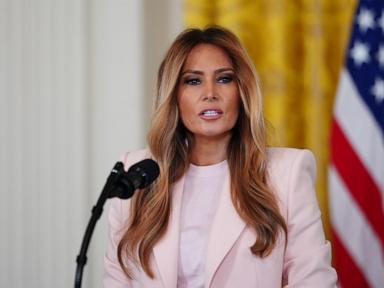
U.S. District Judge Mary Kay Vyskocil’s dismissal of author Michael Wolff’s preemptive lawsuit against First Lady Melania Trump exposes the structural boundaries of anti-SLAPP statutes when weaponized as offensive legal tools. By designating Wolff’s action as a "contorted" attempt to litigate out of order, the court’s 45-page ruling defines the technical limits of using declaratory judgments to neutralize future defamation claims.
The conflict originated from a demand letter sent by Melania Trump’s legal counsel, Alejandro Brito. The correspondence asserted that Wolff’s public statements linking the First Lady to the social circle of Jeffrey Epstein had caused overwhelming reputational and economic injury, signaling that she would be left with no choice but to file a $1 billion defamation suit if Wolff did not issue a formal retraction. Rather than waiting for a formal complaint to be filed, Wolff executed an offensive tactical pivot: he filed an anti-SLAPP lawsuit in New York state court, seeking a judicial declaration that his commentary was protected speech, effectively attempting to secure a defense before an active claim existed. The defense counsel subsequently transferred the case to federal court, setting the stage for a critical analysis of preemptive legal maneuvering.
The Mechanics of Procedural Asymmetry and Forum Shopping
The primary structural flaw in Wolff’s strategy lies in the misapplication of Strategic Lawsuits Against Public Participation (SLAPP) protections. Anti-SLAPP statutes are designed fundamentally as a defensive shield to rapidly dismiss meritless lawsuits aimed at chilling free speech. By deploying this framework offensively, the plaintiff attempted to invert the traditional sequencing of civil litigation.
This maneuver introduces an artificial asymmetry into the judicial process. In a standard defamation timeline, the burden of proof operates on a fixed trajectory:
- The Plaintiff Files: Establishes specific defamatory statements, falsity, fault, and quantifiable damages.
- The Defendant Responds: Asserts affirmative defenses, such as truth, opinion, or anti-SLAPP immunities.
By launching a preemptive suit, Wolff sought a judicial declaration that if he were to be sued in the future, he deserved to win. Judge Vyskocil rejected this framework, noting that federal courts lack the mandate to issue advisory opinions on hypothetical or unfiled complaints.
The second breakdown in the strategy involves tactical forum shopping. The initial state court filing in New York was a calculated effort to anchor the dispute in a jurisdiction known for robust anti-SLAPP protections, which allow for the recovery of attorney fees and immediate stays of discovery. Conversely, the Trump legal team favored Florida for a potential defamation suit—a jurisdiction whose federal courts have historically applied different standards to the cross-applicability of state anti-SLAPP rules. Wolff's preemptive action was designed to seize home-court advantage, an optimization strategy that the court classified as textbook bad-faith forum shopping.
The Justiciability Bottleneck: Declining Declaratory Relief
The legal mechanism used to dismantle the lawsuit relies on the discretionary nature of the Declaratory Judgment Act. While federal courts possess the jurisdiction to hear cases involving diverse parties and substantial financial stakes, they are not compelled to exercise it when a lawsuit is deemed purely tactical.
Judge Vyskocil’s decision outlines a clear cause-and-effect relationship between procedural gamesmanship and judicial rejection. When a party utilizes a declaratory judgment action solely to beat a natural plaintiff to the courthouse or to choose a friendlier forum, the court faces a distinct choice. It can either allow the case to proceed, thereby rewarding procedural manipulation, or decline jurisdiction to preserve standard litigation mechanics.
[Tactical Preemptive Suit] ---> [Judicial Discretion Filter] ---> [Jurisdiction Declined] ---> [Standard Litigation Restored]
The court chose the latter. The ruling established that allowing this case to proceed would force the judiciary to oversee an abusively presented conflict. By dismissing the suit, the court reset the baseline, requiring both parties to litigate the dispute according to standard procedural timelines.
The Real Dispute: Fact, Opinion, and the Epstein Factor
Despite dismissing the case on procedural grounds, the court acknowledged that a genuine underlying dispute exists. The friction centers on the boundaries between actionable factual assertions and protected editorial opinion regarding the Trump administration’s internal management of legacy political crises.
The statements made by Wolff spanned three social media videos and interviews, including statements later retracted by external media outlets. The core arguments highlight a fundamental divergence in legal classification:
- The Defense Position: Wolff’s characterizations—specifically that Melania Trump was actively managing the administration's response to the Epstein files behind the scenes—were framed as a matter of factual public interest and fair comment. The assertion that the marriage was a strategic arrangement was defended as protected opinion.
- The Plaintiff Position: The demand for $1 billion in damages was predicated on the argument that asserting any integration into Epstein's historical social circle constitutes a false statement of fact that inflicts severe financial and reputational harm.
The legal exposure for both parties remains unhedged. Because the dismissal was executed without prejudice regarding the core merits of the defamation claims, the underlying dispute has not achieved legal resolution; it has merely been stripped of its premature procedural framework.
Strategic Forecast for High-Stakes Defamation Battles
The dismissal establishes a clear precedent for public figures and media entities engaging in pre-litigation posturing. The strategy of executing an offensive anti-SLAPP suit to preempt an impending claim has suffered a severe blow in federal jurisprudence.
The next tactical phase will likely shift to a conventional venue. The First Lady’s legal team retains the option to file a formal defamation suit in their preferred jurisdiction, such as Florida, where they can control the scope of the initial complaint and force Wolff to defend his reporting under standard civil procedures. For Wolff, the defense must shift from offensive preemptive maneuvers back to traditional, reactive First Amendment defenses.
Media corporations and investigative journalists must recognize that demand letters, no matter how aggressive or financially inflated, cannot be leveraged reliably to force a premature judicial review. The court system will enforce a strict adherence to traditional litigation order, ensuring that defamation claims are tested only after an actual injury is formally asserted in a compliant court of law.
Michael Wolff's Bombshell Lawsuit Against Melania
This video provides critical context on the author's original legal strategy, featuring first-hand commentary from Michael Wolff on why his team initially filed the preemptive lawsuit in New York.


