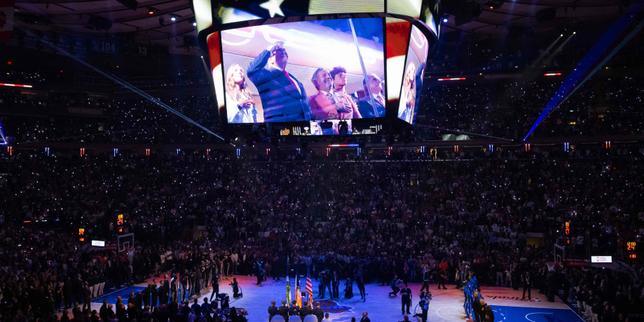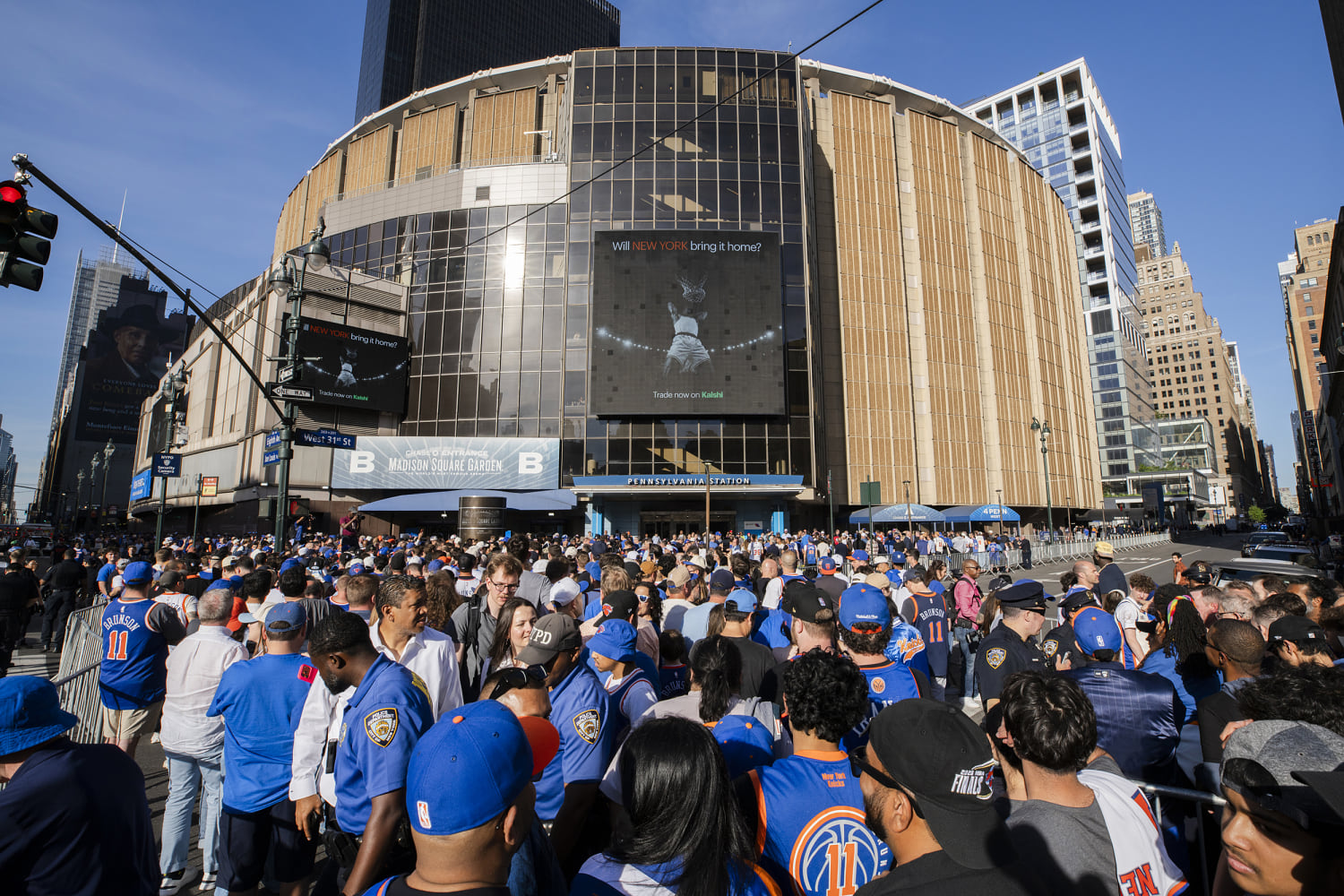
Attributing an athletic defeat to external disruptions or hostile environments is a common cognitive bias in sports journalism. When the New York Knicks dropped Game 3 after a month-long winning streak, public narrative immediately focused on peripheral distractions—the "circus" of officiating friction, hostile crowds, and media narrative. This structural analysis bypasses that superficial framing to isolate the actual operational variables that break winning streaks. When a high-performing system undergoes sudden regression, the root cause is rarely external noise; it is the compounding weight of systemic fatigue, predictable tactical schemas, and unsustainable statistical variance.
Winning streaks in professional basketball artificially inflate a roster's perceived efficiency. During an extended run of victories, coaching staffs frequently rely on a compressed rotation, leaning heavily on core personnel to maintain continuity. This creates a critical vulnerability: operational decay due to compounding physical load. The primary bottleneck is not the psychological impact of a raucous arena, but the physical degradation of biometric outputs—specifically lateral movement velocity, closure time on perimeter shooters, and second-jump explosive capacity.
The Tri-Factor Framework of Streak Termination
To understand why a dominant team experiences a sudden performance drop-off, the event must be deconstructed into three interdependent structural pillars: load accumulation, tactical ossification, and regression to the mean.
[Load Accumulation] + [Tactical Ossification] + [Statistical Regression] = Streak Termination
Load Accumulation and Biometric Decay
High-minute usage rates across a consecutive stretch of games yield a cumulative deficit in neural drive and muscular recovery. In elite basketball, this manifests in the tracking data as a micro-second delay in defensive rotations. A player arriving 0.4 seconds late to a contest alters the shooter's expected effective field goal percentage (eFG%) significantly. The loss is driven by a failure to contest the perimeter effectively, a direct consequence of workload management thresholds being breached in preceding weeks.
Tactical Ossification
The longer a team wins using a specific tactical blueprint, the more film opponents accumulate to isolate structural flaws. A winning streak provides a robust dataset for opposing analytical staffs to study. By Game 3 of a playoff series, a competitor has mapped out every secondary trigger in the offensive set, every preferred driving angle of the primary ball-handler, and the exact defensive drop-coverage depths utilized by the center. The system becomes rigid because success disincentivizes innovation. The team loses not because of a hostile environment, but because their playbook has been thoroughly decoded.
Regression to the Mean
Long winning streaks are almost always fueled by unsustainable shooting variance. Teams converting contested, mid-range opportunities or highly volatile above-the-break three-pointers at a 45% clip will eventually revert to their historical baseline. When this statistical correction occurs simultaneously with a hostile road environment, onlookers misattribute the loss to the venue rather than standard probability.
Deconstructing the Rotational Bottleneck
The structural limitation of the Knicks' strategy during their peak performance window lay in the distribution of active minutes. Relying on a six- or seven-man functional rotation creates a highly synchronized unit, but it builds a fragile ecosystem.
+------------------------------------+------------------------------------+
| Short-Term Systemic Benefits       | Long-Term Structural Vulnerabilities|
+------------------------------------+------------------------------------+
| - High chemistry and fluid pacing  | - Exponential spike in fatigue index|
| - Clear definition of floor roles  | - Zero adaptation depth for injuries|
| - Maximized time for top talent    | - Predictable substitution patterns|
+------------------------------------+------------------------------------+
When load is concentrated in this manner, the secondary unit lacks the developmental minutes required to execute complex defensive adjustments under pressure. When starters face foul trouble or physical depletion, the drop-off to the bench is vertical rather than gradual. This structural gap allows opponents to mount rapid scoring runs, shifting the momentum of a game entirely outside the control of the primary unit.
Defensive Efficiency under Environmental and Physical Stress
Defensive execution relies entirely on cognitive processing speed and physical conditioning. The public narrative surrounding a "circus" atmosphere implies that noise levels or officiating choices disrupt a team's focus. The empirical reality is that environmental factors merely amplify existing structural weaknesses.
The Breakdown of Closeout Mechanics
In a disciplined defensive system, the closeout requires a sprint to close the distance, followed by short, choppy steps to balance against the drive. When physical fatigue sets in, players routinely skip the balancing phase, lunging wildly at the shooter. This opens up direct driving lanes, forcing the interior defense to rotate out of position and leaving the weak-side rim unprotected.
Rebounding Marginalization
Securing defensive rebounds requires consistent box-out positioning and lower-body leverage. As physical load accumulates over a month of high-intensity play, players begin to rely on upper-body reaching rather than establishing deep hip position. This subtle degradation in fundamentals allows an aggressive opponent to secure critical offensive rebounds, extending possessions and wearing down the defense even further.
Tactical Redirection: The Pivot to Sustainable Output
To mitigate these systemic breakdowns and prevent a single loss from cascading into a multi-game slide, coaching staffs must implement immediate adjustments that prioritize structural variance over continuity.
Dynamic Rotation Expansion
Introduce a minimum of two bench players into high-leverage first-half windows. This deliberately sacrifices minor short-term efficiency to preserve the physical baseline of primary closers for the fourth quarter.Asymmetric Offensive Triggers
Abandon highly scouted primary actions during the opening possessions of the second and third quarters. Utilizing secondary and tertiary options alters the defensive rhythm of the opponent, forcing them to adjust on the fly rather than relying on pre-series preparation.Defensive Schema Alternation
Shift between traditional drop coverage, hard hedging, and selective zone defenses across distinct five-minute intervals. This breaks the offensive cadence of the opposing playmaker and reduces the physical load on interior rim protectors who would otherwise spend the entire game absorbing contact on screens.
The final strategic imperative requires a complete separation of emotional narrative from tactical reality. Teams that over-index on the psychological impact of a loss fail to fix the mechanical vulnerabilities that caused it. The pathway to reclaiming dominance involves treating the defeat not as an emotional anomaly caused by an external circus, but as a predictable data point signaling that the current physical and tactical system has run out of runway. Immediate operational adjustment is the only viable mechanism to restore statistical superiority.