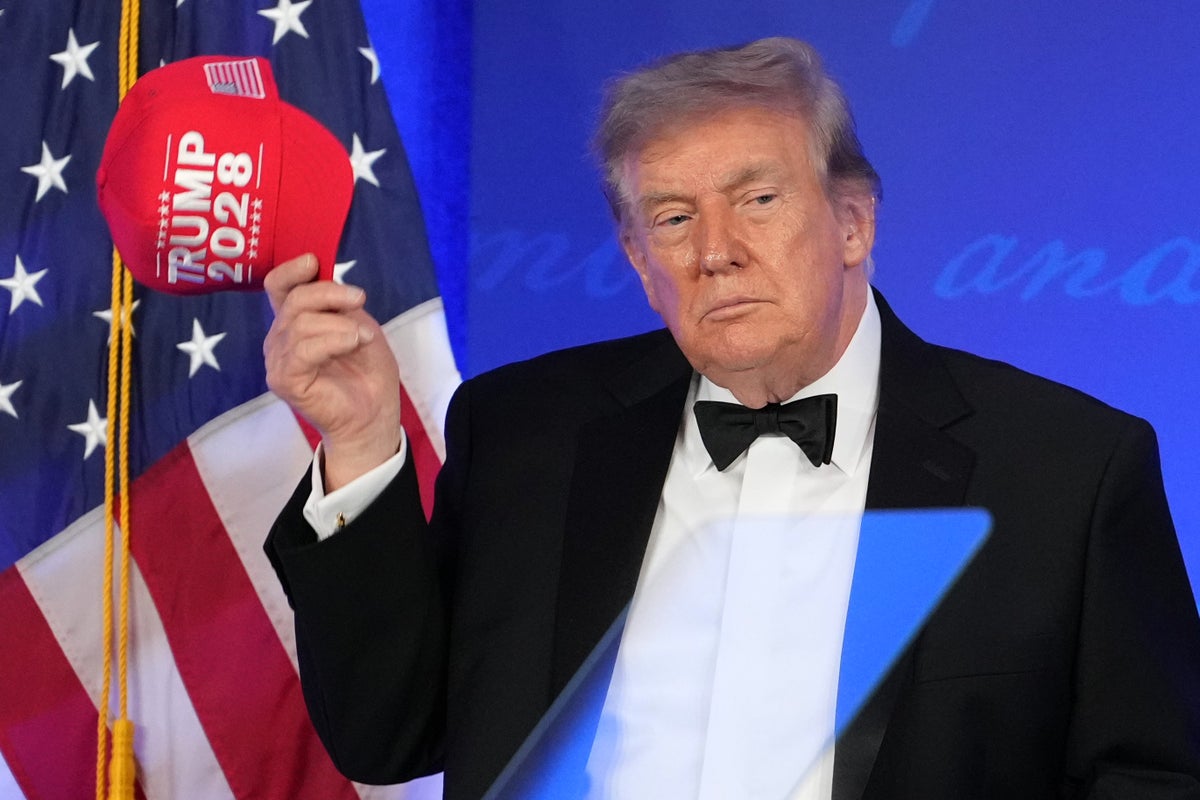
Political communication operates on a strict transactional ledger where public appearances function as calculated risk investments. When a high-profile figure addresses the White House Correspondents' Dinner and subsequently engages in an extended media critique, the event is rarely an isolated tactical error or an unscripted emotional outburst. Instead, it represents a predictable response within a structured feedback loop between political actors and journalistic institutions. Analyzing this dynamic requires stripping away partisan commentary to evaluate the structural incentives, friction points, and measurable outputs of modern political press engagement.
The architecture of the White House Correspondents' Dinner rests on an uneasy coexistence. On one side stands the political class seeking humanizing exposure; on the other stands the press corps operating under a mandate of scrutiny wrapped in an evening of institutional pageantry. This setting creates a unique performance environment. Speakers must navigate a high-risk comedic format where failure is immediately quantified by room silence and hostile media framing. When a performance misses its mark, the immediate downstream effect is a deficit in public narrative control.
The Mechanics of Narrative Friction
Political friction escalates when the subject of media coverage shifts from passive recipient to active aggressor against institutional channels. An extended public critique of specific journalists—such as on-air exchanges with network anchors—serves a dual operational purpose. First, it reinforces a pre-existing populist framework that positions mainstream outlets as adversarial entities rather than objective arbiters. Second, it shifts the news cycle away from a discrete failure of humor or delivery toward a broader, values-based conflict over journalistic integrity.
[Political Appearance]
       │
       ▼
[Performance Friction / Hostile Reception]
       │
       ▼
[Counter-Offensive / Media Confrontation]
       │
       ▼
[Audience Polarization & Base Mobilization]
This tactical pivot relies on predictable institutional reactions. Major networks operate on commercial imperatives that prioritize conflict-driven engagement metrics. When a political figure targets a specific reporter, the network's defensive posture naturally elevates the dispute from a localized event to a prime-time narrative. The media organization increases airtime dedicated to the exchange, inadvertently amplifying the exact critique they aim to neutralize.
The Cost Function of Public Retaliation
Every public escalation carries distinct opportunity costs and yield returns. To measure the utility of a protracted media confrontation, analysts must weigh the immediate reputational penalty against long-term audience retention.
- Short-Term Reputational Friction: Unfavorable editorial coverage from legacy networks, institutional condemnation from press associations, and immediate alienation of moderate demographics.
- Long-Term Engagement Yield: Enhanced base mobilization, direct control over alternative communication channels, and the framing of political opposition as establishment bias.
The mathematical reality of modern media consumption dictates that conflict scales faster than consensus. An hour-long media critique generates a high volume of fragmented video clips optimized for algorithmic distribution across social platforms. Even if the primary traditional outlets frame the event negatively, the resulting content feeds fragmented digital ecosystems where validation bypasses editorial gatekeepers entirely.
The Structural Breakdown of Press Access
The relationship between political figures and television anchors has evolved from adversarial cooperation to totalized branding warfare. Historically, institutional norms dictated a baseline of mutual restraint during formal events. The erosion of these norms points to a structural shift in how political capital is accumulated. Institutional validation from elite press corps yields diminishing returns among constituencies that view mainstream media with deep skepticism. Consequently, publicly clashing with high-profile journalists functions as a credible signal of anti-establishment commitment.
The economic model of cable news networks depends on maintaining high viewer retention through high-stakes political drama. When a political actor directly challenges an anchor, it creates a symbiotic loop of outrage generation. Both entities extract value from the confrontation: the network secures high-yield ratings spikes, while the political actor reinforces their core value proposition as an unyielding outsider willing to confront institutional power directly.
Strategic Outlook and Media Deployment
Future interactions between political figures and network correspondents will likely exhibit even greater friction as the traditional boundaries of press decorum dissolve further. The traditional playbook of issuing standard public relations statements following a controversial appearance is being replaced by immediate, unmediated counter-offensives.
Political strategists no longer measure success by the approval of the White House Correspondents' Association or mainstream editorial boards. Optimization is now calculated through audience fragmentation metrics, direct-to-consumer digital reach, and the velocity of counter-narrative adoption across alternative media channels. The traditional press corps remains a primary sparring partner, but its ability to impose a unified penalty for unconventional behavior has fundamentally collapsed.


