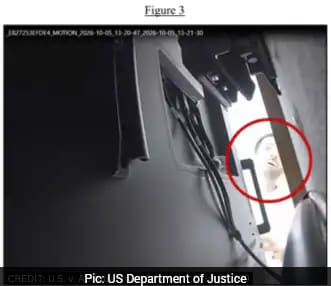
Frontier artificial intelligence laboratories spend billions securing model weights, training clusters, and source code against digital intrusion, yet physical access to conference rooms, hallways, and workbenches remains a persistent vulnerability. When an incident involves a Saudi national arrested for planting a recording device at an OpenAI office, standard news coverage treats it as an isolated crime blotter item—an oddity involving a foreign visitor, a covert recorder, and a high-profile tech company. That framing misses the structural economics of intelligence collection in the AI era. Where digital exfiltration requires zero-day exploits, privilege escalation, or noisy data egress, physical capture targets a different layer of value: unlogged human deliberation, informal roadmap shifts, safety evaluations, and unguarded strategic disagreements that never appear in a Git repository or an encrypted Slack export.
To evaluate why incidents like this happen and what they mean for AI governance, we need a clear separation between verified facts and analytical hypotheses. In this case, no full article text or official charging record is provided in the prompt, and the competitor headline alone establishes only a premise rather than verified judicial findings. What is known from the premise is an allegation or report involving a Saudi national arrested in connection with placing a recording device at an OpenAI facility. What remains unproven without official court filings, law enforcement releases, or company disclosures includes the actor's specific intent, whether the device was active or transmitted data, whether state sponsorship or commercial espionage was involved, and whether any proprietary information was actually captured. Treating an arrest headline as proof of espionage—or dismissing it as mere pranksterism—confuses event occurrence with attribution and impact. Expanding on this theme, you can find more in: Why Matt Walsh Fears AI Chatbots Are Replacing Real Friends.
Deconstructing Standard Coverage vs. Operational Reality
Typical media reporting on physical surveillance incidents at AI companies follows a predictable script. It emphasizes shock value, speculates on geopolitical intrigue based on nationality, and lists generic corporate security reactions. This approach fails on three operational fronts.
First, standard coverage conflates physical presence with information yield. A recording device planted in an office does not automatically harvest high-value intellectual property. Modern frontier AI development is heavily distributed across cloud clusters, restricted repositories, and compartmentalized teams. An audio or visual recorder placed in a shared area or general meeting space often captures ambient noise, routine scheduling, or low-signal chatter rather than model architectures or training hyperparameters. Observers at The Next Web have also weighed in on this trend.
Second, standard coverage ignores asymmetric cost functions. From an attacker's perspective, a low-cost physical probe tests perimeter hygiene, visitor escort discipline, badge controls, and counter-surveillance awareness at minimal technical expense. From a defender's perspective, even a crude recording attempt forces security leadership to sweep rooms, audit visitor logs, re-evaluate vendor and guest protocols, and manage reputational fallout. The defender bears high coordination costs regardless of whether the device succeeded.
Third, standard coverage treats nationality as a substitute for threat modeling. In globalized technology hubs, individuals of many nationalities live, study, work, and visit as tourists, contractors, founders, or researchers. Nationality alone does not establish state intelligence tasking, commercial motive, or criminal sophistication. Rigorous security analysis separates identity attributes from behavioral indicators, technical tradecraft, and evidentiary links.
The Three Pillars of AI Perimeter Risk
Evaluating physical security at frontier AI labs requires looking beyond perimeter doors and guard desks. A practical threat model rests on three interlocking pillars: information density, access friction, and detection latency.
- Information Density: High-density zones are spaces where decision-makers discuss unannounced product timelines, compute allocations, alignment bottlenecks, partnership negotiations, or security incidents before external disclosure. Low-density zones include lobbies, public cafes, or routine administrative areas. Physical surveillance risk scales with the overlap between physical accessibility and decision density.
- Access Friction: Friction is the set of controls—badge segmentation, mandatory escorts, clean-desk rules, device restrictions, and room reservations—that raises the effort and visibility required to place a hardware implant. Friction is never absolute; every extra checkpoint slows down legitimate collaboration, hiring, and external partnerships.
- Detection Latency: Latency is the time elapsed between device placement (or activation) and discovery. A device found within minutes during a routine sweep yields far less operational value than one left undisturbed for weeks, though even brief exposure can create compliance and confidentiality concerns depending on what was discussed.
When an organization optimizes purely for speed, openness, and rapid hiring, access friction drops while information density in shared spaces can rise. That trade-off is central to high-growth technology firms.
Cause-and-Effect Chains Standard Reporting Misses
A single physical surveillance attempt sets off causal chains that extend well beyond physical security guards.
The Confidentiality and Governance Cascade
When a recording device is discovered inside a corporate environment, the immediate operational question is scope: Which conversations occurred within acoustic or visual range while the device could have been operating? Even if investigators later determine a recorder malfunctioned or lacked wireless transmission, legal and compliance teams must treat sensitive discussions during the exposure window as potentially compromised. That uncertainty can force companies to alter negotiation posture, accelerate or delay disclosures, or restrict certain topics to isolated, acoustically shielded environments.
The Trust and Collaboration Tax
Open research culture and cross-functional collaboration depend on psychological safety and informal exchange. Engineers and policy researchers often debate model flaws, safety risks, and internal disagreements candidly only when they assume the room is private. When physical surveillance occurs—or is rumored—the second-order effect is self-censorship. Teams move sensitive discussions into smaller, harder-to-schedule rooms or hold back candid assessments, slowing internal error correction.
Geopolitical and Regulatory Friction
Incidents involving foreign nationals at prominent US AI firms inevitably intersect with broader debates over export controls, foreign investment screening, talent mobility, and national security oversight. Even where no state link is proven, high-profile security incidents give policymakers and critics concrete talking points when arguing for stricter vetting, tighter physical and cyber standards, or greater government visibility into frontier labs. Conversely, over-broad suspicion based on nationality risks alienating legitimate international researchers, customers, and partners.
How Physical Capture Differs from Cyber Intrusion
Security teams often compare physical implants to network intrusions, yet the mechanics differ sharply.
| Dimension | Physical Recording Device | Network or Cloud Intrusion |
|---|---|---|
| Primary Target | Spoken strategy, roadmaps, interpersonal dynamics, visible screens or whiteboards | Code, weights, datasets, credentials, internal communications logs |
| Entry Requirement | Physical proximity or authorized/unescorted building entry | Network exposure, software vulnerability, phishing, or compromised identity |
| Scalability | Low; tied to specific rooms, times, and physical placement | High; can potentially query or copy large volumes of digital data once inside |
| Primary Failure Mode | Discovery during placement/retrieval, poor audio/line-of-sight, battery or storage limits | Patching, anomaly detection, egress blocking, identity revocation |
| Investigative Trail | CCTV, badge logs, visitor records, forensic device analysis, witness accounts | Firewall logs, endpoint telemetry, authentication records, memory forensics |
In practice, sophisticated adversaries rarely rely on a single vector in isolation. A physical device might be used to overhear a pass-phrase, meeting schedule, or vendor name that later supports social engineering or digital reconnaissance—or a physical attempt might simply be opportunistic or personal rather than part of a multi-stage campaign.
Tactical Defense Architecture for High-Value Labs
Securing a modern AI office against covert recording without turning it into a bunker requires layered, high-leverage controls rather than blanket lockdowns.
- Zone Tiering and Acoustic Hygiene: Classify spaces by sensitivity. Keep general visitor areas and open collaboration zones strictly separated from executive strategy rooms, safety review spaces, and sensitive hardware/infrastructure discussions. Use sound masking, room-booking verification, and clear visual cues when sensitive topics are on the agenda.
- Escort and Access Discipline: Enforce strict visitor badging and escort rules in restricted zones, paired with regular audits of contractor, delivery, and event access. Ensure doors lock reliably behind entrants rather than prop-open or tailgating habits taking hold.
- Routine Physical Sweeps and Anomaly Triage: Train facilities and security staff to spot out-of-place power adapters, chargers, cables, small electronics, or adhesive residue near outlets, vents, furniture undersides, and conference tables. Establish a clear incident protocol: do not power-cycle or casually handle a suspected device before preserving chain of custody and logging location and timestamps.
- Device and Screen Hardening: Treat every visible monitor, whiteboard, and printed sheet in a semi-private room as potentially observable. Lock unattended workstations automatically, avoid leaving sensitive architecture diagrams on whiteboards overnight, and keep sensitive verbal briefings out of glass-walled rooms facing public walkways.
- Evidence-Led Attribution: When an incident occurs, separate immediate containment from attribution. Let physical forensics, device storage analysis, network checks (if wireless capability exists), and law enforcement investigation establish intent and origin before drawing public or geopolitical conclusions.
Limitations and Trade-Offs of Counter-Surveillance
No counter-surveillance program eliminates risk. High-sensitivity physical security imposes real operational costs: slower onboarding, friction for guests and recruits, higher facilities overhead, and false alarms from benign personal electronics or maintenance gear. Over-indexing on physical paranoia can also distract security teams from higher-frequency threats such as credential compromise, insider data mishandling, supply-chain vulnerabilities, or social engineering.
Furthermore, covert hardware has become smaller, quieter, and more power-efficient over time, meaning visual and physical checks have non-zero miss rates. A mature security posture treats physical controls as risk reduction and deterrence, backed by strong digital access controls and disciplined operational security around truly sensitive assets.
Strategic Recommendation
Frontier AI organizations and enterprise security leaders should treat physical recording incidents as a zone-classification and operational-security test, not merely a perimeter-guard failure. Move sensitive strategic, safety, and commercial deliberations out of high-traffic or casually accessible spaces into controlled, time-bound environments, audit visitor and contractor access logs continuously, and standardize chain-of-custody sweep procedures so any suspected device yields forensic clarity rather than operational guesswork.


