Acute cervical spine trauma in professional football triggers an immediate, rigid cascade of medical, operational, and organizational protocols designed to prevent catastrophic neurological degradation while managing public information asymmetries. When the Detroit Lions issued a positive status update regarding linebacker Jack Campbell following a neck injury, reporting that the team’s collective prayers were working, the organization executed a standard crisis communication play that obscures the underlying clinical and roster-management realities. Beneath the surface of an optimistic press release lies a complex biomechanical, diagnostic, and logistical framework governing how National Football League franchises evaluate structural stability, rule out spinal cord compromise, and recalibrate defensive schematics when a central communicator is removed from the field.
The Biomechanics of Cervical Loading in Linebacker Play
Linebackers operate within the highest-density collision zone in professional football. Unlike defensive backs, who experience high-velocity, open-field impacts, or interior linemen, who engage in immediate, low-impulse leverage battles, an inside linebacker like Jack Campbell absorbs multi-vector kinetic energy after accelerating over three to seven yards. You might also find this connected coverage interesting: The Heavy Silence at 1 Jets Drive.
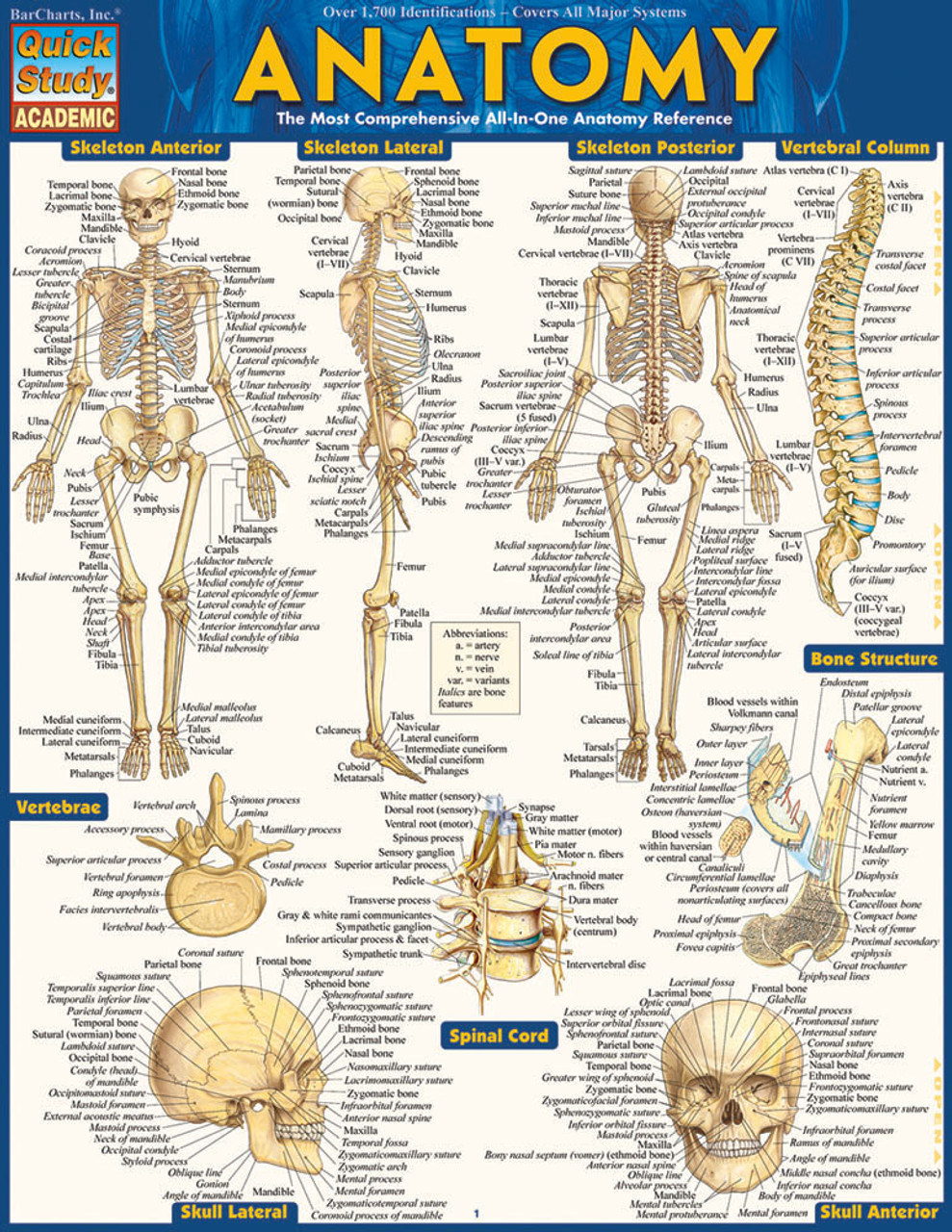
The mechanism of cervical spine injury in this positional archetype almost universally involves axial loading. When a player lowers the crown of the helmet—even by a fraction of an inch—prior to contact, the natural lordotic curve of the cervical spine flattens into a straight, segmented column. In its normal curved state, the cervical spine acts as a shock-absorbing spring, dissipating kinetic energy through the paraspinal musculature and intervertebral discs. Once straightened, the spine loses its capacity to flex safely. The kinetic energy of the collision transfers directly down the vertical axis of the vertebral bodies.
This axial compression produces three distinct mechanical failure modes: As highlighted in detailed coverage by Sky Sports, the results are notable.
- Transient Neuropraxia (Stingers or Burners): Traction or compression of the brachial plexus or cervical nerve roots. This causes immediate, unilateral burning pain, paresthesia, or temporary motor weakness in the upper extremity, yet leaves the structural integrity of the spinal column intact.
- Ligamentous Sprain and Facet Joint Contusion: Hyperflexion or hyperextension forces that stretch the anterior or posterior longitudinal ligaments without causing vertebral subluxation. Pain is localized, and protective muscle guarding severely restricts range of motion, though neurological pathways remain uncompromised.
- Structural Fracture or Dislocation: The threshold where axial force exceeds the compressive strength of the vertebral body (such as a Jefferson fracture of C1 or a teardrop fracture of the lower cervical vertebrae) or ruptures the stabilizing ligaments, threatening the spinal cord itself.
Standard sports media coverage treats all "scary neck injuries" as a single monolithic event until a binary "good" or "bad" update emerges. In operational sports medicine, these three categories represent entirely different risk profiles, diagnostic timelines, and physiological recovery curves.
Deconstructing the Acute On-Field Triage Protocol
When a player remains supine on the turf exhibiting signs of cervical distress, the NFL’s Emergency Action Plan (EAP) overrides all competitive timelines. The visible choreography—the stabilization of the head, the removal of the facemask via cordless screwdrivers while leaving the helmet and shoulder pads affixed, and the deployment of the spine board—is governed by strict biomechanical preservation rules.
Removing a helmet without simultaneously removing shoulder pads forces the cervical spine into hyperextension, creating a shear force across potentially unstable vertebrae. Therefore, medical personnel maintain neutral alignment by keeping both pieces of equipment locked in place until radiographic clearance is achieved.
The immediate diagnostic progression follows a strict hierarchy of exclusion:
- Phase One: Neurological Screening. Before the player leaves the field, team physicians and unaffiliated neurotrauma consultants assess motor function and sensation across all four extremities. Confirming voluntary movement in the fingers and toes immediately rules out complete spinal cord transection, though it does not eliminate the risk of central cord syndrome or unstable fractures.
- Phase Two: Advanced Imaging. Upon transport to a designated trauma center or stadium imaging suite, Computed Tomography (CT) scans take precedence over Magnetic Resonance Imaging (MRI) for initial clearance. CT provides superior spatial resolution of cortical bone, allowing radiologists to identify hairline fractures in the pedicles, laminae, or vertebral bodies within minutes.
- Phase Three: Soft Tissue and Cord Evaluation. Once bony stability is confirmed via CT, an MRI is utilized to evaluate the intervertebral discs, ligamentous complexes, and the spinal cord parenchyma for edema or contusion.
When a franchise releases an early positive update—such as the Lions indicating favorable progress for Campbell—it signals that Phase One and Phase Two have cleared the most catastrophic thresholds. Specifically, it indicates the absence of acute spinal cord compression and unstable bony fractures. However, a "positive update" in clinical terms merely shifts the prognosis from life-altering trauma to complex orthopedic management.
The Information Asymmetry of NFL Injury Communications
Public statements from NFL front offices and coaching staffs serve dual purposes: satisfying league-mandated transparency rules while preserving competitive ambiguity. Phrases like "doing well," "moving in the right direction," or "your prayers are working" are deliberately non-clinical. They de-escalate public alarm without committing the organization to a specific medical timeline or revealing the precise anatomical structure injured.
This creates a profound information asymmetry between internal team operations and external analysis. Internally, the medical staff categorizes the injury along a strict return-to-play continuum. Externally, media narratives oscillate between panic and relief based on emotional cues rather than physiological markers.
Three structural constraints dictate how franchises communicate cervical injuries:
- HIPAA and Collective Bargaining Agreement (CBA) Protections: Teams cannot legally disclose specific diagnostic findings—such as an MRI showing a C5-C6 disc herniation—without explicit player consent. Consequently, organizations rely on broad functional summaries.
- Competitive Game-Planning: Confirming a player is out for four weeks allows upcoming opponents to eliminate specific defensive packages from their preparation. Maintaining day-to-day or week-to-week ambiguity forces opposing offensive coordinators to allocate film study and practice reps to counter a player who may not be active.
- Psychological Stabilization of the Roster: Witnessing a teammate immobilized on a spine board induces acute stress across a locker room. Early, optimistic communication from leadership mitigates psychological contagion, allowing the remaining roster to compartmentalize the trauma and resume operational focus.
The Physiological Bottleneck of Cervical Return-to-Play
Even when structural fractures and spinal cord contusions are completely ruled out, returning an inside linebacker to live NFL competition presents a severe physiological bottleneck. Unlike an ankle sprain or a hamstring strain, where a player can perform at 85 percent capacity with taping or compensatory mechanics, the cervical spine admits zero margin for protective compensation.
Before a player can be cleared for contact, four non-negotiable clinical benchmarks must be met:
- Painless, Full Active Range of Motion (AROM): The athlete must demonstrate complete flexion, extension, lateral bending, and rotation without pain or radicular symptoms. Any lingering stiffness indicates active inflammation or protective muscle guarding, which compromises the spine's ability to absorb subsequent impacts.
- Symmetrical Isometric Strength: Dynamometer testing must confirm that the deep neck flexors, sternocleidomastoid, and upper trapezius muscles have returned to baseline strength symmetry. Muscle fatigue during the fourth quarter of a game degrades dynamic stabilization, leaving the ligaments vulnerable to shear forces.
- Resolution of Radiculopathy: If the injury involved nerve root irritation, all tingling, numbness, or strength deficits in the deltoids, biceps, or triceps must completely resolve. Playing with residual nerve root compression risks permanent axonotmesis (nerve fiber damage) upon repeat impact.
- Absence of Spinal Stenosis: Imaging must confirm adequate cerebrospinal fluid reserve around the spinal cord. Athletes with congenital or acquired narrowing of the spinal canal face exponentially higher risks of catastrophic injury from minor hyperextension events.
The timeline for clearing these benchmarks varies wildly. A mild muscular strain or transient neuropraxia may resolve within seven to ten days, allowing a player to return the following week. Conversely, a significant ligamentous sprain or acute disc bulge—both of which still warrant "positive updates" relative to catastrophic cord injury—can sideline a linebacker for three to six weeks while inflammation subsides and isometric strength is rebuilt.
Defensive Schematic Entropy Without the Green Dot
In the Detroit Lions' defensive architecture, Jack Campbell’s value extends beyond physical tackling metrics; he functions as a primary spatial processor and communication hub. Losing a starting inside linebacker mid-game or for an extended stretch introduces immediate schematic entropy into a defensive unit.
Modern NFL offenses utilize pre-snap motion, condensed formations, and tempo shifts specifically to stress the communication links between a defense’s second and third levels. The inside linebacker is responsible for translating the defensive coordinator’s headset call into front alignments, coverage checks, and blitz adjustments.
When an injury removes the primary communicator, the defensive ecosystem experiences three cascading degradations:
- Latency in Pre-Snap Adjustments: Backup linebackers often possess the physical athleticism to execute assignments, yet lack the pattern-recognition speed to diagnose offensive formation indicators instantly. A half-second delay in communicating a coverage check against a motioning receiver creates blown assignments in the secondary.
- Reduction in Playbook Complexity: Coaching staffs must artificially truncate the defensive call sheet. Exotic simulated pressures, complex stunt-and-twist combinations up front, and split-field coverage disguises are stripped away in favor of base alignments that minimize communication failures.
- Run-Fit Integrity Breakdowns: Inside linebackers dictate the leverage of the defensive front. If a replacement player misreads a pulling guard by a single step, the geometric integrity of the run-fit collapses, turning two-yard gains into explosive twenty-yard runs.
Strategic Allocation of Roster and Medical Capital
For a coaching staff and front office managing a recovering linebacker, the optimal strategy is dictated by risk-adjusted expected value rather than short-term emotional momentum. The incentive structure of the NFL heavily penalizes premature clearance of cervical injuries. Re-aggravating a soft-tissue neck injury or sustaining a secondary impact before full isometric strength returns transforms a short-term absence into a season-ending or career-threatening event.
To insulate the defense against both immediate performance drops and long-term medical liability, the organization must execute a dual-track operational adjustment:
First, reallocate the communication burden. If Campbell returns to action while still managing minor range-of-motion limitations or wearing restrictive collar equipment (such as a Cowboy Collar or Kerr Collar to limit hyperextension), the defensive staff should temporarily shift the helmet communicator (the "green dot") to a veteran safety or an adjacent linebacker. Reducing his cognitive load pre-snap allows him to focus entirely on physical posture, head placement, and run-fit execution, minimizing the risk of awkward, compromised tackling angles.
Second, deploy personnel-package insulation. During the immediate recovery window—whether Campbell sits out or plays on a snap count—the defensive coordinator must lean heavily into sub-packages (such as Big Nickel formations utilizing three safeties) rather than forcing an inexperienced backup linebacker onto the field for 65 snaps. Upgrading the athletic floor on the field with a veteran defensive back compensates for the loss of linebacker bulk by increasing overall team speed and coverage reliability, forcing opposing offenses into low-efficiency, sustained drives rather than allowing explosive plays over the middle.
Ultimately, a positive medical update after a cervical spine scare represents a cleared hurdle, not the finish line. Preserving the asset requires disciplined adherence to objective isometric and radiographic benchmarks, paired with schematic adjustments that protect the player from the exact biomechanical vulnerabilities that caused the trauma.


