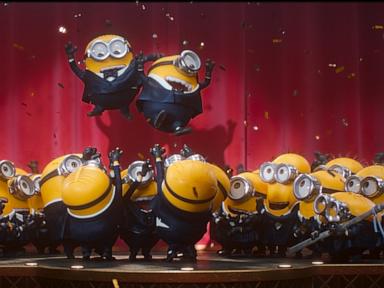
Hollywood production pipelines consistently fail due to a structural flaw: runaway capital expenditure coupled with highly volatile box-office returns. The standard theatrical model relies on $200 million-plus production budgets that require over $500 million in global ticket sales just to achieve operational break-even. In stark contrast, Illumination Entertainment has systematized a margin-first production engine. By enforcing a hard cap on negative costs and structurally separating creative execution from geographic cost centers, the studio maintains an uncompromised distribution-to-cost ratio.
The strategy relies on a structural framework that rejects the industry standard of technological maximalism in favor of strict unit economics and calculated audience psychology.
The Production Arbitrage Framework
The fundamental driver of the studio's superior margin profile is a deliberate geographic separation between corporate strategy and physical asset creation. While intellectual property management, deal structuring, and high-level development are centralized in Santa Monica, California, the labor-intensive production and rendering pipeline is anchored in Paris, France via Illumination Mac Guff.
This configuration exploits two critical economic variables:
- Subsidized Labor Arbitrage: Operating in France unlocks systemic state-sponsored financial incentives, such as the Crédit d'Impôt International (Tax Shelter for International Productions). This effectively reduces net labor costs by up to 30% for qualifying technical operations.
- Targeted Infrastructure Investment: Unlike competitors who continuously fund internal R&D to develop proprietary rendering software or simulate physics to a hyper-realistic degree, the Paris facility optimizes existing, stable technology stacks. Engineering resources are deployed to accelerate render times and automate asset reuse rather than chasing marginal visual fidelity.
The direct result of this framework is a rigid cost structure. The upcoming release Minions & Monsters carries a production budget of approximately $85 million. This figure is not an anomaly; it is an absolute ceiling that has defined the studio’s entire catalog, from the original Despicable Me to The Super Mario Bros. Movie.
Competing studios routinely spend two to three times this amount on single animated features. The structural breakdown of this capital discrepancy reveals that competitors over-allocate funds to two main categories: extended developmental timelines (frequent script rewrites during active animation) and excessive visual rendering complexity. Illumination eliminates the first by freezing scripts before heavy asset production begins, and the second by intentionally choosing a stylized, cartoony aesthetic that demands less computational overhead.
The Economics of Intellectual Property Monopolization
The studio’s franchise architecture relies on high-velocity character recognition and systematic cross-promotional loops. The core monetization strategy does not depend solely on the domestic theatrical box office; rather, theatrical releases function as high-profile marketing campaigns for a wider ecosystem of downstream consumer products, theme park integrations, and multi-tier streaming windows.
The structural lifecycle of this intellectual property operates through three distinct mechanisms:
1. The Linguistic Simplification Index
The global box office is highly dependent on international markets, yet narrative complexity and verbal humor frequently degrade when translated across diverse cultures. The creation of the Minions solves this international friction. By utilizing a non-verbal, pantomime-based comedic style mixed with a cross-lingual vocal delivery (voiced consistently by Pierre Coffin), the studio eliminates translation barriers. The humor translates identically in Tokyo, Paris, São Paulo, and New York, maximizing the film's international box office potential without requiring localized content adjustments.
2. Multi-Platform Windows and Output Optimization
The domestic box office is merely the initial phase of capital capture. The distribution network leverages a highly optimized post-theatrical waterfall. The theatrical window creates cultural urgency, which is immediately monetized through a dual-streaming structure. Under the existing Universal Pictures framework, films stream first on Peacock for an exclusive window, transition to Netflix for a high-value middle window, and return to Peacock. This system extracts maximum licensing revenue from distinct consumer segments while ensuring continuous IP visibility between theatrical cycles.
3. Corporate IP Aggregation
The studio has expanded beyond its native Despicable Me universe by applying its low-cost, high-efficiency production template to external, established brands. Strategic partnerships with Nintendo (The Super Mario Bros. Movie) and Mattel (the upcoming animated Barbie feature) demonstrate this scalability. The studio does not bear the financial risk of building brand equity from scratch; instead, it imports pre-monetized consumer bases into its optimized production engine, ensuring high floor-level box office returns before a single frame is rendered.
Technical Stagnation as a Defensive Strategy
During periods of rapid technological transition, a common corporate misstep is the premature adoption of unproven systems. The entertainment sector is currently facing immense pressure to integrate generative artificial intelligence into production pipelines under the assumption that it will drastically reduce asset creation costs.
The studio's leadership has adopted a public stance of technological conservatism regarding this shift. The rationale is grounded in risk management and capital preservation rather than creative sentimentality.
First, the integration of generative AI tools introduces severe legal vulnerabilities concerning copyright provenance and intellectual property ownership. For a studio whose core enterprise value is tied entirely to clean, defensible trademarks and character designs, introducing algorithmically generated elements into a commercial pipeline compromises the underlying asset integrity.
Second, existing automation pipelines within the studio are already highly optimized. The operational bottleneck in high-end animation is rarely the speed of initial asset generation; it is the iterative control required by directors to maintain character performance and narrative continuity. Current generative models lack the granular control mechanisms needed for complex, multi-character interactions. Investing capital to force these tools into a working pipeline yields diminishing returns while threatening predictable production schedules.
The strategic priority remains job preservation and pipeline stability over the pursuit of unproven technological advantages. The studio treats its workflow as a fixed machine; altering the fundamental architecture introduces systemic variance, which directly threatens the $85 million budget ceiling.
The Risk Profile of Creative Conservation
The primary vulnerability of this operational model lies in the eventual decay of audience engagement due to creative fatigue. The reliance on safe, iterating narratives creates a long-term strategic bottleneck.
The structural trade-off between fiscal predictability and creative innovation can be modeled as a declining utility curve:
[Audience Retention Floor] -------- High Margin Predictability
                                \
                                 \  <- Creative Saturation Point
                                  \
                                   [Fatigue Velocity Dropoff]
As a franchise enters its sixth or seventh iteration—such as Minions & Monsters marking the seventh entry in the broader Despicable Me universe—the risk of sudden audience drop-off increases. When stories rely entirely on established tropes to protect their financial downside, they run the risk of becoming entirely predictable. If a competitor introduces a highly innovative visual or narrative product that captures public attention, a studio reliant on formulaic models can lose its market share rapidly.
To mitigate this saturation risk, the studio uses a tactical director-rotation system. Bringing back veteran creators like Pierre Coffin while giving them distinct thematic prompts—such as turning the Minions into low-budget filmmaker characters within the narrative—allows the studio to simulate creative evolution without shifting the underlying production constraints. The narrative itself changes slightly to mock new cultural targets, but the structural assets, character skeletons, and comedic timing metrics remain completely unchanged.
Resource Allocation Matrix
The operational divergence between this model and standard Hollywood practices is best understood by evaluating where capital is deployed across the life cycle of a project.
- Development Phase: Standard Hollywood studios allow for multi-year, open-ended development cycles with rolling script changes that happen concurrently with active animation. Illumination demands an absolute script freeze prior to layout and animation phases, eliminating wasted asset creation.
- Asset Complexity: Competitors optimize for individual strand hair simulation, micro-expression muscle tracking, and hyper-realistic lighting environments. Illumination enforces a simplified geometry rule, utilizing stylized shapes that drastically reduce render farm electricity consumption and compute time.
- Talent Compensation: Instead of paying massive upfront salaries that inflate the negative cost of the film, the studio heavily leverages performance-based back-end structures and long-term multi-film contracts to keep upfront overhead predictable.
The second limitation of this model is its historical inability to capture prestigious industry accolades, such as the Academy Award for Best Animated Feature. The critical establishment routinely favors the high-budget, structurally experimental output of competitors. However, from a purely financial perspective, the lack of awards recognition is entirely irrelevant. The studio’s core objective is the maximization of return on invested capital (ROIC). Because awards campaigns themselves require millions of dollars in secondary marketing spend with no verifiable correlation to international consumer product sales, omitting the pursuit of critical acclaim is a deliberate, margin-preserving choice.
Strategic Playbook for Sustained Market Dominance
The long-term viability of the studio depends on executing a precise capital reallocation strategy. As the core Despicable Me asset base inevitably approaches natural market saturation, the cash generated by Minions & Monsters must be funneled into expanding the external IP joint-venture framework.
The next operational step requires replicating the Nintendo partnership model across other international gaming and consumer ecosystems that possess massive built-in nostalgic equity but lack internal cinematic production capabilities. The studio must position itself as a pure service-and-distribution engine for global brands, using its rigid $85 million production template to guarantee profitability for its partners while shielding itself from the foundational risks of original IP development. Maintaining this absolute fiscal discipline, even when facing pressure to scale up visual complexity, is the only way to preserve the studio's position as the most reliable margin generator in modern media.