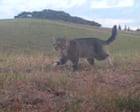
Effective conservation management relies on the complete removal of invasive mammalian predators from vulnerable island and mainland ecosystems. When a single apex predator targets endangered avian species over an extended timeline, standard pest management protocols frequently fail. The three-year evasion of capture by a specific feral cat targeting rare ducks in New Zealand exposes the structural weaknesses of traditional trapping deployment. Solving this operational challenge requires examining the intersection of behavioral adaptation in invasive carnivores, the limitations of passive monitoring networks, and the economic constraints of protracted field campaigns.
The Behavioral Economics of Feral Evasion
A feral cat operating in a high-resource environment with abundant native prey exhibits a low incentive threshold for consuming manufactured bait or investigating standard box traps. Neophobia, or the fear of new objects, increases proportionally with age and survival duration in the wild. This cat established a localized hunting territory overlapping with endangered waterfowl populations, developing a specialized dietary preference that ignored standard olfactory lures.
Field operators confronting this level of behavioral resistance face diminishing returns on passive intervention. When an animal successfully navigates multiple trap cycles without reinforcement of a negative stimulus, it learns to associate human-deployed infrastructure with lethal risk.
- Spatial Avoidance: The target animal restricts its home range to dense vertical cover, bypassing standard transit corridors where traps are conventionally placed.
- Olfactory Habituation: Standard commercial attractants lose efficacy against an apex predator that consumes fresh avian tissue daily.
- Temporal Shift: Activity patterns transition entirely to unmonitored nocturnal windows, neutralizing diurnal tracking efforts.
Breaking this evasion loop demands an active telemetry-guided approach rather than static infrastructure deployment. The transition from reactive trapping to proactive tracking changes the probability distribution of capture from random encounter to deterministic removal.
Operational Failures in Multi-Year Eradication Campaigns
The persistence of the predator for thirty-six months highlights systemic vulnerabilities in resource allocation and technological deployment across conservation projects. Standard monitoring frameworks rely on motion-activated cameras and scat surveys, which provide lagging indicators of presence rather than real-time location vectors.
When monitoring infrastructure operates on delayed data loops, the target animal exploits temporal gaps to bypass hazard zones. The cost function of eradication scales exponentially with time. Every month an elusive predator remains active, the reproductive output of the endangered duck population suffers incremental loss, tipping the demographic balance toward localized extinction.
[Traditional Passive Trapping] ---> [High Evasion Rate] ---> [Extended Timeline] ---> [Ecosystem Degradation]
[Targeted Telemetry & Mapping] ---> [Deterministic Interception] ---> [Rapid Removal] ---> [Avian Recovery]
Resource misallocation typically occurs when field teams distribute low-density trap networks across wide geographic zones instead of concentrating high-density, multi-modal interception arrays around known kill sites. An effective eradication protocol treats the targeted animal as an intelligent adversary capable of spatial risk assessment.
The Mechanistic Blueprint for Apex Predator Removal
Eradicating a persistent mammalian threat from an avian sanctuary necessitates a three-stage tactical matrix designed to eliminate optionality for the target.
Phase One: High-Resolution Spatial Profiling
Deploying thermal imaging drones and specialized scat-detection canines maps the precise micro-habitats utilized by the predator. Instead of guessing travel routes, operators isolate the exact resting dens and primary hunting boundaries. This eliminates the latency inherent in waiting for an animal to stumble into a regional grid.
Phase Two: Multi-Modal Interception Arrays
Standard steel-jaw or cage traps fail against conditioned adults. Modern protocols mandate the integration of thermal-triggered mechanical devices and customized olfactory profiles that mimic live prey distress rather than generic food sources. The mechanical trigger must fire with velocity parameters that prevent escape upon initial impact.
Phase Three: Real-Time Environmental Manipulation
Restricting access to secondary prey sources through targeted habitat modification forces the predator to engage with high-risk feeding zones where surveillance is concentrated. By artificially constraining the animal's foraging options, conservationists manipulate its risk-reward calculus, compelling it to enter monitored bottlenecks.
Capital Allocation and Strategic Forecasts
The long-term security of endangered waterfowl populations cannot depend on prolonged, ad-hoc chases of individual rogue carnivores. Funding structures must pivot from emergency response grants triggered by media attention to preventative, automated biosecurity grids.
Future conservation engineering will rely on autonomous monitoring networks utilizing machine vision to instantly identify and neutralize invasive carnivores before they establish multi-year residencies. Field operations must integrate continuous acoustic and thermal telemetry across all sensitive breeding zones to compress response windows from years to hours. The elimination of a single elusive predator proves that while persistence wins individual battles, systemic technological superiority is mandatory to secure the operational theater.