Geopolitical coercion operates on a simple ledger of pain versus survival, yet Washington consistently miscalculates the friction points. The proclamation of an economic D-Day by United States Treasury officials targeting Iran represents a pivot from kinetic exhaustion to total financial isolation. This strategy relies on an assumption that tightening the secondary sanctions noose around third-party trade partners will force Tehran into an unconditional surrender or a return to stalled diplomatic frameworks. Deconstructing this financial offensive requires examining the structural mechanics of sanctions enforcement, the elasticity of illicit trade networks, and the strategic limits of extraterritorial compliance.
The Tripartite Architecture of Financial Isolation
The announced campaign rests upon three distinct operational vectors designed to sever the remaining arteries of the Iranian state budget.
The first vector targets primary liquidity nodes, aiming to close historical loopholes involving exchange houses, front companies, and clandestine maritime ship registries. By threatening secondary sanctions against any financial institution or government entity providing a trade lifeline, Washington attempts to impose a prohibitive compliance cost on external actors.
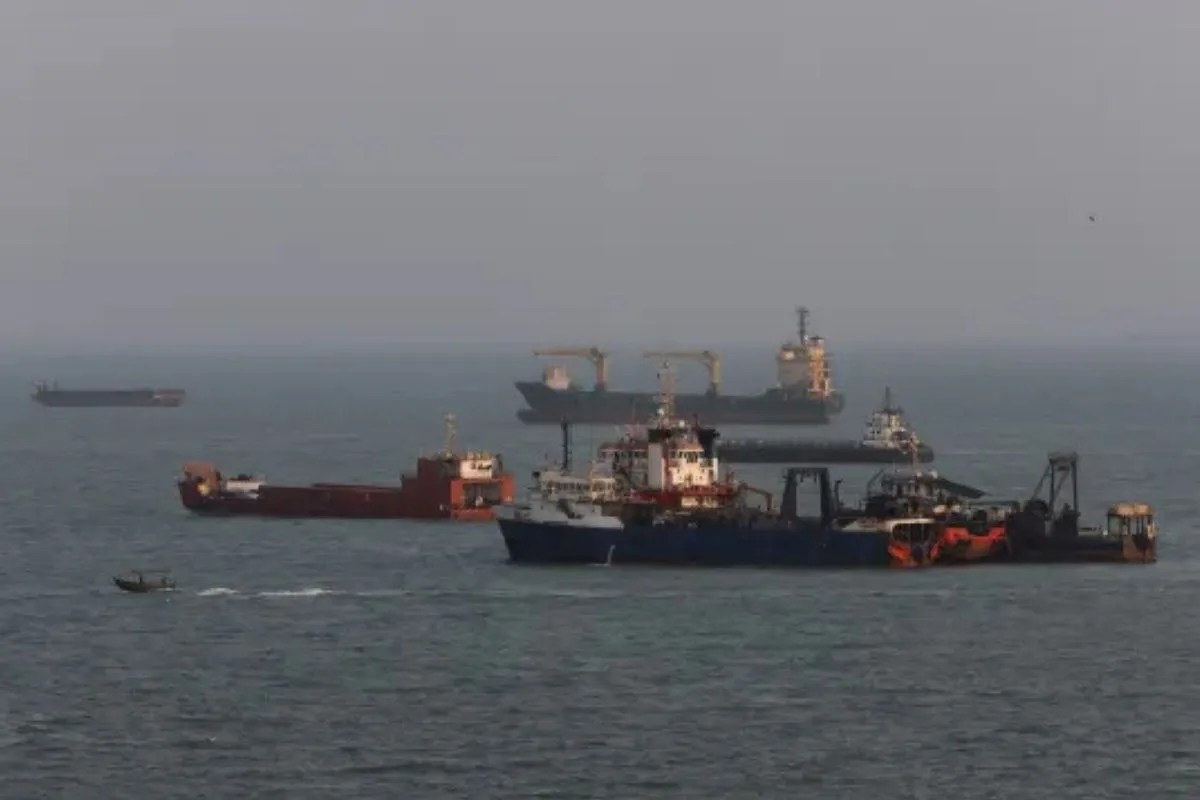
The second vector centers on energy export channels. With the United States Navy maintaining a heavily patrolled corridor in the southern lane of the Strait of Hormuz, the financial offensive seeks to legally criminalize the destination markets for whatever petroleum volume manages to evade the blockade.
The third vector is diplomatic coercion directed at regional and global intermediaries, such as Pakistan and Oman, forcing them to choose between access to Western capital markets and their commercial relationships with Tehran.
The Structural Breakdown of Secondary Enforcement
Despite the declared magnitude of this financial offensive, the mechanism suffers from severe structural diminishing returns. Iran has endured nearly five decades of continuous economic restrictions since the 1979 revolution, evolving an adaptive subterranean economy that operates independently of Western clearinghouses.
When primary and secondary sanctions reach saturation, target states transition to sovereign barter systems, localized digital ledger settlements, and non-dollar invoicing. The efficacy of threatening third-party entities depends entirely on the disparity between their exposure to the United States financial system and the profit margins derived from sanctioned trade. For nations or private actors already decoupled from Western banking, an additional layer of sanctions introduces zero marginal deterrence.
Furthermore, major energy consumers like China, which historically relied heavily on Gulf hydrocarbons, possess alternative strategic imperatives that frequently override Washington's extraterritorial edicts. Beijing views long-term energy security through a geopolitical lens, neutralizing the intended shock value of unilateral financial declarations.
The Asymmetric Cost Function and Regional Blowback
The strategic equation put forward by proponents of maximum economic pressure ignores the counter-measures available to a cornered adversary. Tehran has repeatedly signaled that if financial warfare aims to extinguish its export economy entirely, symmetrical retaliation will manifest through maritime choke points.
Closing or severely disrupting transit through the Strait of Hormuz transforms a localized financial dispute into a global energy supply crisis. The cost function thus shifts away from the target regime toward global markets, driving up crude prices and introducing inflationary shocks across importing economies.
When regional neighbors face direct threats from both Washington's secondary compliance mandates and Tehran's retaliatory warnings, a defensive realignment occurs. States like the United Arab Emirates and Oman must balance physical security vulnerabilities against economic integration, rendering total regional compliance an unattainable objective for Western strategists.
Operational Execution
Deploying maximum financial pressure without a viable diplomatic off-ramp creates a strategic trap. If the targeted regime perceives that capitulation guarantees internal collapse rather than relief, the incentive structure favors absolute defiance. To operationalize an enduring containment strategy, economic coercion must be paired with precise, credible pathways for economic reintegration should compliance occur. Absent this balance, financial offensives devolve into perpetual attrition cycles that fail to alter core state behavior while compounding regional volatility.
Execute the next phase of containment by conditioning relief milestones directly on verified reductions of destabilizing proxies rather than demanding total structural surrender, thereby aligning the enforcement mechanism with achievable behavioral adjustments.
US Treasury Secretary set to announce economic sanctions against Iran
This short video provides a concise overview of the U.S. Treasury's announcement regarding upcoming financial sanctions against Iran and the associated regional reactions.
http://googleusercontent.com/youtube_content/1