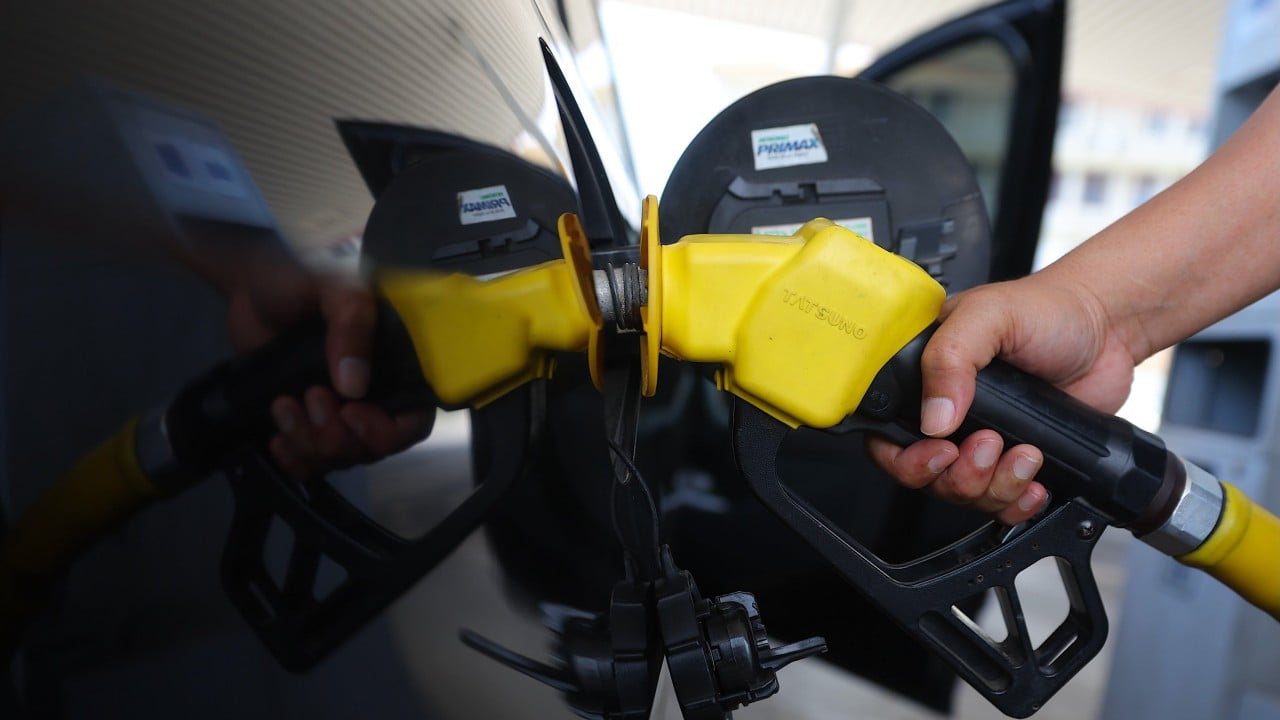
Azman watches the digital readout on Pump 4 flicker. It is 6:15 PM in suburban Selangor, the hour when the heat of the asphalt finally begins to soften, and the line of idling cars snakes out toward the main road. To most, this is just the evening rush. To Azman, who has managed this station for twelve years, the sound of those engines is the sound of a countdown.
He knows something the drivers don't. Or rather, he knows the physical reality of the warnings currently echoing through the halls of the Ministry of Domestic Trade and Cost of Living. By June, the Minister warns, Malaysia will hit a "critical period." It sounds clinical. It sounds like a line item in a budget meeting. But on the ground, "critical" looks like an empty underground tank and a "No Fuel" sign taped to a plastic cone.
The math of a nation’s hunger for oil is surprisingly fragile. We have grown accustomed to the rhythmic click of the nozzle, the cooling scent of gasoline, and the relative pittance we pay at the gesture of a credit card. But that stability is currently being eroded by a convergence of logistics, global price volatility, and the sheer, staggering volume of consumption that peaks as the mid-year heat arrives.
The Ghost in the Tank
Imagine a circulatory system where the blood is being diverted before it ever reaches the heart. This is the metaphor for Malaysia’s current fuel leakage. While the government pours billions into subsidies to keep the price of RON95 at the pump among the lowest in the world, a shadow economy is siphoning that generosity.
Smuggling syndicates don't look like movie villains. They look like modified trucks with hidden auxiliary tanks, crossing borders where the price of fuel triples the moment you hit the neighbor's soil. Every liter that disappears into a black-market drum in a border town is a liter that isn't available for Azman’s customers in Selangor. When the Minister speaks of a "critical period," he isn't just talking about a lack of supply. He is talking about a system being bled dry by its own efficiency.
The statistics are sobering. The government is expected to spend upwards of RM80 billion on subsidies this year alone. To put that in perspective, that is money that isn't going into schools, hospitals, or the aging rail lines that might actually reduce our dependence on those very pumps. We are essentially burning our future to keep the present affordable.
The June Threshold
Why June? The timing isn't arbitrary. As we approach the middle of the year, several gears grind together.
First, there is the seasonal surge. Travel increases, school holidays begin, and the industrial demand for logistics hits a fever pitch. Second, there is the global market. We live in a world where a drone strike three thousand miles away or a policy shift in an OPEC+ boardroom can instantly tighten the noose on local supply chains. Malaysia, despite being an oil producer, is not an island. We refine what we can, but we import what we must.
Consider a hypothetical courier named Sarah. She drives a ten-year-old Perodua, delivering parcels across the Klang Valley. For Sarah, a five-sen increase in fuel isn't a statistic; it’s a missed meal. A "supply disruption" isn't a news headline; it’s a lost day of wages. When the pumps go dry in June, people like Sarah are the first to feel the ghost in the tank. They are the ones who will spend their precious evening hours hunting for a station that still has RON95, burning the very fuel they are trying to find.
The Minister’s warning is an attempt to preempt a panic, yet the irony of such warnings is that they often trigger the very behavior they seek to avoid. Hoarding. Panic buying. The sight of a half-empty tank becomes a source of existential dread.
The Subsidy Trap
We are locked in a paradox of our own making. For decades, cheap fuel has been the unwritten social contract of Malaysian life. It is the grease that keeps the gears of the middle class turning. But this blanket subsidy—where the billionaire in the luxury SUV receives the same per-liter discount as the delivery rider on a 110cc moped—is no longer sustainable.
The transition to targeted subsidies is the "solution" being whispered in every department, but the execution is a minefield. How do you identify the vulnerable without creating a bureaucratic nightmare? How do you prevent the inevitable inflation that follows when the cost of transporting a cabbage from Cameron Highlands suddenly doubles?
The "critical period" in June serves as a stress test for a nation that has forgotten what energy actually costs. We have lived in a cocoon of artificial pricing for so long that the reality of the global market feels like an assault.
The Quiet at the Pump
Back at the station, Azman watches a luxury sedan pull up. The driver leaves the engine idling—cool air conditioning blasting—while he wanders inside to buy a bottle of water. He is oblivious to the fact that the fuel keeping his cabin at a crisp 20°C is being subsidized by a government currently sweating over how to keep the lights on in June.
It is a failure of visibility. Because we don't see the cost, we don't feel the value.
The crisis isn't just about whether the tankers will arrive on time. It’s about the realization that our relationship with energy is reaching a breaking point. We are approaching a moment where the "critical" warnings will stop being press releases and start being empty nozzles.
When that June sun hits the pavement and the line at the station grows longer than the supply can handle, the conversation will shift. It won't be about cents per liter anymore. It will be about the realization that the most expensive fuel in the world is the fuel you can't buy.
Azman resets the pump. The digits spin. For now, the liquid flows. But the silence of an empty tank is a heavy thing, and it is moving toward us, one kilometer at a time.