Gravity does not negotiate.
You learn this early if you spend enough time watching metal birds descend through heavy weather. There is a precise, unforgiving rhythm to an instrument landing. A choreography of numbers, needles, and altitudes that leaves zero margin for human vanity. When the cloud ceiling drops and the tarmac disappears behind a curtain of horizontal rain, the cockpit becomes a monastery of absolute focus. Every voice must be clear. Every warning must be respected.
Except, sometimes, they are not.
Consider what happens inside the flight deck when the invisible pressure of a schedule collides with the stubborn optimism of a human being. Not a monster. Not a reckless daredevil. Just a captain. Someone with a mortgage, a family waiting in another time zone, a logbook boasting thousands of unblemished hours, and a sudden, quiet conviction that they can fix whatever the sky is throwing at them.
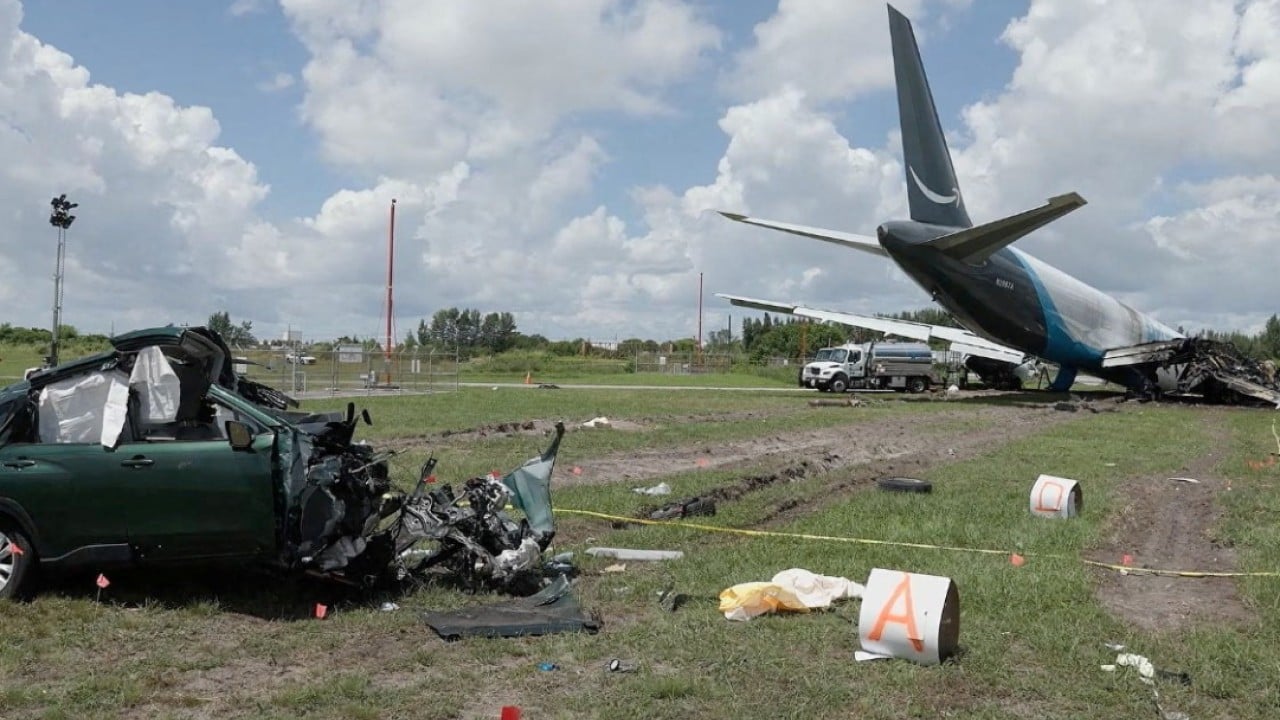
The aviation world knows the outcome of the Miami crash all too well by now. The dry reports sit in government archives, filled with bureaucratic phrasing: unstabilized approach, excessive descent rate, ignored ground proximity warnings. Those words are sterile. They reduce a terrifying human moment to a spreadsheet.
Let us restore the breath to the bodies.
Picture the cockpit of a cargo flight on its final approach. It is dark outside the windshield, save for the smear of runway lights fighting through torrential downpours. The instruments are screaming. Literally screaming. Synthetic voices synthesized to sound calm yet urgent echo off the bulkheads, repeating a single, uncompromising command: Pull up. Sink rate. Terrain.
To understand why a pilot pushes past those warnings, you have to understand the psychology of the expert trap. Expertise is a shield forged over decades, but it can easily become a cage. When you have successfully landed a thousand times in marginal weather, your brain rewrites the definition of possible. You stop seeing the red line as a physical boundary and start seeing it as a suggestion. A challenge to be overcome by sheer force of habit and superior airmanship.
The cockpit voice recorder tells a haunting story of this exact phenomenon. The aircraft was moving too fast. The descent was too steep. Every rule written in blood by generations of aviation safety experts was being quietly rewritten in real time by the men at the controls.
Too fast.
When an airplane carries too much energy over the threshold, it refuses to settle. It floats down the runway like a skater on fresh ice, burning up precious feet of concrete while the pilot wrestles the nose downward, desperate to force compliance.
Too low.
When the aircraft drops below the glidepath, the safety buffers vanish. There are no second chances when you are grazing the tops of the trees or misjudging the approach light stanchions.
The warnings blared. The first officer noted the deviations. The data shows the warnings were acknowledged, yet the thrust levers remained untouched, the nose stayed down, and the descent continued. Why? Because stopping requires turning around. Going around means admitting defeat, burning extra fuel, facing the administrative friction of a missed approach, and delaying the inevitable arrival. It feels like failure. And for high-achieving professionals, failure is often harder to face than danger.
We have all been there, in our own smaller, less lethal arenas.
You stay on a highway long after the snow turns to black ice because you are half an hour from home. You refuse to call a contractor because you are certain you can patch that leaking roof yourself, even as water pools on the hardwood. You press on because turning back feels like an admission of weakness. We confuse persistence with stubbornness, and usually, the universe lets us get away with it.
Until it doesn't.
In aviation, the margins are razor-thin, and the universe keeps score with absolute mathematical precision.
When the aircraft finally impacted, it was not because the technology failed. The instruments did their job. The ground proximity warning system did its job. The weather radar painted the picture clearly. The system failed because it had to contend with the most unpredictable variable in the history of engineering: the human will to press on against all available evidence.
We study these crashes not to point fingers at the fallen, but to hold up a mirror to ourselves. Every rule in the aviation rulebook was purchased with wreckage and lives. When we read about a pilot pressing on despite warnings, we are looking at a magnified reflection of our own daily compromises. We look at the red lights in our lives—the physical exhaustion, the strained relationships, the mounting financial pressures—and we hear our own internal synthetic voice shouting warnings.
And like that crew in Miami, we sometimes reach for more speed, drop our heads, and hope the runway appears before the ground does.
The wreckage is cleared now. The reports are filed, bound in heavy paper, and placed on shelves where young cadets study them in hushed classrooms. They learn the numbers. They memorize the limits. They recite the mantra of the go-around.
Out on the tarmac tonight, another heavy jet lines up for departure into a stormy night. The engines spool up, vibrating through the floorboards, singing that low, powerful song of controlled combustion. Inside the flight deck, two pilots scan their instruments, secure their harnesses, and push the throttles forward, trusting that when the weather closes in and the warnings begin to sound, they will find the courage to do the hardest thing possible.
To walk away.