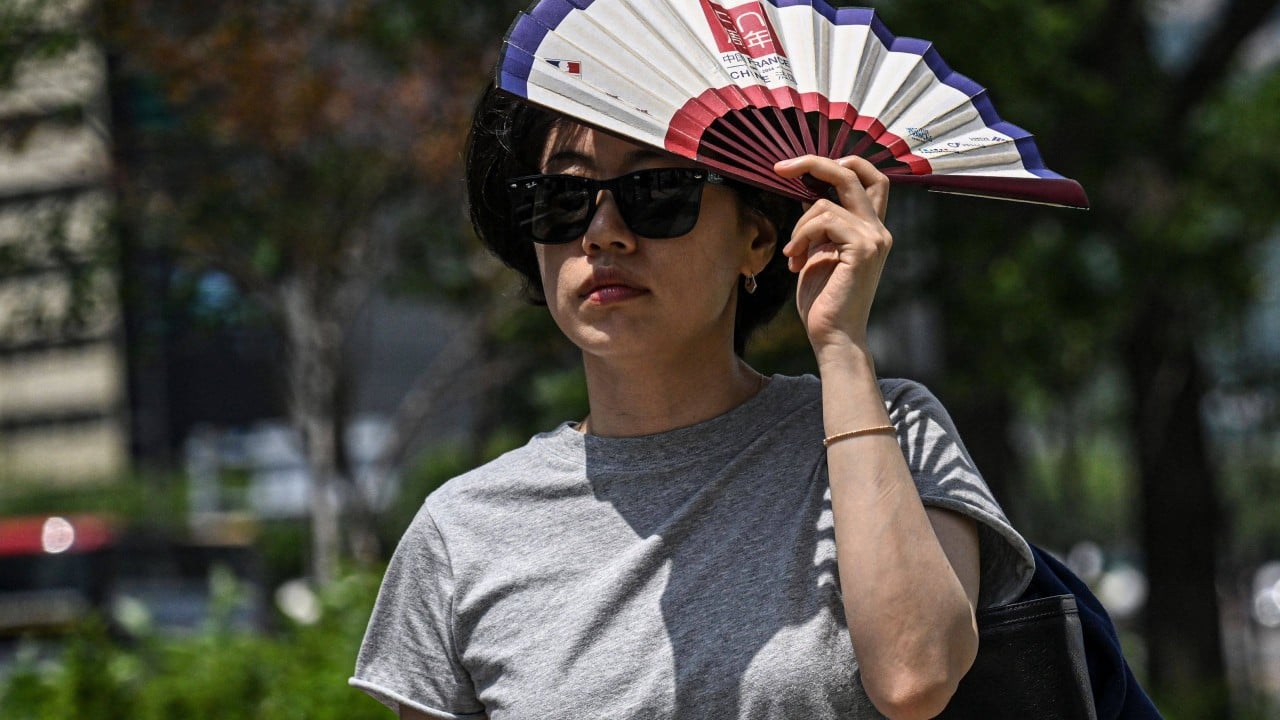
The institutional baseline for managing meteorological risk on the Korean Peninsula has fundamentally collapsed. The issuance of South Korea’s first-ever Heat Wave Emergency Warning for Gyeongsan and Pohang does not merely indicate an acute spike in local temperatures; it signals that the historical statistical models used to safeguard public health, labor productivity, and infrastructure stability are no longer functional. Over the past five decades, the country's baseline thermal risk has shifted permanently. Data from the Korea Meteorological Administration (KMA) indicates that the average annual number of heatwave days has more than doubled, climbing from eight days per year in the 1970s to an average of 19 days over the last five years. Concurrently, the frequency of tropical nights—defined as periods where the overnight minimum remains at or above 25°C—has more than tripled, surging from four to 14 nights annually.
To quantify and mitigate this accelerating thermal exposure, the state has been forced to abandon its legacy two-tier advisory system. The newly deployed three-tiered architecture introduces an extreme upper-bound trigger designed to prevent catastrophic systemic failure. Managing this transition requires an objective understanding of the mechanical, structural, and economic frameworks dictating this new atmospheric reality.
The Three Pillars of Thermal Stress: The Mechanics of Perceived Temperature
The legacy approach to heat advisories relied heavily on dry-bulb air temperature, a metric that systematically underestimates biological and infrastructural stress in high-humidity zones. The updated KMA framework relies strictly on perceived (apparent) temperature, which functions as a complex interaction between thermodynamic heat and atmospheric moisture.
This interaction is governed by three primary mechanisms:
- The Latent Heat Bottleneck: Human thermoregulation depends heavily on the evaporation of sweat from the skin, a phase transition that removes latent heat from the body. When relative humidity rises, the vapor pressure gradient between the skin and the surrounding air narrows.
- The Humidity Multiplier effect: Within the KMA’s analytical engine, when relative humidity exceeds a baseline threshold of 55%, every subsequent 10 percentage point increase in humidity adds approximately 1°C to the perceived temperature. This explains why a measured ambient temperature of 29°C can easily morph into a perceived thermal load of 32°C or higher.
- The Nocturnal Thermal Trap: The doubling of tropical nights creates a cumulative physiological deficit. When overnight temperatures fail to drop below 25°C, the human cardiovascular system cannot drop its core temperature, preventing cellular recovery and compounding the heat stress experienced during subsequent daytime peaks.
The Cost Function of Extreme Thermal Events
The structural shift from chronic seasonal heat to acute thermal emergencies imposes a compounding cost function across three critical sectors of the South Korean macroeconomy.
1. Infrastructure and Grid Volatility
The mechanical stress on the national energy grid operates on a non-linear scale. As daytime perceived temperatures breach 38°C, residential and industrial cooling demand creates a synchronous spike in load factor. The risk is not merely localized blackouts, but the thermal degradation of distribution transformers. When ambient air temperatures remain elevated during tropical nights, these transformers cannot radiate excess operational heat, drastically accelerating asset depreciation and increasing the probability of cascading substation failures.
2. Labor Suboptimization and Productivity Thresholds
For outdoor economic sectors—primarily construction, heavy manufacturing, shipyards, and agriculture—the introduction of the Heat Wave Emergency Warning creates an absolute regulatory block. The emergency tier requires an immediate cessation of outdoor activities between 2:00 PM and 5:00 PM.
This operational pause introduces a severe supply-chain bottleneck. The economic loss is calculated as:
$$\text{Loss} = \Delta t \times (\text{Output per Hour}) + \text{Contractual Delay Penalties}$$
Because the emergency alert can be triggered after a single day if the forecast hits 38°C perceived or 39°C actual temperature, industrial operations lose the ability to smooth out labor scheduling over a multi-day window, forcing costly operational halts on short notice.
3. Public Health Capacity and Triage Costs
The healthcare system faces a binary shift in patient intake dynamics. Under standard heatwave warnings (35°C for two consecutive days), heat-related illnesses track linearly with vulnerable demographics such as the elderly or unhoused populations. However, the emergency warning threshold marks the boundary where the human body's wet-bulb temperature tolerance is pushed to its absolute limit. At this inflection point, morbidity rates expand to include healthy, prime-working-age adults. The result is an immediate, localized surge in emergency room admissions for heatstroke and severe dehydration, threatening to exhaust regional ICU capacities.
The Micro-Monsoon Anomalies: Why the Rainy Season Fails to Cool
A persistent logical fallacy in climate analysis assumes that the onset of the East Asian monsoon (Changma) acts as a cooling counterweight to summer heat. Recent meteorological data reveals an opposite causal chain.
[Late Cold Air Retreat]
       │
       ▼
[Delayed Monsoon Front] ──► [Short, Intense Rainfall Bursts]
                                      │
                                      ▼
[High Ambient Heat] ◄────── [95% Relative Humidity Multiplier]
The historical model of the rainy season relied on prolonged, continuous cloud cover that blocked solar radiation for weeks, suppression ground heating. The contemporary pattern is characterized by extreme, highly compressed convective precipitation events separated by intense periods of direct solar exposure.
Because the monsoon front arrived up to 11 days later than the historical average due to persistent northern cold air masses, the ground absorbed massive thermal energy throughout June. When the rains do arrive, they do not cool the land; instead, they flash-evaporate upon hitting the hot topography. This drives relative humidity levels up to 95%, transforming the peninsula into a high-pressure, thermodynamic sauna where the actual air temperature may hover at 34°C, but the perceived index surges straight into emergency territory.
Strategic Play: Institutional and Industrial Adaptation
The current climate trajectory dictates that waiting for multi-day triggers before initiating defensive action is an obsolete strategy. Organizations and municipal authorities must pivot to an algorithmic, single-day predictive trigger response matrix.
Industrial operators must decouple their operational schedules from traditional calendar shifts, implementing automated split-shift labor models that legally isolate the 2:00 PM to 5:00 PM thermal peak without sacrificing total weekly run-time. Concurrently, municipal infrastructure investments must shift away from retrofitting passive cooling shelters and move directly toward installing decentralized, micro-grid-powered district cooling nodes capable of maintaining continuous operation independently of the primary electrical grid during peak load stress.