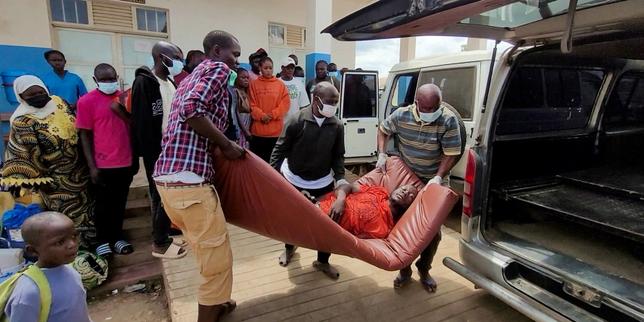
The World Health Organization's declaration of a Public Health Emergency of International Concern (PHEIC) on May 16, 2026, exposes a critical vulnerability in global health security: the international bio-containment playbook is structurally misaligned with non-Zaire ebolavirus phenotypes. The current outbreak, originating in the Ituri Province of the Democratic Republic of the Congo (DRC) and rapidly propagating to Kampala, Uganda, cannot be evaluated through the lens of historical containment successes. While prior interventions relied on pharmaceutical dampening via ring vaccination, the 2026 outbreak involves the Bundibugyo virus disease (BVD) etiology. This distinct viral profile strips global response teams of their primary intervention mechanisms, converting a biological suppression task into a pure execution problem of classic epidemiological infrastructure under asymmetric conditions.
To evaluate the actual strategic threat of this outbreak, analysts must abandon the binaries of panic and complacency. Instead, the situation requires an examination of the structural variables that dictate the transmission vector, the systemic therapeutic deficits, and the operational friction of the geographic theater.
The Immunological Deficit: Ervebo Neutralization Inefficacy
The primary point of failure in current public expectation stems from a misunderstanding of vaccine cross-protection. The successful suppression of the 2018–2020 North Kivu outbreak and the smaller late-2025 Kasai outbreak relied fundamentally on the deployment of Ervebo (rVSV-ZEBOV). This countermeasure operates as a recombinant vesicular stomatitis virus vector expressing the glycoprotein of the Zaire ebolavirus species.
The genetic divergence between Orthoebolavirus zairense (Zaire ebolavirus) and Orthoebolavirus bundibugyoense (Bundibugyo ebolavirus) occurs precisely within the genomic sequences encoding this surface glycoprotein. The structural divergence produces a distinct antigenic profile:
- Epitope Incompatibility: Neutralizing antibodies induced by the Zaire-specific vaccine exhibit negligible binding affinity to the Bundibugyo surface glycoprotein.
- Zero-Stock Vaccine Environment: No licensed or pre-qualified vaccine candidates exist for the Bundibugyo species. While experimental multivalent platform candidates are in early-stage pipelines, they lack the manufacturing scale and safety validation required for immediate deployment.
- Therapeutic Deprivation: Monoclonal antibody therapies such as Ebanga (Ansuvimab-zykl) and Inmazeb (Atoltivimab/Maftivimab/Odesivimab), which altered case fatality dynamics in recent years, are entirely Zaire-specific. They offer zero therapeutic utility for BVD patients.
This diagnostic reality shifts the Case Fatality Rate (CFR) logic. While Bundibugyo historically demonstrates a lower raw CFR (approximately 30% to 40% in the 2007 Uganda and 2012 DRC outbreaks) compared to the catastrophic 70% to 90% associated with untreated Zaire strains, the lack of therapeutic options presents a severe operational challenge. The initial lab data from the Rwampara health zone confirms this issue: out of 13 initial blood samples analyzed by the Institut National de Recherche Biomédicale (INRB), eight returned positive for Bundibugyo, revealing a high early positivity rate amidst a mounting pool of hundreds of suspected cases.
The Transmission Cost Function: Structural Amplification Vectors
Epidemiological modeling relies on the basic reproduction number ($R_0$), defined as the average number of secondary infections generated by a single infectious individual in a completely susceptible population. In a standard rural Ebola outbreak, $R_0$ typically hovers between 1.3 and 1.8, driven exclusively by direct contact with contaminated bodily fluids. However, the current outbreak in Ituri operates within an environmental framework that artificially inflates this cost function through three specific multipliers.
+-----------------------------------------------------------------+
|                  STRUCTURAL AMPLIFICATION VECTOR                |
+-----------------------------------------------------------------+
|  [Demographic Mobility]     [Nosocomial Loops]     [Conflict]   |
|  Artisanal Gold Mining   ->   Caregiver Gaps    ->  Insecurity  |
|  & Transit Corridors         & Latency Errors       & Blind Spots|
+-----------------------------------------------------------------+
                                 |
                                 v
                [Artificial Inflation of R0 Value]
The Mobility Multiplier: Artisanal Mining Logistics
The index zones—specifically Mongbwalu and Rwampara—are economic hubs for artisanal gold mining. This industry creates an environment characterized by transient, young male populations (the current data indicates a high proportion of cases in the 20–39 demographic) who move rapidly along informal transport corridors.
Unlike agricultural populations tied to seasonal crops, mining populations migrate immediately when an unexplained health crisis threatens local commerce or triggers quarantine rumors. This behavior patterns the rapid geographic dispersion across nine health zones in Ituri, culminating in the confirmed imported cases in Kampala within weeks of the initial transmission chain illumination.
The Nosocomial Feedback Loop
The initial phase of the outbreak recorded at least four deaths among healthcare workers in a short window. This concentration of medical casualties indicates a severe breakdown in standard Infection Prevention and Control (IPC) protocols.
When a healthcare facility lacks adequate personal protective equipment (PPE) or misdiagnoses early cases due to symptom overlap with endemic malaria or typhoid, the clinic itself becomes an amplification engine. Infected healthcare workers inadvertently cross-contaminate successive patient cohorts, increasing the velocity of the transmission wave prior to official state declarations.
Insecurity and Epistemic Blind Spots
Eastern DRC remains a complex humanitarian theater with active armed conflict. This security environment limits the deployment of traditional epidemiological surveillance tools. Contact tracing relies on a linear chain of human verification: a confirmed case is identified, and their contact tree is monitored for 21 days.
When armed groups restrict geographic access, contact tracing drops below the critical threshold required for containment (typically 90% or greater). The resulting gaps generate an epistemic blind spot, meaning the recorded case counts of roughly 11 confirmed and hundreds of suspected cases represent only a fraction of actual transmission.
The Cross-Border Bottleneck: Kampala and Transit Infrastructure
The confirmation of two independent cases in Kampala, Uganda, demonstrates that the geographic containment of the virus to its sylvatic reservoir has failed. The economic linkages between northeastern DRC and western Uganda form a highly integrated logistical network that complicates border control.
A rigid border closure strategy is mathematically counterproductive in this geography. The frontier between the DRC and Uganda features dozens of informal crossing points alongside official checkpoints. Implementing hard travel bans or closing formal border stations creates an immediate substitution effect. Travelers circumvent formal entry points, diverting traffic through unmonitored bush paths.
This shift removes the opportunity for syndromic screening, temperature monitoring, and contact registry collection, rendering the outbreak invisible to border health authorities. Therefore, containment efforts must focus on maintaining open transit points equipped with rapid diagnostic capabilities while accepting a baseline probability of international importation.
Strategic Operational Playbook
Because pharmaceutical suppression is unavailable, containing the 2026 Bundibugyo outbreak requires shifting resources toward intensive non-pharmaceutical interventions. The response architecture must be adjusted across three operational pillars.
Decentralized Isolation Over Centralized Units
The historical model relies on large, centralized Ebola Treatment Centers (ETCs) managed by international agencies. This approach introduces a fatal latency delay: transporting a suspected patient over degraded roads in Ituri takes days, increasing their community contact time and mortality risk.
The strategy must shift to decentralized isolation units integrated directly into existing community health structures. By distributing low-cost isolation capacity closer to the mining zones, the time from symptom onset to isolation drops significantly, lowering the community reproductive value.
Systematic Post-Mortem Surveillance
Traditional burial practices involving the washing of bodies remain a powerful vector for transmission due to the high viral load present in deceased patients. Rather than deploying aggressive burial teams that generate community resistance, the intervention must focus on systematic post-mortem oral swab testing for all deaths within the affected health zones. This approach identifies missed transmission chains within 24 hours, allowing immediate contact tracing for households that would otherwise slip through the tracking system.
Targeted Diagnostic Deployment
With standard RT-PCR testing concentrated in primary regional laboratories like the INRB in Kinshasa or specialized centers in Kampala, sample transport creates a major bottleneck. Deploying mobile GeneXpert diagnostic blocks configured for the Bundibugyo matrix directly to transit hubs and major mining concessions converts a multi-day diagnostic loop into an asset that delivers actionable results in under six hours.
The trajectory of this outbreak depends entirely on the speed of infrastructure execution over the next 14 days. If the operational response remains dependent on waiting for a Zaire-style vaccine deployment that cannot immunologically occur, the virus will continue to utilize transit networks to establish secondary urban transmission nodes across East Africa. Success requires treating the outbreak as a structural logistics challenge: containment will be won through rapid diagnostic turnarounds, secure isolation at the point of care, and maintaining open, monitored transit lines.